A New Dog’s First 3 Days, 3 Weeks, and 3 Months
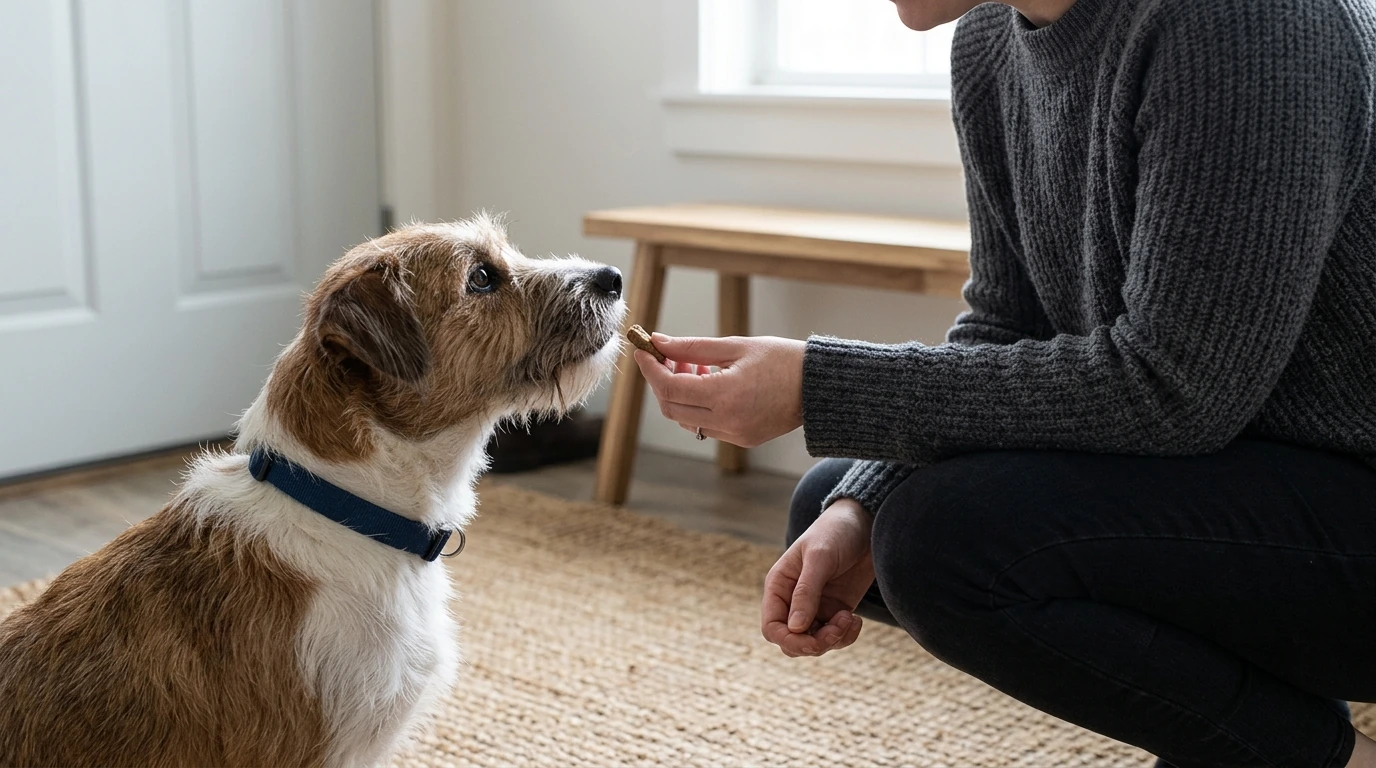
What is the 3-3-3 rule for dog training?
The 3-3-3 rule is a simple way to think about how a newly adopted dog may adjust to a home: roughly three days to decompress, three weeks to settle into a routine, and three months to feel more secure. It is not a formal training program or a fixed timeline. Every dog adjusts at a different pace, and some may need more time.
What does each stage mean?
The first three days: Your dog may feel overwhelmed and need quiet, space, and a predictable routine. Keep introductions and outings low-key, provide a comfortable place to retreat, and avoid expecting polished responses to cues.
The first three weeks: Your dog may begin learning the household rhythm and showing more of their everyday behavior. Use short, positive training sessions to teach useful basics such as responding to their name, settling, and coming when called indoors.
The first three months: With consistent care, your dog may become more comfortable and ready to practice skills in a wider range of situations. Continue rewarding calm choices and build new challenges gradually rather than assuming your dog is ready for every environment.
How can you use the rule in training?
Let your dog’s comfort and behavior guide the pace. Start in a quiet space with few distractions, reward the response you want, and keep practice brief enough that your dog can succeed. If they seem worried, stop engaging, or cannot focus, make the next session easier by reducing distractions or returning to a familiar setting.
For recall, begin indoors or in a securely fenced area. Use a cheerful cue, reward your dog generously for returning, and gradually add distance and distractions. The 3-3-3 rule is not a reason to let a dog off leash before they are ready; practice safely and build reliability step by step. For more guidance, visit our guide to off-leash training, reliable recall, and confident freedom.
Is the 3-3-3 rule a deadline?
No. It is a general adjustment guide, not a promise that every dog will feel settled or master cues by a particular date. Progress may vary with the dog’s history, temperament, and surroundings, so celebrate small steps and adjust your expectations to your dog.
FAQ
When should you begin practicing recall outdoors?
Begin in a secure, fenced space once your dog can respond to the recall cue in a quiet indoor setting. Add distractions gradually, and keep your dog leashed or in a safely enclosed area until their response is dependable.
















Leave a comment