First Signs of Baby Teething: What to Look For
What are the first signs that a baby is teething?
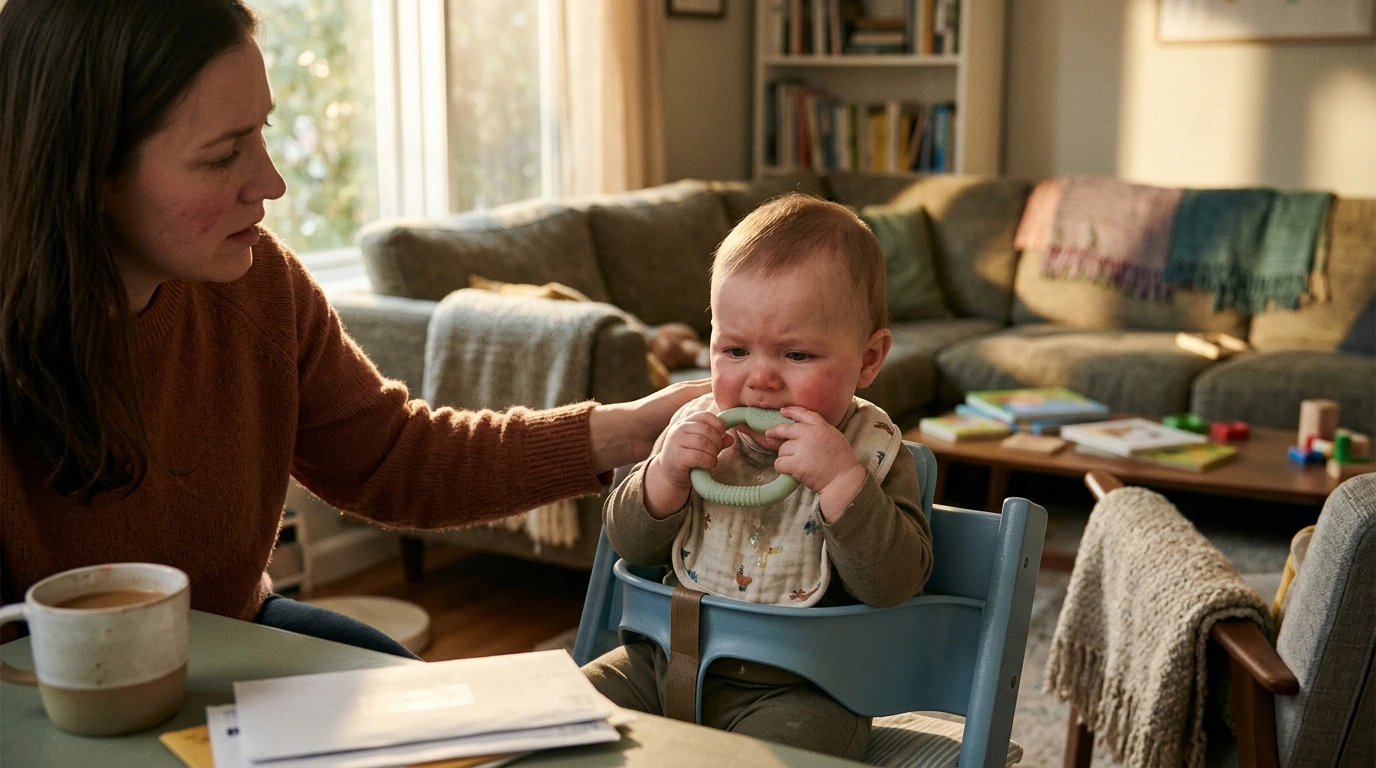
The first signs of teething are often more drooling, a stronger urge to chew, and tender or slightly swollen gums. You may also notice that your baby is fussier than usual or rubs their cheek near the sore area. These signs can appear before you can see or feel a tooth.
Teething commonly begins around 6 months, although some babies get their first tooth earlier or later. The lower front teeth often come in first. Every baby is different: some show several signs, while others seem hardly bothered.
What should you look for?
A combination of these changes may point to a tooth on its way:
- More drool: Extra saliva may wet your baby’s chin, clothes, or bib.
- Chewing or biting: Your baby may gnaw on fingers, toys, or other safe objects to relieve gum pressure.
- Gum changes: The area around an emerging tooth may look red or swollen, and you might eventually feel a small, hard edge.
- More fussiness: Sore gums can make your baby temporarily more irritable.
- Changes in feeding: Tender gums may make your baby less interested in feeding for a short time.
Drooling and chewing are also normal parts of development, so they do not always mean a tooth is about to appear. Our baby teething signs checklist and 48–72-hour tracker can help you notice patterns and keep track of changes.
How can you help a teething baby?
Gently rub your baby’s gums with a clean finger, or offer a firm teething ring chilled in the refrigerator. Avoid frozen teethers, which can be too hard and cold for delicate gums. We recommend choosing a one-piece teether that is easy for your baby to hold and too large to fit entirely in their mouth. Supervise your baby while they use it.
Wipe away drool gently and keep the chin dry to help prevent irritation. Avoid teething necklaces and bracelets because they can cause choking or strangulation. Do not use benzocaine or lidocaine teething gels unless your baby’s clinician specifically directs you to.
When should you call your baby’s clinician?
Teething should not cause a fever of 100.4°F or higher, diarrhea, or significant illness. Contact your baby’s clinician if these occur, if your baby is feeding poorly, or if you are concerned about their symptoms. Our team encourages you to seek advice promptly if your baby seems unusually unwell.
FAQ
How long does it take for a tooth to come through?
The timing varies: gum discomfort may come and go before a tooth becomes visible. Once you spot the edge, the tooth can continue to emerge gradually over the following weeks.















Leave a comment