Smart Squat Bundle: Weekly Squat Routine for Toned Legs
The Smart Squat Training Bundle: Squat Workout Routine, eBooks & Guides for Toned Legs
A consistent squat practice can shape the legs and glutes while building full-body strength—if technique, progression, and recovery are handled with care. Squats look simple, but the best results usually come from small, repeatable basics: a stable stance, solid bracing, controlled depth, and a plan you can actually follow week after week. Below is a practical breakdown of squat variations, a simple weekly structure, quick form fixes, and how a step-by-step digital bundle can keep training organized from the first rep to long-term progress.
What Squat Training Builds (Beyond “Leg Day”)
- Lower-body development: Squats train the glutes, quads, hamstrings, adductors, and calves, while demanding core and upper-back bracing.
- Everyday strength: Strong squat patterns help with getting up from chairs, climbing stairs, and lifting safely from the floor.
- Better balance when programmed well: Pair squats with hinge patterns (like RDLs) and unilateral work (lunges or split squats) to avoid overemphasizing one movement style.
- Joint resilience over time: Gradual increases in range of motion, load, and weekly frequency can help tissues adapt without constantly feeling “beat up.”
Set-Up and Form Cues for Safer, Stronger Reps
- Stance: Start around shoulder width. Turn toes slightly out if it matches your hip anatomy and feels smoother.
- Brace: Inhale into your ribcage and belly, then tighten like you’re preparing to absorb a light punch. Keep ribs stacked over pelvis.
- Foot pressure: Use a “tripod” foot—big toe, little toe, and heel stay grounded—to improve stability and reduce knee collapse.
- Depth: Aim for the deepest position you can control with a neutral spine. Consistency beats forcing range.
- Knees and hips: Let knees track in line with toes while hips move back and down. Avoid twisting or collapsing inward.
- Tempo: Lower in control (about 2–3 seconds), then stand with steady intent while staying braced.
For a reputable starting point on squat mechanics and safety, the American Council on Exercise (ACE) and the NSCA offer evidence-based training guidance worth following.
Choosing the Right Squat Variation for Your Goal and Equipment
- Bodyweight squat: Great for mastering mechanics, building volume, and joint-friendly conditioning.
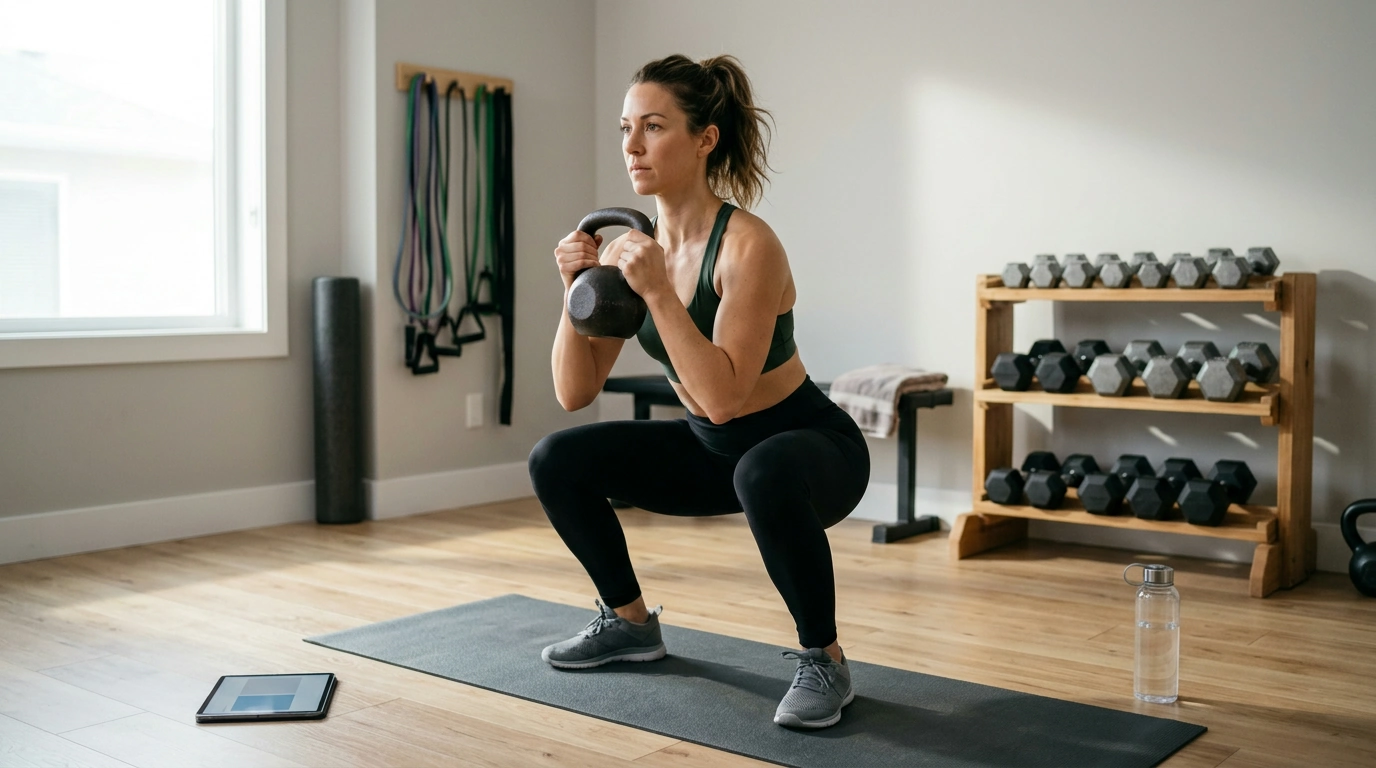
- Goblet squat: Front-loaded resistance often improves posture and depth; ideal with a dumbbell or kettlebell.
- Split squat / Bulgarian split squat: Builds single-leg strength and glute focus; useful when you’ve outgrown your available weights.
- Sumo squat: Can emphasize inner thighs and glutes for some lifters; keep knees tracking toes and avoid rounding.
- Tempo and paused squats: Add time-under-tension for shaping and control without needing heavy loads.
Squat variations at a glance
| Variation | Best for | Common mistake to avoid | Simple cue |
|---|---|---|---|
| Bodyweight squat | Technique, endurance, mobility practice | Heels lifting / collapsing inward | Keep whole foot grounded; knees follow toes |
| Goblet squat | Posture, depth, quad + core demand | Elbows dropping and chest caving | Hold weight close; lift the sternum |
| Split squat | Glute/quad balance, knee control, stability | Front knee diving inward | Drive knee over middle toes; stay tall |
| Tempo/paused squat | Control, hypertrophy stimulus, confidence in the bottom | Relaxing at the bottom and losing brace | Stay tight; pause without sinking |
A Simple Weekly Squat Routine for Toned Legs
- Frequency: 2–3 lower-body sessions per week works well for most schedules. Leave at least one rest day between harder sessions.
- Session A (strength focus): 4–6 sets of 5–8 reps (goblet squat or your main squat variation), then 2–3 accessories (RDL/hip hinge, calf raises, core).
- Session B (shape + volume): 3–5 sets of 10–15 reps (bodyweight, goblet, or tempo squats), then single-leg work and glute bridges/hip thrusts.
- Optional Session C (technique + conditioning): Lighter, higher-rep sets with shorter rests plus mobility work to improve movement quality.
- Progression rule: Add a small amount of load, reps, or an extra set only when form stays consistent for every working set.
If you want a repeatable plan that already lays out variations, progression, and weekly structure, The Smart Squat Training Bundle keeps training decisions simple so effort goes into the reps—not constant program-hopping.
Warm-Up, Mobility, and Recovery That Keep Progress Moving
For general exercise and recovery basics that support long-term consistency, NIH MedlinePlus has practical health guidance.
When tightness makes it hard to hit quality positions, pairing a plan with a targeted recovery option can help you stay consistent. The Muscle Relaxation Toolkit for Total Tension Relief fits well alongside mobility work, especially during higher-volume squat weeks.
Common Squat Problems and Quick Fixes
What’s Included in The Smart Squat Training Bundle
Who It Fits Best and How to Get Started
FAQ
How many days per week should squats be done for toned legs?
Two to three days per week is a solid target for most people, with at least one rest day between harder sessions. Results come from consistent weekly volume and recovery, not daily max-effort squatting.
Are bodyweight squats enough to shape legs and glutes?
They can be enough for beginners and also work well for higher-rep, tempo, and paused sets. For continued progress over time, add resistance, increase range or tempo, or use unilateral variations like split squats.
What should be done if knees hurt during squats?
First, reduce load and range of motion and re-check knee tracking and foot pressure. Switching to a goblet squat or split squat can help you find a more comfortable pattern; if pain persists or feels sharp, get evaluated by a qualified professional.















Leave a comment