Clear, Shadow-Free Lighting: LED Anti-Fog Vanity Mirror
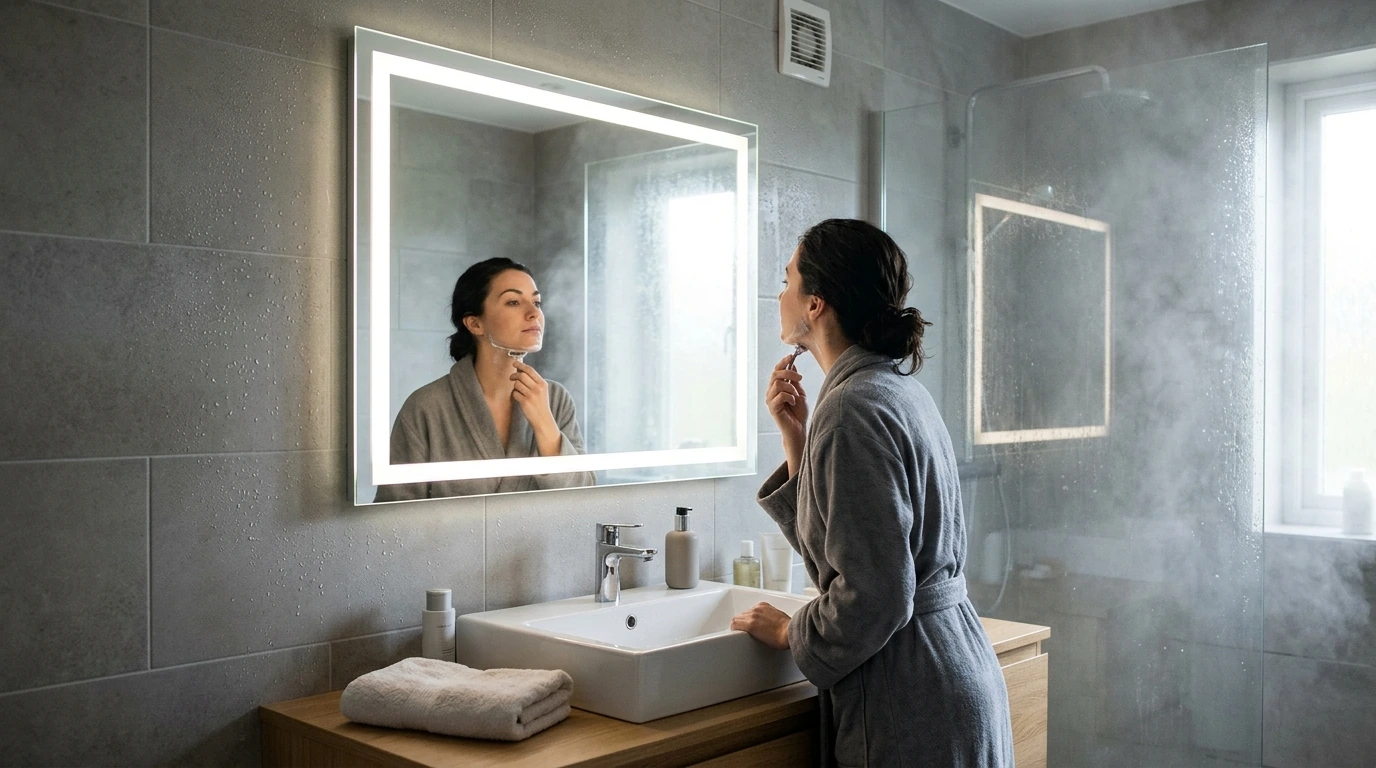
LED Lighted Anti-Fog Vanity Mirror for Clear, Even Bathroom Lighting
A fog-free mirror with built-in LED lighting supports daily routines from shaving to skincare by keeping reflections clear after hot showers and providing consistent illumination at the sink. If bathroom mirrors regularly cloud over or overhead fixtures cast unflattering shadows, an anti-fog, lighted vanity mirror can make the space feel more functional—without changing the entire layout. Below is a practical breakdown of how anti-fog and LED features work, what to prioritize before buying, and how to keep performance strong over time.
Why anti-fog matters in everyday bathroom routines
Bathroom humidity spikes fast. When warm, moist air hits a cooler mirror surface, condensation forms and visibility drops—often right when you need a clear view.
- Helps maintain a clear reflection after showers so grooming doesn’t pause while condensation clears.
- Supports precision tasks such as eyeliner, trimming, and shaving where small details matter.
- Can reduce wiping or polishing that may leave streaks and gradually wear coatings or mirror surfaces.
Even if a quick wipe “works,” constant rubbing can create micro-scratches or damage edge seals over time—especially on mirrors with integrated lighting.
How the anti-fog feature typically works
Most anti-fog bathroom mirrors rely on controlled warmth. A small defogging element (often a heated pad) gently raises the glass temperature so it stays closer to the surrounding air and resists condensation.
- Many mirrors use a gentle heating element behind the glass to keep the surface slightly warmer than the surrounding air, discouraging condensation.
- Anti-fog performance improves when the mirror is powered on a few minutes before a shower or during bathroom warm-up.
- Placement and ventilation affect results; strong humidity with limited airflow can overwhelm any anti-fog system.
Anti-fog approaches and what to expect
| Approach | How it prevents fog | Best for | Notes |
|---|---|---|---|
| Heated pad/defogger | Raises mirror temperature to reduce condensation | Steamy bathrooms, frequent showers | Works best with proper airflow and correct wiring |
| Anti-fog coating | Reduces water droplet formation | Light-to-moderate humidity | May degrade over time; gentle cleaning helps |
| Room ventilation | Lowers humidity level overall | Any bathroom | Exhaust fans improve performance of any mirror |
For the most reliable day-to-day clarity, look at anti-fog as a system: mirror technology plus airflow. Keeping an exhaust fan running during and after showers often makes a noticeable difference.
What good LED vanity lighting should deliver
Lighting is the other half of the upgrade. A bright mirror isn’t automatically a useful mirror—what matters is how evenly it lights your face and how comfortable it is at typical viewing distance.
- Even illumination across the face to avoid harsh shadows under eyes and chin.
- Adjustable brightness for morning vs. evening routines.
- A color tone that matches the room’s needs: warmer tones feel softer; cooler tones can look crisper for detail work.
If you’re comparing options, lighting guidance from ENERGY STAR’s lighting overview is a helpful baseline for understanding efficiency and everyday use. For safety considerations around lighting products, UL Solutions’ lighting information provides a standards-focused perspective.
Features that improve daily comfort and usability
Small design choices can make a mirror feel effortless instead of fussy. Consider which features you’ll actually use every day—and which ones you’ll only notice when they’re missing.
- Touch controls for quick brightness changes and clean aesthetics.
- Memory settings that restore the last used brightness or color mode (if supported).
- Edge-lit or backlit designs that reduce glare while keeping the sink area well lit.
- Moisture-aware design considerations such as sealed edges and durable mounting hardware.
When a mirror is installed in a humidity-heavy room, build quality matters. Sealed edges and sturdy mounting help reduce long-term issues caused by steam cycles and temperature swings.
Sizing and placement for a balanced look
Even a premium mirror can look “off” if the proportions or placement don’t fit the vanity. A few simple checks can help the setup feel intentional.
Care, cleaning, and long-term performance
If you’re evaluating energy-related claims while shopping, the FTC’s Green Guides offer guidance on how energy-efficiency and environmental marketing claims should be presented.
Product spotlight: LED Lighted Anti-Fog Vanity Mirror
For bathrooms where the mirror frequently fogs after showers—or where overhead fixtures create uneven light at the sink—an integrated solution can be the cleanest upgrade. The LED Lighted Anti-Fog Vanity Mirror is designed to combine clear viewing in humid conditions with built-in LED illumination for daily grooming and skincare.
Quick look
| Item | Details |
|---|---|
| Product | LED Lighted Anti-Fog Vanity Mirror |
| Price | 533.50 USD |
| Availability | In stock |
| Product page | https://kenopynstylixdesto.shop/led-lighted-anti-fog-vanity-mirror/ |
Complementary picks for a more finished bathroom feel
- Vintage Resin Vase — A simple way to add a decorative touch to a vanity tray or shelf without overwhelming the space.
- Muscle Relaxation Toolkit for Total Tension Relief – 3-in-1 Bundle for Deep Muscle Relaxation — A self-care add-on that pairs well with post-shower routines, especially after long days or workouts.
FAQ
How long does it take for the anti-fog function to work?
Many heated defoggers start improving clarity within a few minutes. Full effectiveness depends on humidity levels, mirror size, and how well the bathroom is ventilated.
What color temperature is best for makeup or shaving?
Neutral to cooler light can make fine details easier to see for precise tasks like shaving or eyeliner. Warmer light tends to feel softer, so adjustable modes are useful when switching between daytime and evening routines.
Can an LED anti-fog mirror be used in a very small bathroom?
Yes, but ventilation matters more in small spaces where steam builds quickly. Running the exhaust fan and minimizing direct steam exposure helps the anti-fog feature perform at its best.















Leave a comment