36-Inch Dual-Purpose Lake & Landscape Rake Cleanup Guide
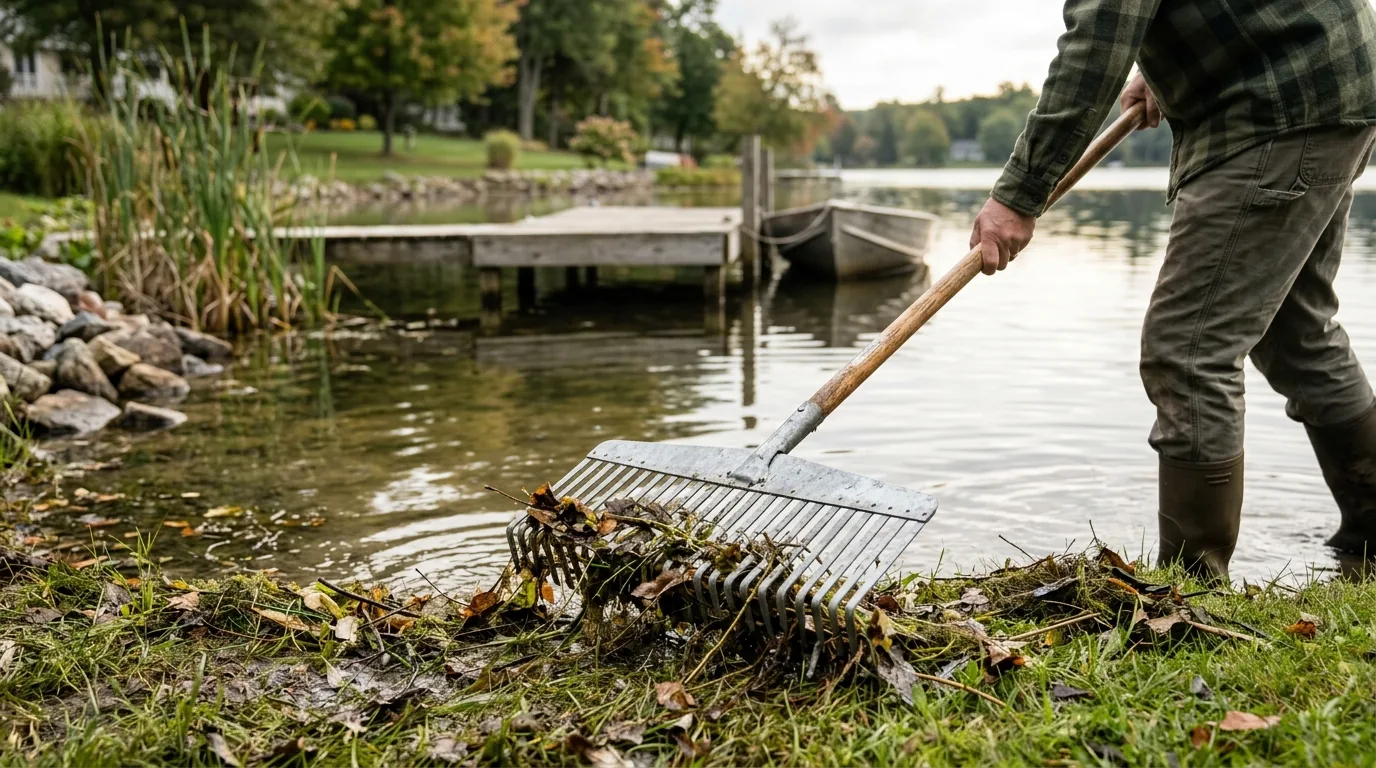
36″ Dual-Purpose Landscape & Lake Rake for Shoreline and Yard Cleanup
A wide rake that performs well on land and in shallow water can simplify seasonal cleanup—pulling leaves, grass clippings, and light debris from beds and lawns while also collecting loose vegetation and litter along shorelines. A 36-inch head covers a lot of ground (and water) in fewer passes, which is especially helpful when you’re maintaining swim access, tidying around docks, or doing a quick post-storm sweep. Below are practical use cases, setup tips, safe technique, and simple upkeep habits to keep results consistent year after year.
What a dual-purpose rake is designed to handle
A dual-purpose landscape and lake rake is built for fast, repeatable maintenance work—moving a high volume of light-to-moderate material without turning every cleanup into a heavy digging project.
- Wide head coverage helps move more material per pass during yard and shoreline cleanup.
- Works on lawns and beds for surface debris like leaves, small twigs, and thatch-like light buildup.
- Works in the near-shore zone for shallow-water retrieval of floating weeds, loose plant fragments, and windblown litter.
- Best for maintenance, not excavation; it’s not intended for dredging or deep bottom disruption.
- Useful around docks and access points such as swim areas, boat ramps, and along riprap or natural shorelines where debris collects.
Common shoreline and lake-edge jobs it can simplify
Shallow-water cleanup is often about timing: collecting loose material before it sinks, drifts back in, or breaks apart. A wide rake makes that routine work faster and more predictable.
- Gathering floating plant fragments before they wash back in or sink.
- Pulling loose algae mats and small debris toward shore for disposal (avoid stirring sediment unnecessarily).
- Clearing around swim ladders, steps, and launch points where snagging is common.
- Routine grooming of the first few feet of shoreline to reduce slippery buildup and improve access.
- Post-storm cleanup: sticks, leaves, and windblown trash that collect in coves and corners.
Where it helps most (and what to expect)
| Area | Typical debris | Technique | Tip |
|---|---|---|---|
| Shoreline shallows | Floating weeds, leaf mats | Long pulls toward shore | Work in sections to avoid piling too much at once |
| Around docks | Plant fragments, litter | Short controlled strokes | Rake parallel to dock edge to reduce snags |
| Lawn edges and beds | Leaves, grass clippings | Light passes to gather | Use a tarp or bin nearby for quick transfer |
| Rocky banks | Twigs, trapped leaves | Angle the head to hook debris | Avoid forcing the rake between tight rocks |
Setup and technique for cleaner results with less strain
A 36-inch head can reduce total passes, but technique matters—especially near water, where overly aggressive raking can churn sediment and make the area look worse before it looks better.
- Scan for hazards first: fishing line, hooks, sharp branches, glass, and submerged obstacles can snag teeth or cause injury.
- Use steady, moderate pressure: let the width do the work rather than forcing deep rakes that stir sediment.
- Skim and pull at the lake edge: keep the teeth near the surface (or just below) to collect loose material without uprooting desirable plants.
- Work with wind/current when possible: positioning so floating debris drifts toward you shortens the job.
- Take frequent small loads: wet vegetation is heavy; smaller pulls reduce back strain and make disposal easier.
- Dress for footing and grip: gloves and sturdy footwear are basics; on slippery banks, prioritize traction and a stable stance.
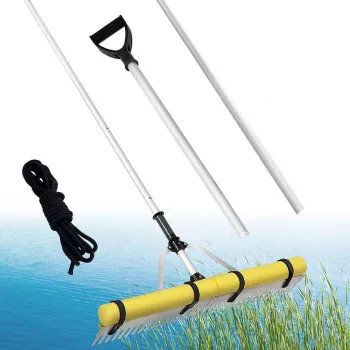
For a dedicated tool built around wide coverage in both settings, the 36″ Dual-Purpose Landscape & Lake Rake is a practical option for regular shoreline grooming and yard cleanup without switching tools.
Responsible cleanup around aquatic plants and habitat
Near-shore plants often stabilize sediment and provide habitat. Cleanup tends to be most effective when it’s targeted—clearing access and collecting loose debris while avoiding unnecessary disturbance.
- Remove only what’s needed in swim and access areas; many aquatic plants support fish and wildlife.
- Avoid raking through dense rooted growth if the goal is debris pickup; disturbance can increase turbidity and release nutrients from sediment.
- Dispose of vegetation properly: bag it or pile it well away from the waterline so it can’t wash back in.
- Be cautious with suspected invasives: fragmentation can spread certain species; follow local identification and disposal guidance.
- Rinse tools between water bodies to reduce transport of hitchhiking fragments.
For background on why disturbed sediment and excess nutrients can affect water quality, see the U.S. Environmental Protection Agency (EPA) guidance on nutrient pollution. For invasive species basics and prevention, reference the USDA National Invasive Species Information Center and the Wisconsin DNR “Clean Boats, Clean Waters” prevention resources.
Care, storage, and longevity tips
After a long cleanup session—especially when you’ve been pulling wet vegetation—recovery matters too. If you want a comfort-focused add-on for post-yard-day muscle relief, consider the Muscle Relaxation Toolkit for Total Tension Relief – 3-in-1 Bundle for Deep Muscle Relaxation.
When a wider rake makes the biggest difference
FAQ
How deep can a lake rake be used effectively?
It’s most effective in shallow water along the near-shore zone, where you can skim and pull loose material back to land. Depth limits depend on handle length and bottom conditions, but cleaner results usually come from surface-level passes rather than digging into sediment.
Will raking remove rooted aquatic weeds?
It may dislodge some plants, but it’s mainly intended for loose vegetation and debris. Aggressive raking through rooted growth can increase turbidity and may spread plants through fragmentation, so follow local guidance for invasive or heavy-growth situations.
How should collected lake weeds and debris be disposed of?
Move the material away from the waterline, let excess water drain, and bag it or place it where runoff won’t carry it back into the lake. If invasive species are possible, follow local disposal rules to prevent re-rooting or spread.















Leave a comment