Pet Feeding Schedule: A Simple Daily Checklist
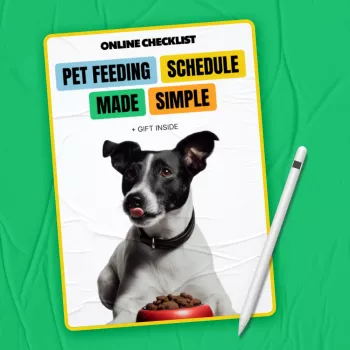
A good feeding routine should be easy to follow on an ordinary busy day. Start with your veterinarian’s guidance and the directions on your pet’s food, then turn the plan into a checklist everyone in your household can use. Our Pet Feeding Schedule Made Simple checklist gives you a place to organize meals, portions, and handoffs without relying on memory.
Start with the plan your pet needs
The feeding directions on a food package are a starting point, not a universal prescription. Your pet’s age, activity level, body condition, and health needs can affect how much food is appropriate. Ask your veterinarian about portions and meal timing if you have a puppy or kitten, a pet with a medical condition, or an animal that takes medication with food. A weight-management plan also deserves individual guidance.
Once you have a daily amount, decide how you will measure it. Use the same measuring scoop or a kitchen scale each time, and make sure everyone understands whether a written portion means a volume or a weight. Count treats and food used for training toward the daily total rather than treating them as extras. The WSAVA Global Nutrition Guidelines offer additional context for conversations about your pet’s nutritional needs.
Turn meals into a daily checklist
Give each pet a separate entry with their name, food, measured portion, usual meal times, and any relevant veterinary instructions. Keep one current checklist where the people who feed your pets will see it. If you use a shared digital note instead, make sure every caregiver can open and update the same version.
Mark a meal complete immediately after serving it. Recording the time, portion, and caregiver’s initials takes only a moment, but it makes the next handoff much clearer. It can help prevent both a missed meal and a second dinner served by someone who did not know the first one happened.
Use this layout as an example, not a prescribed feeding schedule. Fill in the times and portions that fit your individual pet’s plan.
| Pet | Morning | Midday, if planned | Evening | Daily check |
|---|---|---|---|---|
| Dog | Record time and measured portion | Record any planned meal or food-based treat | Record time and measured portion | Initial each completed entry |
| Cat | Record time and measured portion | Record any planned meal or snack | Record time and measured portion | Initial each completed entry |
Make entries specific enough to be useful. “Breakfast served” confirms that a meal happened; “7:15 a.m., measured portion, AB” also tells the next caregiver when it happened and who handled it. If a pet refuses food or eats only part of a meal, write that down instead of marking the full portion as eaten.
Make the routine work for your household
Choose meal times you can usually follow, while allowing reasonable flexibility when your day changes. The goal is a dependable process, not a clock that creates confusion whenever someone gets home late. If several people share feeding duties, assign a person to each meal or agree that nobody serves food until they have checked the shared record.
In a multi-pet home, separate lines matter. They help caregivers give each dog or cat the intended food and portion, especially when animals have different diets. Keep measured meals clearly identified so one pet’s serving is not mistaken for another’s. Fresh water should be available as appropriate for your pet; note meaningful changes in appetite or eating habits and discuss them with your veterinarian. For more general feeding information, see the FDA’s guide to feeding your pet.
Plan ahead without making it complicated
Before a busy week, confirm that you have enough of your pet’s current food and that anyone helping with meals knows the latest instructions. If a caregiver is filling in for one day, point them to the checklist and show them how you measure a portion. A short, clear handoff is more useful than several notes in different places.
Review your checklist whenever the food, portion, schedule, caregiver, or veterinary instructions change. Update the one shared version and remove outdated directions so nobody has to guess which note is current. Our Pet Feeding Schedule Made Simple checklist is a ready starting point; adapt its daily entries to your dog or cat rather than forcing your pet into a sample schedule.
Keep feeding tools separate from products meant for people. For example, our Muscle Relaxation Toolkit for Total Tension Relief is a personal wellness product, not a pet-feeding aid or an item to use on your animal. For the feeding routine itself, the essentials are simpler: a current plan, a consistent way to measure, and a record that gets updated after every meal.
FAQ
Should dogs and cats follow the same feeding schedule?
Not necessarily. Meal timing and frequency depend on the individual animal, their food, life stage, and veterinary guidance, so give each pet a separate checklist entry.
How do I avoid feeding my pet twice when several people help?
Assign meals when you can, and record the time and portion immediately after feeding. Keep one shared checklist in an easy-to-see place so the next person can confirm what has already been served.
When should I update my pet’s feeding checklist?
Update it whenever your pet’s food, portion, routine, caregiver, or veterinarian’s instructions change. Remove or replace older instructions at the same time.















Leave a comment