Train Your Dog to Be Off Leash: Recall & Focus Plan
How do I train my dog to be off leash?
Off-leash training is built on two skills: reliable recall (coming when called) and steady focus around distractions. Start in controlled spaces, reinforce heavily for the right choices, and expand freedom in small, repeatable steps so your dog learns that checking in with you is always worth it.
1) Lock in the basics on leash first
Before you remove the leash, make sure your dog can sit, stay, and come on cue with a regular leash in low-distraction areas. Use a consistent recall word (like “Come”) and reward quickly with high-value treats, praise, or a toy. The reward should be better than whatever your dog was doing a moment ago.
2) Switch to a long line for “safe freedom”
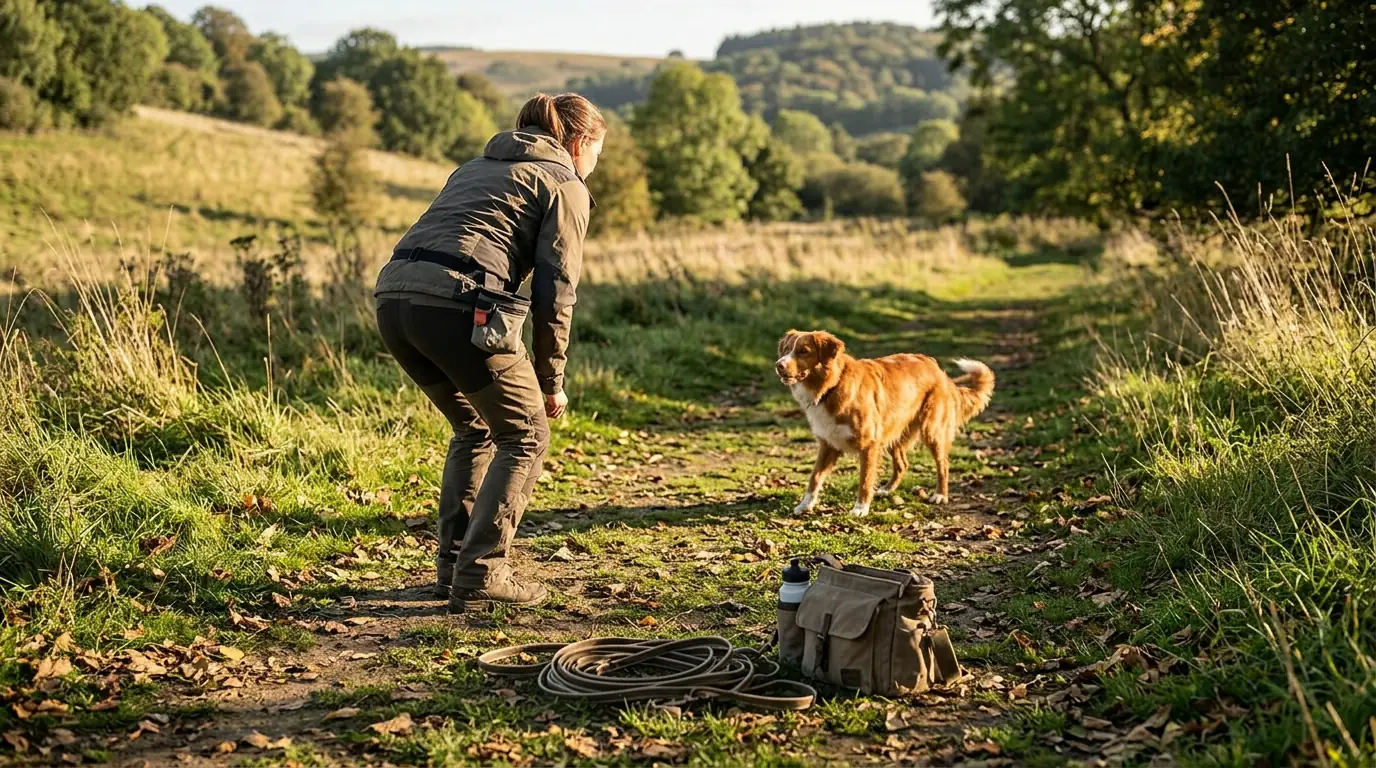
Use a long line (often 15–30 feet) in a yard or open field. Let your dog wander, then call once in a calm, upbeat tone. If they hesitate, gently guide them in with the line—then reward as soon as they reach you. This builds the habit of finishing the recall every time, not just when they feel like it.
3) Practice focus and check-ins
Reward your dog for choosing to look back at you without being asked. Mark it (“Yes!”) and pay. Those voluntary check-ins become the glue that keeps an off-leash dog connected, especially when distractions pop up.
4) Add distractions gradually (not all at once)
Move from quiet areas to mildly distracting ones: a park at off-hours, a friend walking at a distance, or mild scents on a trail. If your dog stops responding, you’ve increased difficulty too fast—go back a step and rebuild success.
5) Test readiness before going fully off leash
Your dog is ready for true off-leash time when they respond on the first cue most of the time, even around common distractions, and you can interrupt chasing, sniffing, or greeting behavior reliably. For a deeper step-by-step plan, see the full guide here: off-leash training with reliable recall, focus, and confident freedom.
FAQ
What’s the best long line length for off-leash training?
For most dogs, a 15–30 foot long line is ideal: long enough to simulate freedom, short enough to stay manageable. Start shorter if your dog is fast or highly distracted, then increase length as skills improve.















Leave a comment