Essential Bird Care Tips: Diet, Safety, and Routines
Essential Bird Care Tips for Happy Avians: Daily Routines, Safer Homes, and Healthier Habits
Happy, healthy pet birds thrive on consistency: the right food, a clean and enriching space, safe household routines, and early attention to subtle behavior changes. Strong care isn’t complicated—it’s a set of small habits done on time, every time. Below is a practical care framework you can adapt to your bird’s species, age, and personality to support physical health, mental stimulation, and long-term wellbeing.
Start With the Basics: Species Needs, Temperament, and Expectations
Before refining routines, match your expectations to the bird in front of you. A young, hand-raised bird may seek more interaction, while a rehomed bird might need weeks of predictable calm before trusting hands.
- Match care to species and age: Diet, sleep, handling, and enrichment needs differ across parrots, budgies, cockatiels, finches, and more.
- Normalize noise and mess: Vocalizing, tossing food, and chewing are natural behaviors—not “bad behavior.”
- Plan for decades: Many parrots can live a very long time with good care, so build routines you can sustain.
- Ease the transition: After bringing a bird home, prioritize quiet sleep, a predictable schedule, and minimal handling at first.
- Know your baseline: Note appetite, droppings, activity level, and typical vocal patterns so you can catch changes early.
Nutrition That Supports Energy, Feathers, and Immune Health
A consistent, species-appropriate staple diet is the anchor. For many companion parrots, that often means high-quality pellets, with fresh foods added for variety and micronutrients. Seed-heavy diets can lead to nutritional gaps unless a veterinarian specifically recommends otherwise.
- Build a balanced base: Use an appropriate staple (often pellets for many parrots), then add fresh foods for variety.
- Offer vegetables often: Rotate colors and textures—chopped, shredded, or lightly steamed—to encourage exploration.
- Use seeds/nuts strategically: Many birds love them, so keep portions modest and use them as training rewards when possible.
- Refresh water daily: Clean bowls to reduce slippery biofilm buildup that can harbor bacteria.
- Avoid common hazards: Skip avocado, chocolate, caffeine, alcohol, and moldy/spoiled foods. Be cautious with onions/garlic in large amounts.
- Weigh routinely: A gram scale is ideal for small birds; slow weight loss can be an early warning sign.
For deeper species-specific meal planning and printable tracking pages, consider the Essential Bird Care Tips for Happy Avians eBook.
Simple Care Rhythm for Companion Birds
| Routine | What to do | Why it matters |
|---|---|---|
| Daily | Refresh water; offer fresh foods; remove leftovers; quick cage tidy; short training/enrichment session | Supports hydration, nutrition, and reduces bacterial growth while building trust |
| Weekly | Replace/rotate toys; wash perches and bowls thoroughly; launder cage liners; assess nails and beak condition | Prevents boredom, lowers pathogen load, and catches grooming issues early |
| Monthly | Deep-clean cage and stands; review diet variety; check scale trend; inspect hardware for rust/loose parts | Improves safety and helps prevent chronic problems from developing unnoticed |
Housing, Cage Setup, and Sleep: The Foundation of Calm Behavior
Many behavior problems improve when the environment is set up for comfort and predictability. Start with space, then refine perches, placement, and sleep.
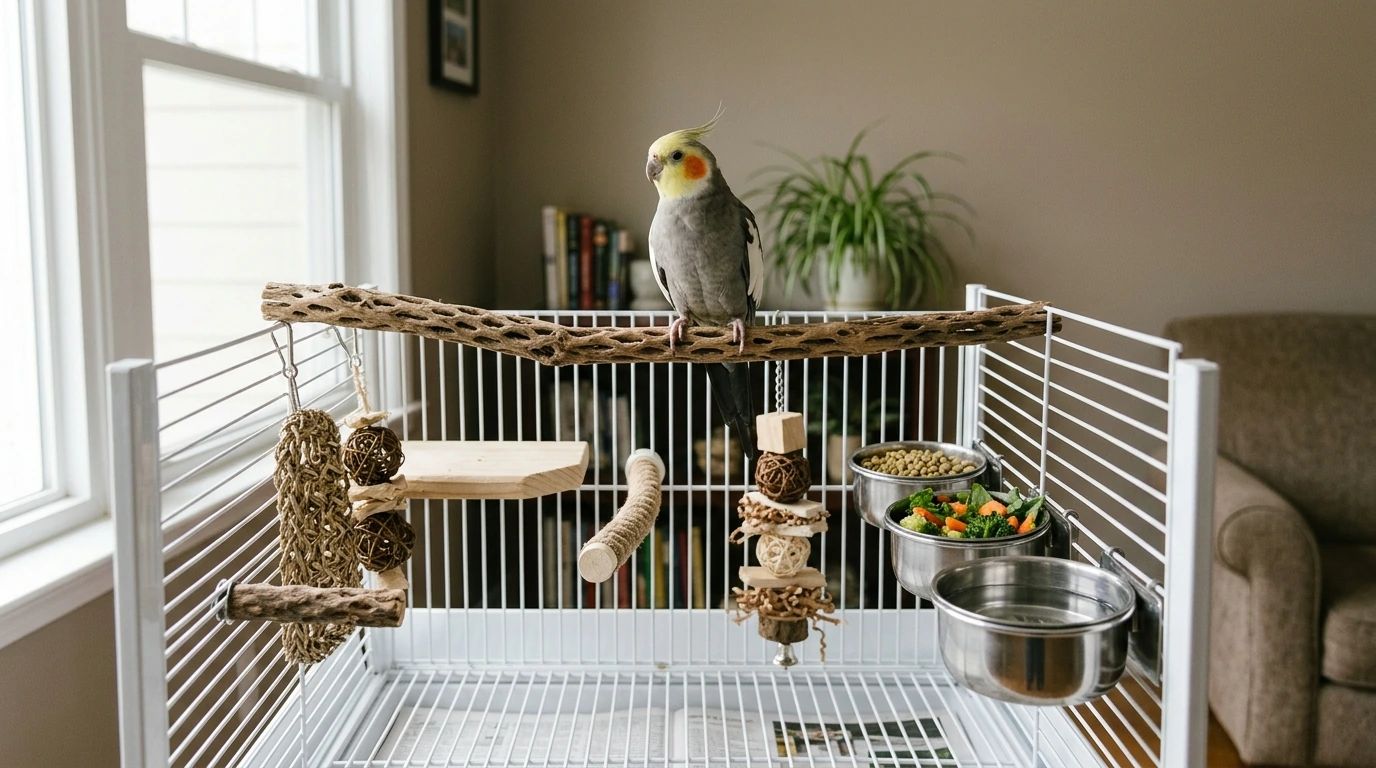
- Choose the largest safe cage possible: Prioritize horizontal room for climbing and movement.
- Use varied perches: Different diameters and textures help reduce pressure points on feet (use safe, bird-appropriate natural wood when suitable).
- Place bowls thoughtfully: Keep food and water away from perches that encourage droppings to fall into bowls.
- Protect sleep: Provide a quiet, dark environment and a consistent schedule; avoid late-night noise and bright screens near the cage.
- Maintain comfort: Aim for stable temperatures, good ventilation, and minimal drafts.
A calm home routine supports calm birds—and calmer humans, too. If you’re building a quiet evening wind-down routine, a comfortable recovery setup like the Muscle Relaxation Toolkit for Total Tension Relief – 3-in-1 Bundle for Deep Muscle Relaxation can help caregivers stay consistent with training and handling when days get hectic.
Enrichment and Training: Preventing Boredom-Driven Problems
Birds are intelligent, active animals built to forage, explore, and socialize. When those needs aren’t met, you may see screaming, feather damaging behaviors, or persistent nippiness—often signs of under-stimulation or confusion, not “spite.”
A Safer Home: Common Household Dangers to Remove
For plant safety checks, the ASPCA’s Toxic and Non-Toxic Plants database is a practical reference when you’re unsure.
Hygiene and Disease Prevention: Clean Smart, Not Just Often
For general care standards and husbandry reminders, see AVMA: Caring for Pet Birds and the Merck Veterinary Manual (Pet Birds).
Health Watch: When to Call an Avian Veterinarian
A Practical Companion Guide for New and Experienced Bird Owners
If you’re setting up a consistent home “care station” with notes, timers, and supplies, choose stable furniture that keeps items organized and out of reach—some households prefer a dedicated seating area nearby, such as the Luxury High-Back Recliner Sofa Set, to make supervised out-of-cage time easier to maintain.
FAQ
How many hours of sleep do pet birds need?
Many pet birds do best with about 10–12 hours of uninterrupted dark and quiet, though needs vary by species and age. Overtired birds may become extra nippy, screamier than usual, or less interested in training and play.
What are the safest everyday foods to offer along with a balanced staple diet?
Common bird-safe options include leafy greens, broccoli, bell pepper, carrots, squash, green beans, and small portions of fruit like apple (no seeds), berries, or grapes. Wash produce well, keep portions appropriate, and avoid known toxins like avocado, chocolate, caffeine, alcohol, and spoiled or moldy foods.
How can boredom be reduced without buying lots of new toys?
Rotate the toys you already have, change their placement, and add simple DIY foraging using safe paper/cardboard and hidden treats. Short positive-reinforcement training sessions and offering multiple textures to shred or chew can also keep daily life engaging.















Leave a comment