Vintage 3-Speed Bluetooth Record Player: RCA, USB, AUX
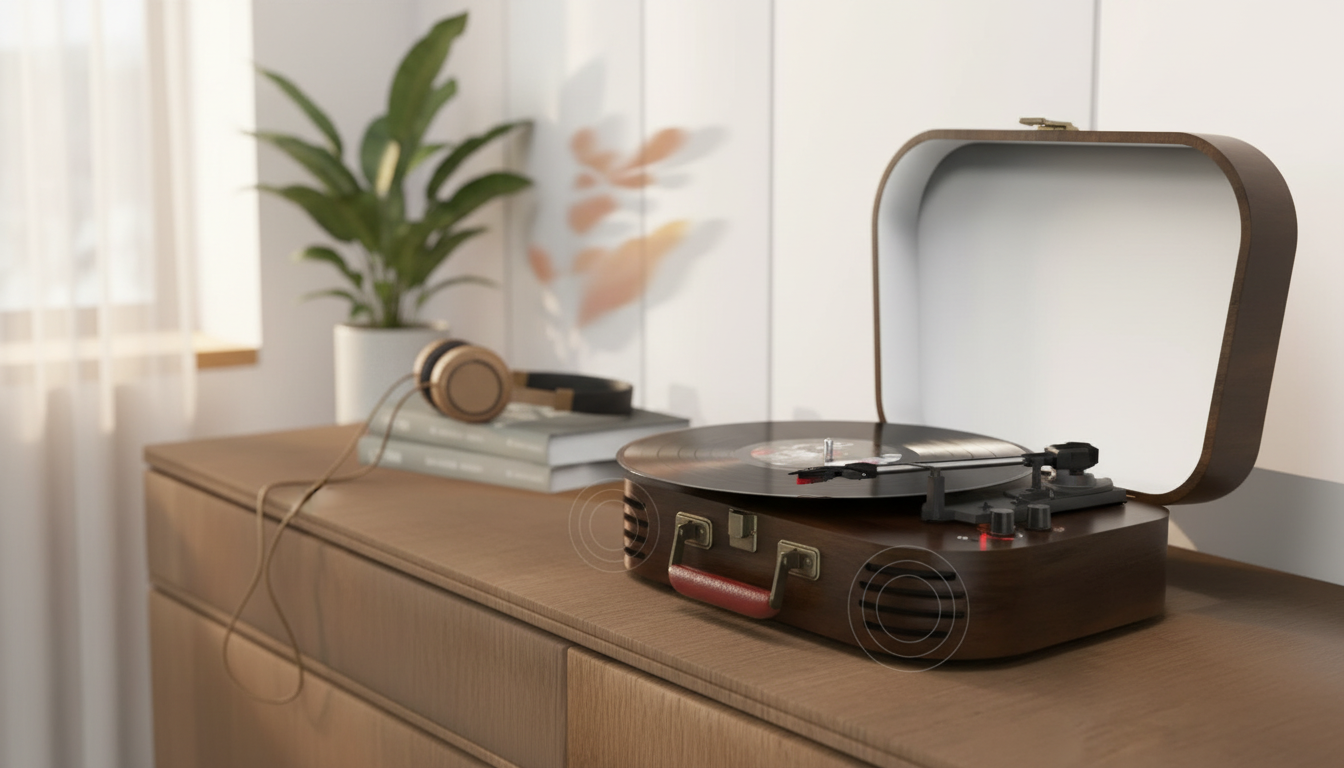
Vintage 3-Speed Record Player with Bluetooth, RCA, USB, AUX-in, and Built-in Speakers
A vintage-style turntable can be one of the simplest ways to enjoy vinyl without building a full hi-fi stack. With 3-speed playback, built-in speakers for a quick start, and modern inputs/outputs for everyday devices, this kind of record player fits apartments, dorm rooms, and relaxed listening spaces—while still leaving the door open to upgrade to external speakers later.
What a 3-speed record player makes possible
A 3-speed record player gives you compatibility across the most common record formats by switching between 33⅓, 45, and 78 RPM. That flexibility is especially useful if your collection includes a mix of new pressings, older singles, and thrift-store finds where the label is scuffed or missing—selecting the correct speed brings the pitch and timing back to normal.
If you plan to play 78 RPM records, take extra care: many 78s are shellac (more brittle than vinyl) and often sound best with a stylus designed for 78 playback. Also inspect each record’s condition, because worn grooves can accelerate stylus wear.
Speed guide for common record types
| Speed | Typical record type | Common use case | Quick note |
|---|---|---|---|
| 33⅓ RPM | LP (12-inch) | Full albums | Most modern vinyl uses this speed |
| 45 RPM | Single/EP (7-inch) | One to a few tracks per side | Often requires an adapter depending on spindle size |
| 78 RPM | Vintage shellac (10-inch/12-inch) | Pre-1950s recordings | Handle gently; confirm stylus suitability |
Wireless playback: Bluetooth for everyday listening
Bluetooth makes this style of record player feel at home in daily life: stream playlists, podcasts, or background music from a phone, tablet, or laptop through the built-in speakers, then switch back to vinyl when you’re ready to drop the needle. It’s a practical option for small rooms where a single all-in-one unit is easier than juggling a turntable, amplifier, and separate speakers.
For smoother Bluetooth performance, keep your source device nearby with a clear path, and avoid placing the player right next to interference-heavy appliances (such as microwaves) or crowded network gear. In very busy radio environments, wired connections (AUX or RCA) can be more consistent.
Wired connections that keep it flexible (RCA, AUX-in, USB)
Even if you start with built-in speakers, wired connectivity is what helps an entry-friendly record player grow with your setup.
- RCA output lets you connect to powered speakers, a stereo receiver, or an external amplifier. This is the most common next step when you want more volume, better bass, and a wider soundstage.
- AUX-in (3.5 mm) is a simple fallback for phones, MP3 players, and computers when you’d rather avoid Bluetooth pairing or interference.
- USB can be used for device connectivity and, on many models, is often associated with digitizing playback. Since USB behavior varies by product, it’s smart to confirm what the specific unit supports before purchase.
Having both wireless and wired options makes it easier to match the player to the room: quick, casual listening today—and a more deliberate speaker layout when you’re ready.
Built-in speakers: when they’re enough (and when to upgrade)
Built-in speakers are all about convenience: fewer cables, less clutter, and faster setup. They’re well-suited to background listening in a bedroom, dorm, or home office, and they make it easy to move the player from one spot to another without reworking a system.
When you want more—deeper bass, clearer separation between instruments, and higher volume without strain—external powered speakers connected via RCA are the usual upgrade path. For best results, place external speakers on a separate surface from the turntable, and keep the record player on a sturdy platform to help reduce vibration feedback.
Setup tips for clean sound and stable playback
For deeper record-care guidance, the Library of Congress guide to caring for records is a reliable reference, and the RIAA’s vinyl basics offers a helpful overview of how records are made and played.
Who this style suits best
Featured option
If you’re looking for a straightforward, vintage-inspired player that still fits modern habits, the Vintage 3-Speed Record Player with Bluetooth, RCA, USB, AUX-in, and Built-in Speakers combines easy setup with multiple ways to listen. Put on vinyl at 33⅓, 45, or 78 RPM, stream over Bluetooth between sides, or connect external speakers through RCA when you’re ready for a bigger sound.
At-a-glance details
| Item | What it offers |
|---|---|
| Model | Vintage 3-Speed Record Player with Bluetooth, RCA, USB, AUX-in, and Built-in Speakers |
| Price | $53.51 |
| Availability | In stock |
| Product page | View product |
More in-stock picks for a vintage-leaning space
- Vintage Resin Vase for shelving or console-table styling near your listening area.
- Luxury High-Back Recliner Sofa Set if you’re building a dedicated, comfort-first music room.
FAQ
Can external speakers be used instead of the built-in speakers?
Yes. Use the RCA output to connect the record player to powered speakers or a receiver/amplifier, then place the speakers a bit away from the turntable to help reduce vibration feedback.
Will it play 78 RPM records safely?
It can play records at 78 RPM, but many 78s are shellac and may require a stylus suited to that format. Check both record condition and stylus compatibility before regular 78 playback.
How should records be cleaned for better sound?
Use a carbon fiber brush before each play to remove surface dust, and do occasional deeper cleaning with a record-safe solution. Store records vertically in sleeves to reduce dust buildup and static over time.












Leave a comment