Tall Narrow Bookshelf Guide: Measure, Style & Stabilize
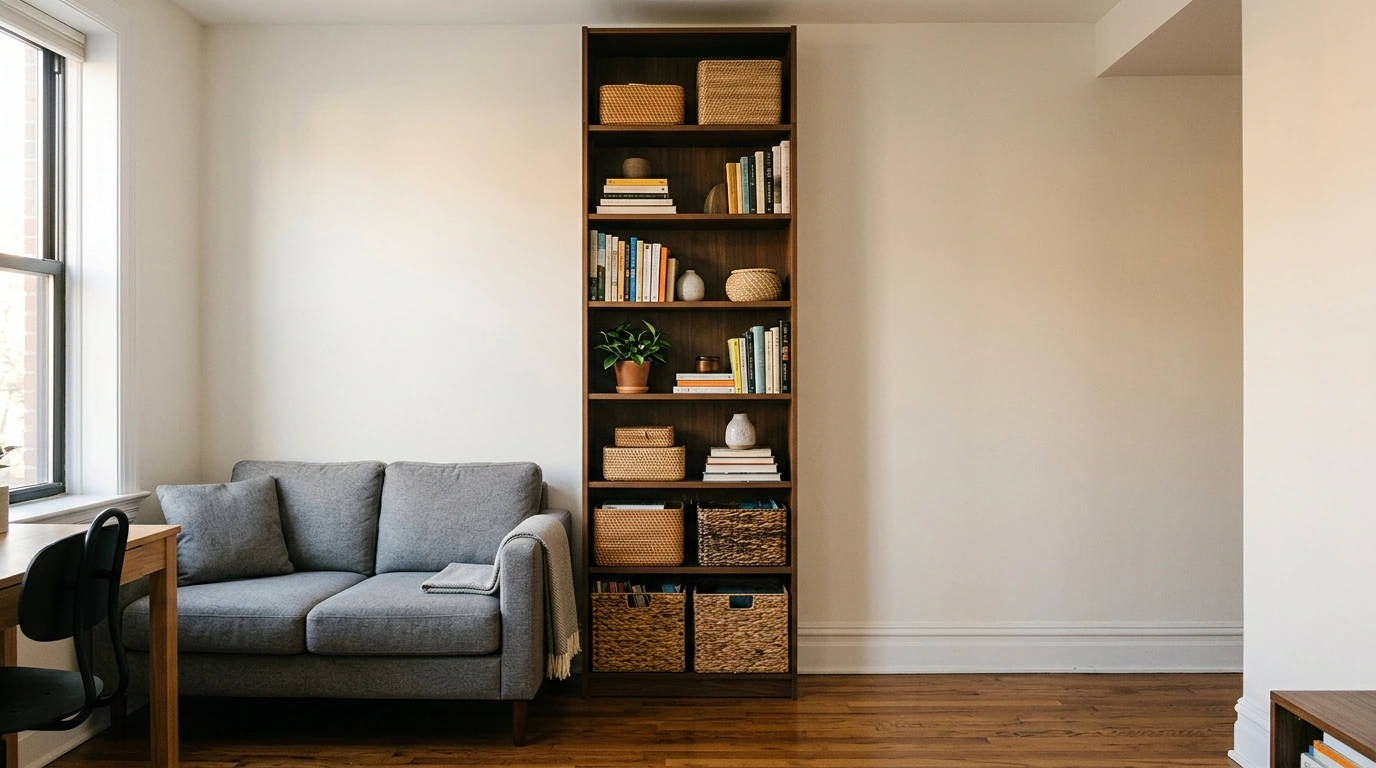
71.5″ Tall Narrow Bookshelf: Space-Smart Storage for Small Rooms
A tall, narrow bookshelf is a practical way to add storage without taking over the room. By building upward instead of outward, it helps create a clear home for books, baskets, and decor while keeping walkways open. Below is a simple guide to where a slim bookcase fits best, what to measure before buying, how to style it so it looks intentional, and how to keep it stable for everyday life—plus a quick look at a 71.5″ option designed for tight spaces.
Why a Tall, Narrow Bookshelf Works in Tight Layouts
Small rooms rarely lack wall space—they lack usable floor space. A narrow bookcase takes advantage of vertical real estate, giving you multiple shelves of storage with a smaller footprint than a wide console or cabinet.
- Uses vertical wall space to increase storage when floor space is limited
- Fits in “in-between” zones: beside desks, next to sofas, between windows, or in hallway nooks
- Creates a dedicated home for books, baskets, plants, and display items without a wide footprint
- Helps visually organize a room by grouping small items onto shelves instead of scattered surfaces
Best Places to Use One at Home
The biggest advantage of a narrow bookshelf is flexibility. It can “solve” those frustrating gaps where furniture usually feels too bulky.
- Home office: Store reference books, binders, and supplies in a slim footprint beside a desk.
- Living room: Style with a mix of books and decor; keep frequently used items at mid-shelf height.
- Bedroom: Use as a compact alternative to a bulky dresser for folded items in bins and small accessories.
- Entryway or hallway: Turn a narrow wall into functional storage; place heavier items lower for stability.
- Small apartment: Define a corner “library” without sacrificing walking paths.
If you’re furnishing a lounge area, a tall, slim shelf can balance the visual weight of larger seating (like a statement sofa set) without adding more wide furniture. For a coordinated look, consider pairing storage with comfortable seating such as the Luxury High-Back Recliner Sofa Set in larger living spaces.
Measurements to Check Before Buying
A narrow bookshelf is easy to underestimate—especially height. Measure first so setup goes smoothly and the shelf doesn’t interfere with doors, trim, or traffic paths.
- Ceiling height and clearance: Allow a little space above the top for easier placement.
- Baseboard and trim: Confirm the back can sit flush or plan for a small gap.
- Walking path: Ensure doors, drawers, and traffic lanes won’t be blocked.
- Shelf capacity needs: Plan for the heaviest items (textbooks, cookbooks, photo albums) to live on lower shelves.
- Wall material: Identify studs or suitable anchors if tip-over prevention is needed.
Quick Fit Checklist (Measure Before Ordering)
| What to measure | Why it matters | Practical tip |
|---|---|---|
| Available width | Prevents crowding and blocked pathways | Leave a little side clearance for cleaning and cords |
| Available depth | Keeps shelves from protruding into walkways | Check door swing and drawer clearance nearby |
| Ceiling height | Ensures the unit can stand upright during setup | Confirm the unit can be tilted upright in the room |
| Stud/anchor points | Improves stability and safety | Locate studs; use appropriate anchors for drywall if needed |
| Heaviest item size | Avoids overloading and sagging | Plan heavy items for the bottom shelves |
Spotlight: 71.5″ Tall Narrow Bookshelf
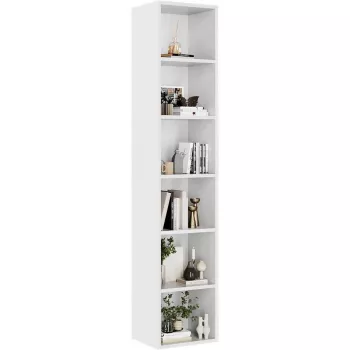
If your goal is maximum storage with minimal floor space, a tall “book tower” shape is a smart move. The 71.5″ Tall Narrow Bookshelf is designed to make use of height for small rooms, narrow walls, and awkward corners where wider furniture won’t fit.
- A 71.5″ height provides vertical storage that suits small rooms and narrow walls
- Works well as a slim book tower, a decor display, or mixed storage with baskets and bins
- Pairs easily with minimalist, modern, or transitional interiors when styled with consistent materials and colors
- Price point makes it a practical upgrade for renters, dorms, and starter homes where space is limited
- Consider anchoring for added stability, especially in homes with children or pets
To make it look pulled-together quickly, add one standout accent on an upper shelf—like the Vintage Resin Vase—and keep the rest of the styling simple and repeatable (books, a small plant, and a matching basket set).
Styling Ideas That Look Intentional (Not Cluttered)
Narrow shelves can look busy fast, especially if every inch is filled. The goal is to create small “moments” on each shelf rather than a wall of random items.
Stability and Everyday Safety
For tip-over awareness and prevention guidance, review the CPSC Anchor It! campaign. If you want more background on how stability is evaluated, the ASTM F2057 furniture stability standard overview provides helpful context.
Care and Maintenance for a Long-Lasting Finish
FAQ
How do you keep a tall narrow bookshelf from tipping?
Load heavier items on the lower shelves, keep the top shelf lighter, and make sure the base sits level. For added safety, use appropriate wall anchoring for your wall type (studs or rated drywall anchors).
What should go on the top shelf of a narrow bookcase?
Choose lightweight decor such as a small plant, framed photo, or a compact vase. Avoid heavy stacks of books or bulky items that raise the center of gravity.
Can a tall narrow bookshelf work in a hallway?
Yes—so long as the depth doesn’t pinch the walking path or interfere with doors. Keep frequently used items at easy reach and use baskets on lower shelves for tidy, quick-drop storage.















Leave a comment