Printable Tennis Checklist for Beginners: 7-Day Start Plan
Tennis Journey Checklist: A Step-by-Step Beginner Plan You Can Print and Follow
Starting tennis is easier when the first decisions are already mapped out—what to learn first, what to buy (and what to skip), how to find a place to play, and how to track progress without overthinking it. This beginner-friendly tennis journey checklist is designed as a simple, printable roadmap that turns “I want to try tennis” into a clear sequence of small wins. For more guidance, see Get Kids to Play Tennis | Tennis Parents.
What a Beginner-Friendly Tennis Checklist Solves
- Turns a vague goal into a clear order of actions: gear, courts, basics, practice, and first matches
- Prevents common early mistakes (buying too much gear, practicing the wrong things, or jumping into full matches too soon)
- Creates momentum with quick, check-off steps and mini milestones
- Keeps tennis fun by balancing learning, movement, and play from week one
Quick Start: Your First 7 Days (No Perfection Required)
- Day 1: Pick a nearby court, confirm court rules/booking, and choose a realistic schedule (2 short sessions beats 1 long session).
- Day 2: Get a beginner-appropriate racket (comfortable grip size; avoid ultra-heavy frames) and a can of tennis balls.
- Day 3: Learn the ready position, basic grip basics, and a simple rally goal (10 controlled hits, not 10 winners).
- Day 4: Do a 20–30 minute court session: warm-up, short-court rally, then a few serves with no pressure.
- Day 5: Add a wall session or partner mini-rally session focused on consistency.
- Day 6: Play a “mini match” to 7 points using simplified rules (serve in, rally, keep score loosely).
- Day 7: Review what felt hard (timing, footwork, serve toss) and set one focus for next week.
Step-by-Step Tennis Starter Path (Beginner Progression)
- Step 1: Choose a learning style—solo (wall/drills), partner rallies, clinics, or private lessons; mixing two works well.
- Step 2: Learn the court basics: lines, singles vs doubles, where to stand for serving and returning. (The International Tennis Federation rules are a helpful reference.)
- Step 3: Build the three pillars first—consistent contact, simple footwork, and a repeatable routine.
- Step 4: Add scoring and rules gradually; start with tie-break style points before full sets.
- Step 5: Introduce variety only after consistency: direction, height, and pace (in that order).
- Step 6: Create a weekly rhythm: 1 technique session, 1 rally/play session, 1 optional fitness/mobility session.
- Step 7: Track small metrics: rally count, second-serve in percentage, and unforced errors per short game.
Gear Checklist: What to Get Now vs Later
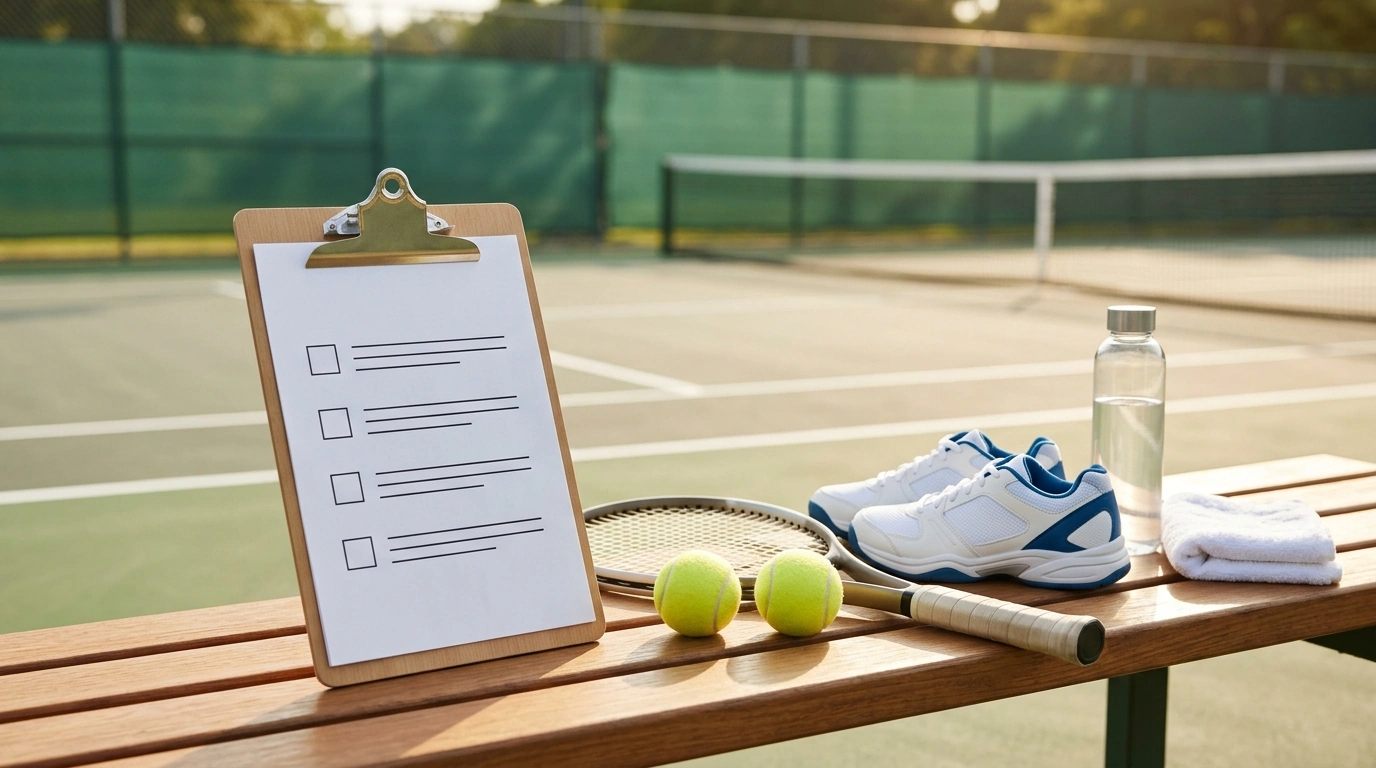
- Get now: racket, tennis balls, supportive court shoes, water bottle, and a small towel
- Nice soon: overgrip, vibration dampener (optional), hat/sunscreen, and a simple racket bag
- Later: extra rackets, advanced strings, training aids—only after 4–8 weeks of consistent play
- Shoes matter more than most beginners expect; prioritize stability and traction made for courts.
- Comfort check: grip that doesn’t force squeezing, shoes that don’t pinch, and clothing that allows free rotation.
Beginner Tennis Setup: Essentials vs Optional Add-Ons
| Category | Essentials (Week 1) | Helpful Later (After Consistency) |
|---|---|---|
| Racket | Comfortable, manageable weight; correct grip size | String upgrades; spare racket |
| Balls | One can of pressurized tennis balls | Practice balls for longer sessions |
| Footwear | Court shoes with lateral support | Second pair for rotation |
| Grip/Comfort | None required if comfortable | Overgrip; blister tape |
| Training | None required | Targets, cones, or a simple practice plan |
Court, Lessons, and Playing Partners: Finding the Right Starting Environment
- Locate courts: public parks, schools, clubs, and community centers; confirm if reservations are required.
- If available, beginner clinics often deliver faster improvement than only casual hitting. The USTA Tennis 101 guide is a solid starting point for basics and expectations.
- Look for partners with similar goals: rally-focused sessions reduce frustration and injuries.
- Use structured session themes: “cross-court rally day,” “serve and return day,” and “footwork day.”
Warm-Up, Safety, and Recovery Basics for New Players
- Warm up 5–10 minutes: brisk walk/jog, arm circles, hip openers, and light shadow swings.
- Start with short-court rallies to groove timing before full-court hitting.
- Common early soreness areas: forearm, shoulder, calves, and lower back—reduce volume before changing technique.
- Simple recovery routine: hydrate, light stretching, and a rest day after higher-intensity sessions.
- Pain rule: sharp or escalating pain is a stop signal; consider coaching feedback and medical guidance if persistent.
If tight muscles start limiting your swing, a recovery add-on can help support your routine on off-days: Muscle Relaxation Toolkit for Total Tension Relief – 3-in-1 Bundle for Deep Muscle Relaxation. For further reading, see TENNIS COACHING GUIDE Teaching Tennis Skills.
How to Use a Printable Tennis Journey Checklist (So It Actually Gets Used)
Printable Instant Download: Tennis Journey Checklist
Tennis Journey Checklist – printable instant download
First Match Confidence: Simple Formats That Feel Like Real Tennis
FAQ
What should a beginner learn first in tennis?
Start with the ready position, a simple grip you can repeat, and clean contact on short-court rallies. Once you can keep the ball in play consistently, add full-court hitting, serving routines, and controlled direction.
Do beginners need lessons to start playing tennis?
Lessons help but aren’t required. A beginner clinic or even a few sessions with a coach can speed up safe technique, while a structured checklist can guide solo practice and partner rallies.
What equipment is necessary to start tennis?
A comfortable racket, tennis balls, and court shoes are the core essentials. Add extras like overgrips or training aids after a few weeks, once you know what actually improves comfort and consistency.















Leave a comment