Mobile Paint Drying Rack for Auto Parts: Hooks & Wheels
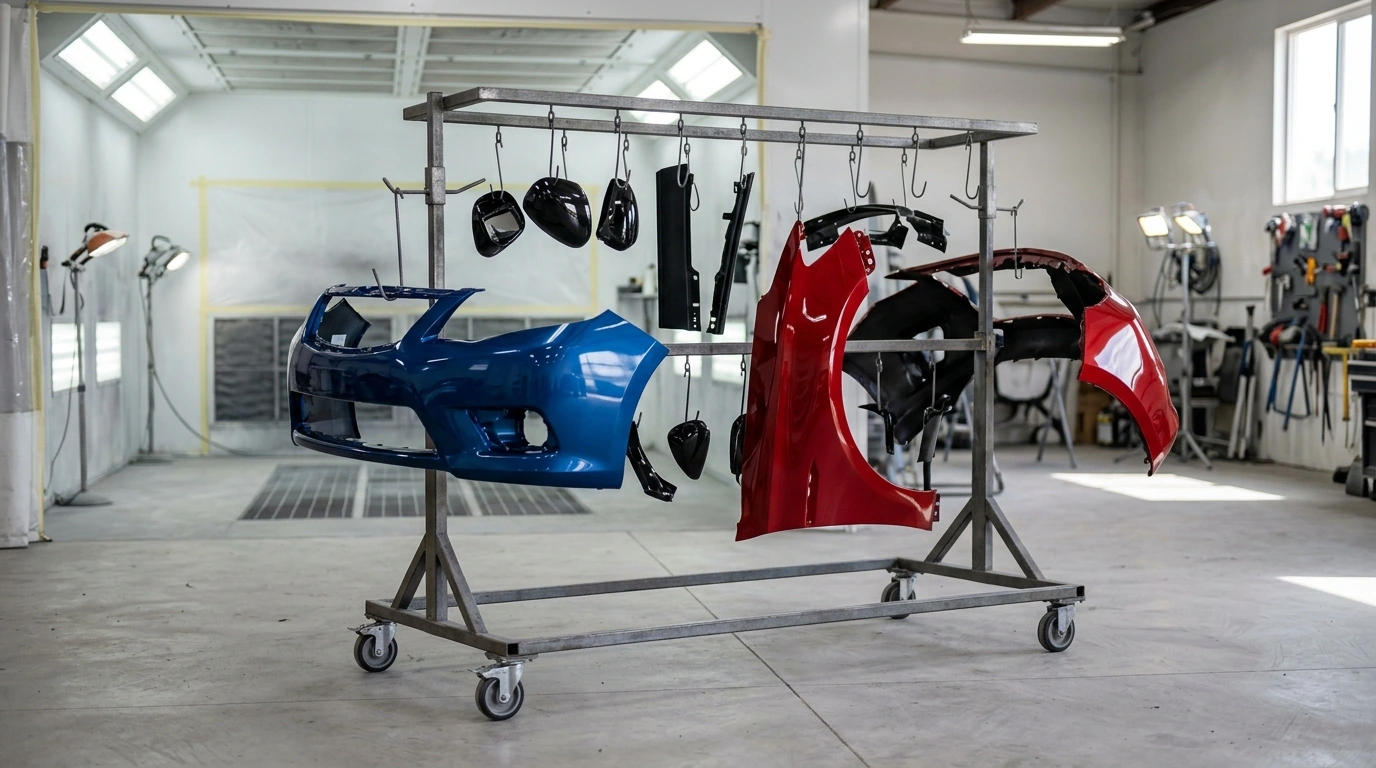
A Mobile Drying Rack Built for Fresh Paint and Busy Shops
A dedicated drying rack keeps freshly painted panels off the floor, reduces contact marks, and helps organize parts between coats. This heavy-duty, wheeled rack is designed to hold multiple automotive pieces at once while staying easy to reposition around the workspace. Whether you’re juggling prime, base, and clear in a tight bay—or simply trying to keep finished pieces safe while they cure—a purpose-built rack turns “where do I put this?” into a repeatable, clean process.
What this rack is designed to handle
Automotive refinishing rarely means “one flat panel at a time.” A good rack needs to handle varied shapes, uneven weight distribution, and delicate edges without turning into a juggling act.
- Supports common automotive parts such as bumpers, fenders, spoilers, mirrors, trim, and smaller panels
- Keeps painted surfaces separated to reduce scuffs, fingerprints, and accidental contact during cure time
- Improves workflow by staging parts in one place for priming, basecoat, clearcoat, and final cure
- Useful beyond paint: drying wet-sanded parts, storing prepped pieces, organizing masking and detailing steps
For shops that spray frequently, organized staging also supports safer habits—keeping coated parts out of walkways and away from ignition sources and vapors. For reference, review guidance on spray finishing safety from OSHA and hazard information from NIOSH.
Key build features that matter in day-to-day use
The difference between “a place to hang parts” and a rack you’ll use every day comes down to stability, adjustability, and how smoothly it moves when loaded.
- Heavy-duty frame intended for frequent loading/unloading in a garage or shop setting
- Adjustable hooks help accommodate different part shapes and mounting points
- Swiveling wheels improve maneuverability in tight bays and around other equipment
- Open rack layout promotes airflow around parts to support even drying and curing
Open airflow matters more than it seems. When pieces aren’t crowded together, you reduce the chance of soft clear picking up contact marks and you allow solvent vapors to dissipate more evenly around the part.
Setup and positioning for safer drying
Where the rack lives during a job can prevent rework later. A few placement habits reduce bumps, dust contamination, and uneven drying patterns.
- Place the rack on a level surface to minimize shifting while loading parts
- Keep a clear buffer zone around the rack to avoid bumping freshly painted edges
- Position away from direct overspray paths, grinding dust, and high-traffic walkways
- If working in a ventilated area, orient parts so airflow moves past (not directly blasting) the wet surface
If you’re moving parts from a spray area to a cure zone, make the rack the “transfer point.” That reduces hand-carry time and helps prevent accidental touches on edges that may look dry but are still soft underneath.
Using adjustable hooks for different parts
Hooks are the work interface of the rack. Good hook placement protects the finish by limiting pressure points and keeping contact away from freshly refinished lips.
- Test-fit a part on the hooks before final paint to confirm stable balance and contact points
- Use two points of support when possible to reduce rotation and edge-to-hook pressure
- Space parts so they do not touch when rolling the rack or when air moves through the area
- Protect sensitive edges by ensuring hooks contact sturdy mounting locations rather than freshly refinished lips
A practical approach is to “plan the hang” during prep: identify robust mounting holes, brackets, or inner flanges that won’t be seen once installed. Then mirror that placement after paint so the part settles the same way every time.
Mobility tips: swiveling wheels in real workflows
At-a-glance: features and practical benefits
| Feature | Why it helps | Where it shows up most |
|---|---|---|
| Heavy-duty frame | Handles frequent use and repeated loading without feeling flimsy | Busy DIY garages and small body shops |
| Adjustable hooks | Fits more part shapes and reduces awkward balancing | Bumpers, fenders, trim pieces |
| Swiveling wheels | Easier turns and positioning in tight spaces | Moving between prep, spray area, and cure zone |
| Open airflow design | Supports more even drying by letting air circulate around panels | Between coats and final cure staging |
Care and longevity
Product options
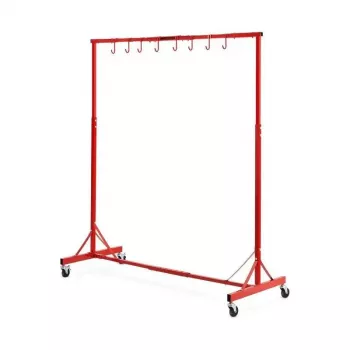
If you want a dedicated rack for staging and drying multiple painted parts with flexible hanging positions, the Heavy-Duty Automotive Painting Drying Rack with Adjustable Hooks & Swiveling Wheels is built to keep parts separated, mobile, and organized.
For shops that also maintain a customer waiting corner or a small break area, the Luxury High-Back Recliner Sofa Set can help create a more comfortable space while vehicles cure or parts dry.
If you keep a front counter or office area on-site, the Vintage Resin Vase is a simple way to tidy up the space and make the shop feel more finished without adding clutter to the work bay.
View the drying rack details and current price to confirm fit for your workflow and available space.
FAQ
How many parts can be dried at once on a rack like this?
Capacity depends on the size and shape of each part and how much clearance you leave for airflow. For best results, prioritize stable hanging and keep pieces from touching, even if that means drying fewer parts per load.
Do swiveling wheels make it less stable when loaded?
Swivel casters mainly improve maneuverability; stability comes from a level floor, balanced loading, and moving slowly. When parked, aligning the wheels and using chocks on slightly sloped surfaces can help prevent drift.
How should hooks be positioned to avoid marks on fresh paint?
Set hooks on sturdy mounting points and test-fit before painting to confirm balance and minimal pressure. Keep hooks clean of overspray or residue so nothing transfers or imprints into soft coatings during cure.













Leave a comment