How to Style Vests: Easy Outfit Formulas for Every Day

Vest Styling Made Simple: Modern, Wearable Outfit Formulas for Every Day
A vest can sharpen an outfit fast—without feeling overdressed. The key is choosing the right proportion, pairing it with simple base layers, and repeating a few reliable outfit formulas for work, weekends, and evenings. This guide breaks vests down into easy combinations, fit checks, and finishing details so outfits look intentional and comfortable. For more guidance, see What Should I Wear? The Ultimate Guide to Workplace Dress Codes.
Why vests work (and when they don’t)
Vests earn their keep because they add structure exactly where many outfits need it: the torso. That clean vertical line reads polished even when the rest is made of basics like denim, tees, and flats. They also function as a lightweight “third piece,” making layered outfits feel finished while still being practical for temperature swings.
They’re especially helpful when an outfit needs definition—think wide-leg pants, relaxed denim, or a simple tee that could otherwise look a little too casual. Where vests get tricky is almost always fit and bulk: a vest that’s too tight will pull at the buttons, a vest that’s too long can fight the rise of your pants, and layering over bulky sleeves can create bunching around the armholes.
Vest types and the easiest way to style each
Tailored suit vest
The most versatile “polished” option. Keep it modern by pairing it with crisp basics: a button-down, fitted tee, or a thin turtleneck. It looks best with trousers or straight-leg denim—clean lines that match the vest’s structure.
Sweater vest
This is the soft, easy layer that adds texture without trying too hard. Wear it over a tee or a collared shirt, then balance the volume with straight or wide-leg bottoms. If the knit is chunky, keep the rest streamlined.
Puffer vest
Great for casual errands, travel days, and in-between weather. Keep the rest of the outfit sleek (long-sleeve top + slim or straight jeans) so the puffer reads intentional rather than bulky.
Denim or utility vest
Treat it like a light jacket. The simplest way to avoid a costume vibe is to build a monochrome base layer (black, white, cream, navy) and let the vest be the texture.
Fit and proportion: quick checks that make outfits look intentional
- Button test: It should close without pulling or gaping. If it strains, wear it open or size up so the front lies flat.
- Length check: Cropped vests flatter high-rise bottoms. Longer vests pair best with mid-rise trousers or skirts for a clean column.
- Neckline check: V-necks elongate the upper body; higher necklines read preppy and pair well with collared shirts.
- Balance rule: If the vest is structured, keep the base layer smooth. If the vest is chunky/knit, keep bottoms cleaner and less bulky.
Everyday outfit formulas that always work
When outfits feel unpredictable, formulas make getting dressed faster. Start with a neutral vest (black, ivory, or navy) and repeat it with the same bottoms for multiple looks—changing only the base layer and shoes.
- Formula 1: Fitted tee + tailored vest + straight jeans + loafers or sneakers. Add a belt to define the waistline.
- Formula 2: Ribbed tank + vest worn open + wide-leg trousers + minimal sandals. Keep jewelry delicate for a modern feel.
- Formula 3: Long-sleeve crewneck + sweater vest + pleated skirt + boots. Add tights for cooler days.
- Formula 4: Crisp button-down + vest + relaxed denim + ballet flats. Half-tuck the shirt if extra volume builds at the waist.
Outfit formulas by occasion
| Occasion | Base layer | Vest choice | Bottoms | Shoes | Finishing touch |
|---|---|---|---|---|---|
| Casual errands | Fitted tee | Puffer or utility vest | Straight jeans | Sneakers | Cap + crossbody bag |
| Office (business casual) | Button-down or thin knit | Tailored vest | Trousers | Loafers | Structured tote |
| Creative workplace | Tank + light cardigan | Tailored vest (open) | Wide-leg pants | Mary Janes | Bold earrings |
| Weekend brunch | Long-sleeve tee | Sweater vest | Midi skirt | Ankle boots | Belt + sunglasses |
| Evening dinner | Sleek top | Tailored vest (closed) | Matching trousers or satin skirt | Heels | Clutch + red lip |
Workwear upgrades: polished without feeling stiff
For office outfits, a vest can do the job of a blazer without the extra heat or bulk. A few tweaks keep it professional while still comfortable:
- Go monochrome: A vest and trousers in the same tone looks sharp and elongating. Break it up with a lighter shirt.
- Choose a clean base layer: Thin knits and smooth button-downs prevent bunching around armholes.
- Swap the blazer strategically: In warmer offices, a vest + tailored pants + belt reads complete without another layer.
- Keep accessories minimal: One structured bag plus one refined shoe (loafer, slingback) is usually enough.
Layering that looks modern (not bulky)
Finishing details that pull a vest outfit together
When outfits feel “off”: fast fixes
Shop tools to make vest styling easier
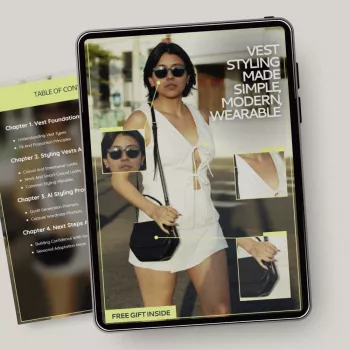
- Vest Styling Made Simple, Modern, Wearable | Easy Guide on how to style vests | Everyday Outfits, Workwear, AI Styling Prompts (Digital guide)
- Muscle Relaxation Toolkit for Total Tension Relief – 3-in-1 Bundle for Deep Muscle Relaxation (At-home recovery for long days on your feet)
Style inspiration sources
For ongoing outfit and proportion ideas, browse seasonal styling coverage from Vogue and practical menswear-to-everyone styling tips at GQ Style.
FAQ
Can a vest be worn casually without looking overdressed?
Yes—pair a structured vest with a plain tee and jeans, or wear a sweater vest over a tee. Keep it relaxed with sneakers or flats and minimal accessories.
What should be worn under a vest for work?
Choose smooth, low-bulk layers like a button-down, thin knit, fitted tee, or turtleneck. Keep sleeves and collars tidy so the vest sits cleanly at the armholes.
How should a vest fit if it buttons?
It should close without pulling at the buttons or gaping at the chest. If it strains, wear it open or size up so the front lies flat.










Leave a comment