A Practical Closet Reset for Everyday Organization

A closet reset doesn’t have to mean taking everything apart in one afternoon. A little structure can help you see what you own, decide what deserves space, and make everyday clothes easier to reach. The goal is a closet that supports your routine, not one that looks perfect for a single day.
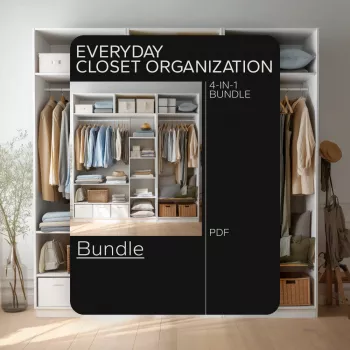
Our Everyday Closet Organization Bundle brings together guides, checklists, and eBooks to support the process. Whether you’re tackling a crowded closet or refreshing one shelf, you can use a straightforward plan to make progress without turning the project into a bigger job than it needs to be.
Start With a Clear Closet Goal
Before moving hangers or emptying drawers, decide what you want the reset to accomplish. You might want to find work clothes faster, make room for the current season, or stop digging through a stack of sweaters. A specific goal makes it easier to decide where to focus your time.
Next, choose a manageable work session. If you have a free afternoon, you may be able to address the whole closet. If your schedule is tight, start with one category, such as shirts, shoes, or accessories. Set up enough clear space to sort that category, and leave yourself time to put the keepers away before you finish.
Our Everyday Closet Organization Bundle offers guides, checklists, and eBooks you can use to plan your reset. Keep your goal nearby as you work: it can help you decide whether a change makes your closet more useful or simply moves clutter around.
Sort Before You Rearrange
Bring similar items together so you can assess them as a group. Seeing all your jeans or belts in one place makes it easier to notice duplicates, gaps, and pieces that no longer fit your routine. You don’t need to pull out every category at once; work through as much as your available time and space allow.
For each item, consider whether it fits, whether it’s in wearable condition, and how often you actually use it. Separate your decisions into four groups. A checklist can help you record the next step for each group so that donation bags and repair projects don’t drift back into the closet.
| Group | What to do |
|---|---|
| Keep | Return useful, wearable items to the closet. |
| Donate | Set aside suitable items for a local donation option. |
| Repair | Gather items that need mending and decide when to address them. |
| Undecided | Revisit items after the rest of the closet is organized. |
Give the undecided group a boundary, such as one bag or a single shelf, and choose a date to review it. For donations, confirm what your local organization accepts and prepare items accordingly. The U.S. Environmental Protection Agency’s textile information provides useful context on clothing and other textiles in the waste stream.
Give Everyday Items Accessible Places
Once you know what you’re keeping, put the pieces you reach for most often where they’re easiest to see and retrieve. That might mean hanging frequently worn shirts at eye level, keeping everyday pants on a reachable shelf, or placing regularly used accessories in a drawer near your clothes.
Organize by a method that matches how you get dressed. Grouping by garment type works well if you choose an outfit one piece at a time. If you regularly wear certain items together, keeping them close may save you a few steps. Leave enough room between hanging garments and avoid overfilling drawers so you can put things away without a struggle.
Use the space you already have before shopping for organizers. Hanging space can serve garments you prefer to keep unfolded, while shelves and drawers can hold neatly folded pieces. Higher or less accessible areas may be better for items you use less frequently.
If you still need a container or divider after sorting, measure the shelf or drawer and the items it needs to hold. Our team recommends making that decision after the reset, when you can see the actual gap. If you have a separate dressing area, our Vintage Resin Vase is an optional decorative addition for a clear surface outside the closet.
Keep the Closet Working for You
A useful closet is easier to maintain when every category has a consistent home. Return clothes and accessories to those places after use, and adjust the layout if an item repeatedly ends up somewhere else. That can be a sign that its assigned spot isn’t convenient.
Schedule occasional checks rather than waiting for another major reset. Review repair items, take donation bags to your chosen location, and swap seasonal pieces as your needs change. You can return to the bundle’s resources whenever you want a checklist for another pass or a refresher on your plan.
Small changes count. If you can find what you wear, see what needs attention, and put things away without rearranging the entire closet, your system is doing its job.
FAQ
Where should I start organizing an overflowing closet?
Start with one category and sort it into keep, donate, repair, and undecided groups. Return the items you use to accessible places.
Do I need to buy storage organizers before sorting?
No. Sort first, then measure your available space and decide whether additional storage would be useful.
How can I keep my closet organized after a reset?
Give items consistent homes and return them after use. Periodically review what needs repair or donation and adjust for seasonal changes.














Leave a comment