Confident Driving for Beginners: A 2-Week Practice Plan
What “confident driving” really means
Confident driving isn’t a personality trait—it’s a set of predictable habits you can repeat under pressure. New drivers often feel “random” behind the wheel because attention jumps around. Confidence comes from steady routines: scanning on a loop, keeping usable space around the car, controlling speed early, and using smooth steering/braking inputs.
There’s also an important difference between caution and hesitation. Caution means slowing early, choosing safe gaps, and staying predictable. Hesitation shows up as stopping late, creeping into intersections, or changing your mind mid-maneuver. The goal is to be decisive without rushing: pick a safe option, commit, and keep your movements smooth.
Progress markers that matter are practical and measurable: fewer surprise moments, smoother braking to a stop, and consistent lane position without “ping-ponging.” Common early challenges include over-focusing on the hood of the car, braking too late, tunnel vision, and feeling rattled by honking. All of these improve quickly with a simple structure.
Mental preparation before the engine starts
Most beginner mistakes aren’t about knowledge—they’re about adrenaline. Before you drive, take 60–90 seconds for a slow breathing reset (longer exhale than inhale). This reduces shaky inputs, overcorrection, and the urge to rush.
Next, use an attention plan. Decide where your eyes will go and how often: far ahead for direction and early hazards, mirrors for context, and blind spots before any lateral move. When stress spikes, lean on an if-then script rather than improvising. Example: “If someone tailgates, then maintain my speed, increase space ahead, and avoid abrupt braking.”
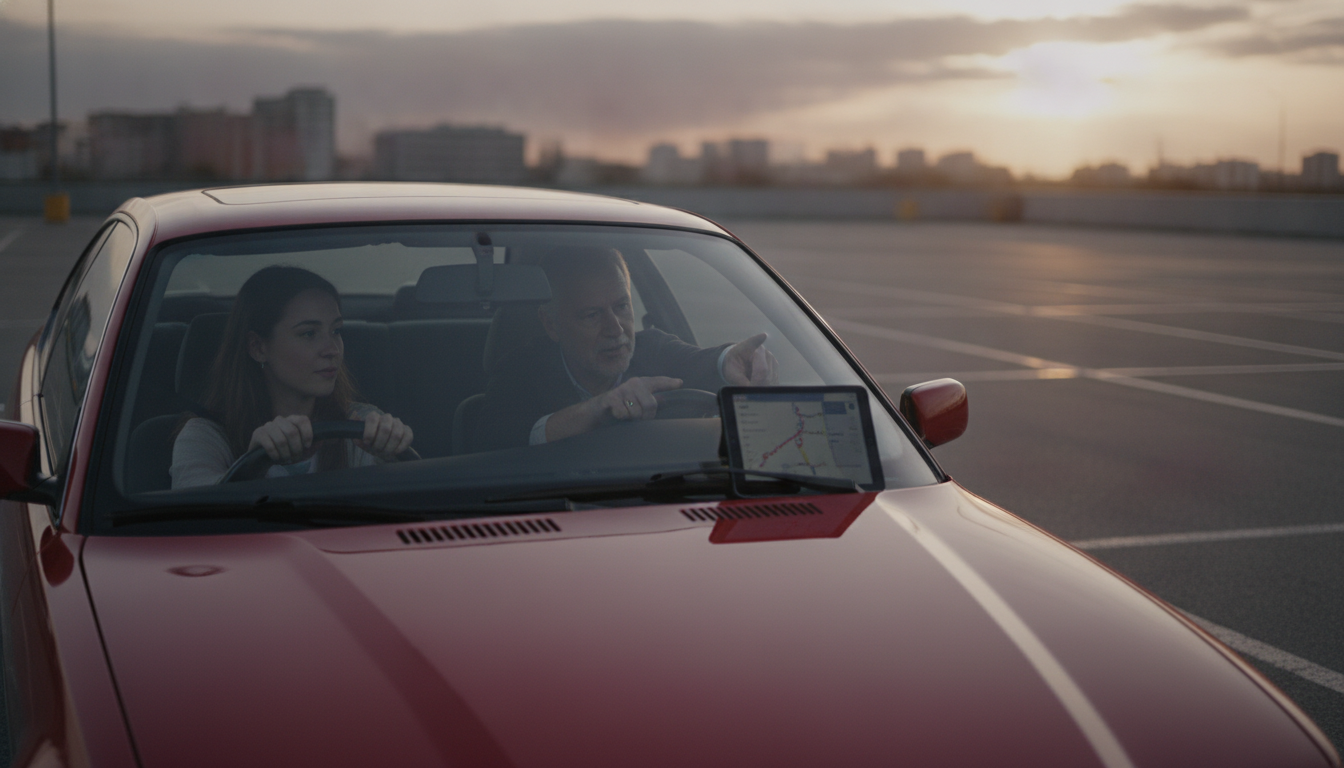
If you make a mistake, correct safely first and analyze later. Spiraling mid-drive (“I’m doing everything wrong”) steals attention from the road. If practicing with a calm companion or instructor, set roles: the driver focuses on scanning and control; the coach uses short, consistent cues like “mirror,” “ease off,” or “look through the turn.”
Quick pre-drive checklist
| Item | What to set | Why it helps |
|---|---|---|
| Seat & headrest | Comfortable reach; head centered on headrest | Improves control and reduces fatigue |
| Mirrors | Rear view centered; side mirrors minimize blind spots | Reduces surprises during lane changes |
| Steering grip | Relaxed hands; avoid white-knuckle grip | Smoother steering and less overcorrection |
| Phone & distractions | Silenced and stowed | Keeps attention on hazards and signs |
| Route plan | Simple loop with safe pull-over spots | Lowers anxiety and supports gradual exposure |
For a reminder on why minimizing distractions matters (especially for newer drivers), review the safety guidance from NHTSA on distracted driving.
Foundational road skills to practice in low-pressure settings
Build confidence where the stakes are low: empty parking lots and quiet streets. Choose one steering method and stick with it (push-pull or hand-over-hand) so your hands move without extra thinking. Keep your grip light; tense arms create jerky steering.
For starts and stops, aim for gentle acceleration and progressive braking. Most “jerk at the end” stops happen because the brake is held too firmly right before stopping—ease off slightly in the last few feet. For lane position, use distant reference points (the center of the lane far ahead), not the edge of the hood.
Decision-making in traffic: scanning, spacing, and timing
Real-world practice plan (step-by-step progression)
Two-week practice schedule (adjust to comfort level)
| Day | Where | Skill focus | Goal |
|---|---|---|---|
| 1 | Empty parking lot | Steering + smooth stops | 10 controlled stops without jerking |
| 2 | Quiet streets | Right turns + lane centering | Maintain centered lane position for 15 minutes |
| 3 | Quiet streets | Left turns + stop signs | Full stops; correct right-of-way decisions |
| 4 | Neighborhood loop | Hazard scanning | Consistent mirror checks and pedestrian awareness |
| 5 | Parking lot + streets | Reverse + parking basics | Park between lines 5 times calmly |
| 6 | Main road (light traffic) | Speed control + spacing | Hold steady speed; keep safe following distance |
| 7 | Main road | Lane changes | 3 safe lane changes with full checks |
| 8 | Rest or easy loop | Confidence consolidation | Drive a familiar route with reduced tension |
| 9 | Busier intersections | Timing + gap selection | Smooth turns without rushed decisions |
| 10 | Multi-lane roads | Route planning | Follow a planned route with minimal last-second moves |
| 11 | Optional: dusk drive | Visibility + headlight habits | Comfortable scanning and speed adjustment |
| 12 | Optional: light rain (if safe) | Traction awareness | Gentle inputs; increased spacing |
| 13 | Highway on-ramp (with coach) | Merge basics | One calm merge; exit at next ramp |
| 14 | Mixed route | Putting it together | Complete a 30–45 minute drive with steady confidence |
Handling common beginner scenarios without panic
Using a step-by-step driving eBook to stay consistent
If you want a single, confidence-first system, consider New Driver’s Guide to Mastering the Road (Confidence-Building Driving eBook). For drivers who carry tension in their shoulders, jaw, or hands, pairing practice with relaxation work can make sessions feel easier—see the Muscle Relaxation Toolkit for Total Tension Relief.
Compare related options such as Choosing Necklace Shapes That Perfectly Match Your Outfits – Jewelry Styling Guide, Necklace Length Chart, Outfit Matching eBook, Digital Download to match features, dimensions, and use case before choosing.
FAQ
How long does it take to feel confident driving?
Many new drivers notice real improvement in 2–6 weeks with consistent, short practice sessions. Confidence grows fastest when you track markers like smoother braking, steadier lane position, and calmer scanning rather than waiting to “feel fearless.”
What should a beginner practice first: parking, lane changes, or highway driving?
Start with vehicle control basics (smooth stops, turns, lane centering) and a reliable scanning routine, then add neighborhood traffic skills. Practice lane changes on multi-lane roads in light traffic before attempting highway merges, which require stronger spacing and timing.
How can nervous drivers stay calm in traffic?
Use a 60–90 second breathing reset before driving, keep extra following distance, and run a simple scanning loop to prevent surprises. When pressure hits (tailgaters or honking), follow an if-then plan and pull over safely to reset if you feel overwhelmed.
















Leave a comment