Cat Home Grooming Tools Checklist: Brushes, Comb & Nails
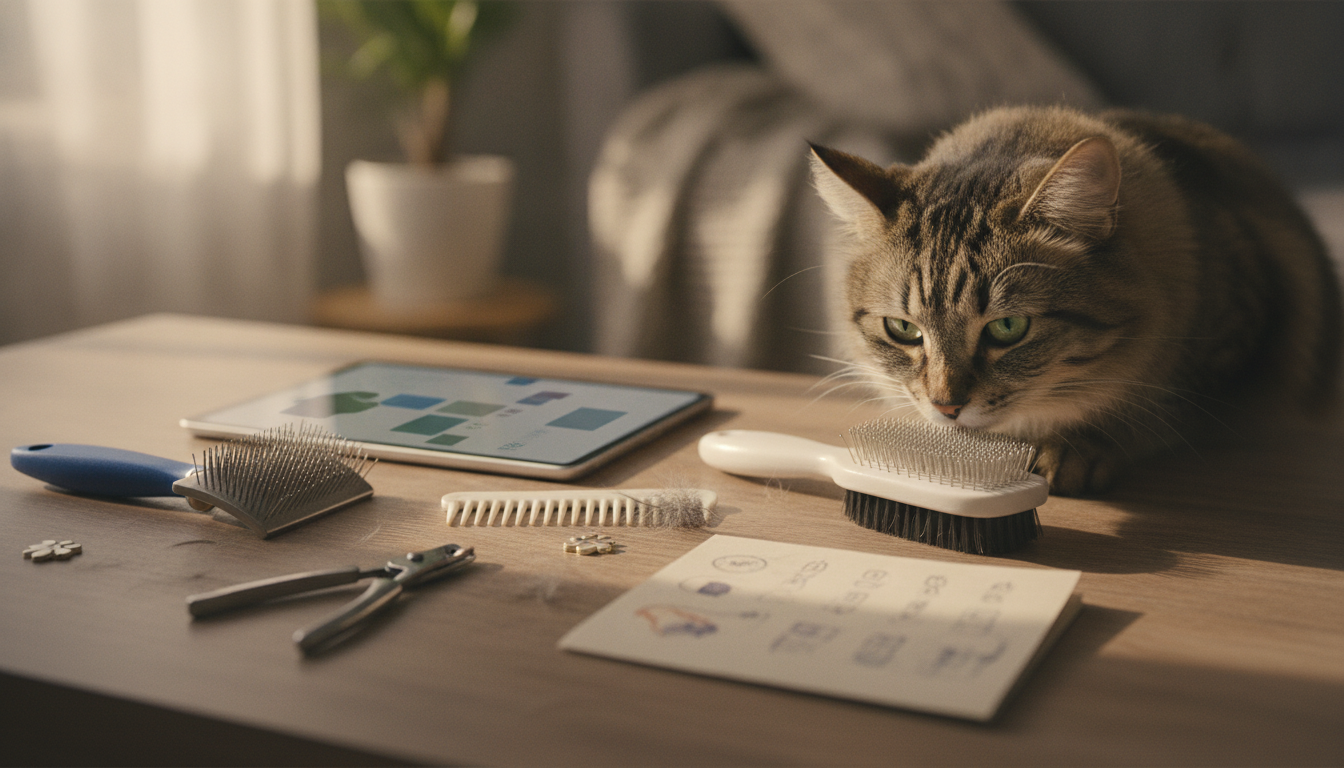
Essential Cat Home Grooming Tools: A Practical Digital Guide and Checklist
Home grooming does more than keep your cat looking tidy. It supports coat health, reduces loose hair around the house, and helps you notice skin, ear, and nail issues early—before they turn into bigger problems. The key is using the right tools, keeping sessions short and predictable, and choosing a routine that matches your cat’s coat type and comfort level.
If you want a repeatable, low-stress approach, the Essential Cat Home Grooming Tools digital download guide and checklist is built to make quick sessions feel straightforward, not overwhelming. For a broader care routine (beyond just brushing and nails), the Cat Hygiene Maintenance Pack: 5-in-1 bundle of eBooks and checklists helps keep multiple cat-care habits consistent.
What “Good Grooming” Looks Like at Home
- Aim for short, low-stress sessions: 2–5 minutes for nervous cats, gradually building up as tolerance improves.
- Focus on comfort first: provide secure footing (non-slip mat or towel), a quiet room, and the same predictable steps each time.
- Watch for red flags that need a vet’s input: sudden matting, bald patches, sores, foul ear odor, head shaking, or painful nails/paws.
Think of grooming as a “micro-checkup.” The goal is cooperation, not perfection. Ending early—before your cat gets frustrated—often leads to longer, calmer sessions later.
The Core Tool Kit: What Each Tool Does (and When to Use It)
A small, dependable tool kit beats a drawer full of gadgets. Start with the basics below, then add specialty tools only if your cat’s coat truly benefits.
- Slicker brush: best for removing loose hair and tackling light tangles; use gentle, short strokes to avoid skin irritation.
- Stainless-steel comb (wide + fine): checks for hidden mats—especially behind ears, armpits, belly, and tail base. The comb is a reliable “final pass.”
- Deshedding tool (coat-dependent): helpful for heavy shedders when used sparingly; avoid overuse to prevent thinning or skin sensitivity.
- Nail clippers or grinder: trims sharp tips; start with one paw—or even one nail—per session if needed.
- Styptic powder or gel: stops minor bleeding from a quicked nail; keep it within reach before clipping.
- Cat-safe wipes and a soft towel: quick cleanups (feet, chin, rear) and gentle handling support; avoid fragranced human wipes.
Essential home grooming tools at a glance
| Tool | Best for | How often | Beginner tip |
|---|---|---|---|
| Slicker brush | Loose hair + minor tangles | 2–4x/week (longhair), 1–2x/week (shorthair) | Use light pressure; stop if the cat flinches |
| Wide-to-fine comb | Finding/confirming mats | After brushing | If the comb won’t pass, don’t yank—work smaller sections |
| Deshedding tool | Seasonal shedding in suitable coats | 1x/week max in shedding season | Follow the coat direction; limit to a few passes per area |
| Nail clippers/grinder | Shortening sharp tips | Every 2–4 weeks | Trim only the tip; reward after each paw |
| Styptic powder | Minor nail bleed control | As needed | Apply pressure for 10–20 seconds |
| Cat-safe wipes/towel | Spot cleaning and handling | As needed | Use for quick wins on sensitive days |
Coat Type Matters: Build a Routine That Matches Your Cat
- Shorthair: prioritize weekly brushing, occasional comb checks, and regular nail trims.
- Medium/longhair: brush several times per week, comb daily in mat-prone zones, and handle small tangles early to prevent tight mats.
- Senior or overweight cats: watch for dandruff, greasy coat, and matting on the back/hips where self-grooming may be limited; increase gentle assistance.
- Kittens: keep sessions playful and brief; handle paws, ears, and the mouth area lightly to build tolerance.
When in doubt, choose consistency over intensity. A two-minute “brush + comb check” done regularly is more effective than a rare, 30-minute session that leaves your cat stressed.
Step-by-Step: A Calm 10-Minute Home Grooming Session
To learn more about general feline care and when to involve your veterinarian, reputable references include the Cornell Feline Health Center, ASPCA Pet Care, and the American Veterinary Medical Association (AVMA).
Mats, Shedding, and Sensitive Skin: Common Problems and Safe Fixes
Downloadable Checklist: A Simple Plan to Stay Consistent
For a printable-friendly format you can keep near your grooming supplies, see the Essential Cat Home Grooming Tools digital download guide and checklist. If you’re building a bigger hygiene plan (especially for multi-cat homes), the Cat Hygiene Maintenance Pack: 5-in-1 bundle of eBooks and checklists adds more structure across common care tasks.
Digital Guide: What’s Included and Who It Helps Most
FAQ
How often should a cat be brushed at home?
Most shorthair cats do well with brushing 1–2 times per week, while medium and longhair cats often need 2–4 times per week (plus quick comb checks in mat-prone areas). During seasonal shedding, you may brush more frequently, but keep sessions short—especially for anxious cats.
What should be done if a cat has a tight mat close to the skin?
Don’t cut tight mats out with scissors because it’s easy to slice the skin underneath. Gentle detangling is only appropriate for small tangles; for tight, painful, or skin-level mats, seek help from a professional groomer or a veterinarian.
Is it safe to use human grooming products on cats?
It’s safest to stick with cat-specific products, since many human wipes and shampoos contain fragrances or ingredients that can irritate feline skin. If your cat has sensitive skin or recurrent dandruff, ask your veterinarian which products are best.
















Leave a comment