61-Piece Thread Chaser Set: Restore Threads Carefully
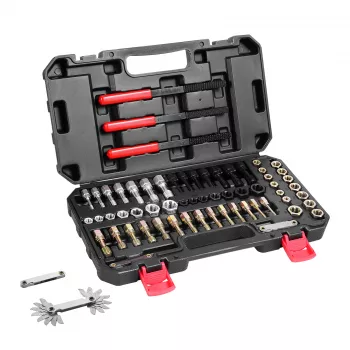
Damaged or dirty threads can make a straightforward repair frustrating. Our 61-Piece Thread Chaser Set is an option for cleaning and restoring existing threads, provided you choose a tool that matches the fastener and work carefully. Before you begin, inspect the damage and make sure the threads have enough material left to hold securely.
Why Use a Thread Chaser?
A thread chaser follows an existing thread path to clear debris and help realign minor imperfections. You might use one when corrosion, dirt, or a small nick prevents a nut or bolt from turning smoothly. The goal is to preserve as much of the original material as possible while making the threads usable again.
That is different from cutting new threads. A tap is designed to cut internal threads, while a die cuts external threads. Using a cutting tool to clean up an existing thread can remove more material than intended, especially if it starts out of alignment.
Chasing is not a cure for every damaged fastener or threaded hole. If threads are badly flattened, stripped, or missing substantial material, another repair or replacement may be necessary.
Choosing the Right Chaser
First, determine whether you are working on internal threads, such as those inside a nut or hole, or external threads, such as those on a bolt. You need the appropriate type of chaser for the surface you are restoring.
Next, match the diameter, pitch, and thread standard to the existing threads. Pitch describes the spacing of the threads; depending on the standard, it may be expressed as a distance or as threads per inch. A tool that seems close is not necessarily a match, and forcing it can make the damage worse.
Use a thread gauge or a known matching fastener to help identify the thread when needed. Before purchasing, review the set’s specifications to confirm that it includes the sizes and standards your job requires. The number of pieces alone does not establish compatibility.
Thread Chasing Checklist
| Check | What to do |
|---|---|
| Thread type | Identify whether the threads are internal or external. |
| Size and pitch | Match the chaser to the existing threads. |
| Condition | Inspect for dirt, corrosion, and damaged areas. |
| Alignment | Start the chaser straight and turn gently. |
How to Chase Threads Carefully
Start by clearing loose debris from the work area and inspecting the threads. A brush can help remove dirt that would otherwise obscure the damage. Secure the part so it cannot shift while you work, and protect your eyes from loose debris.
Place the matching chaser squarely against the thread opening or end. Start it by hand, following the existing thread path rather than pushing it into a new one. If it does not engage smoothly, stop and check both the size and alignment. Starting crooked can cross-thread the part and compound the problem.
Turn gradually, backing off as needed to clear debris. Follow any instructions supplied with the tool or the part, including recommendations for lubrication. If resistance becomes excessive, stop instead of applying more force. Remove the chaser and inspect the threads and tool before deciding how to proceed.
Once you have finished, clean away loosened material and inspect the threads again. Test the fit with the correct mating fastener, turning it without force. A smooth start is useful feedback, but it does not guarantee that a damaged connection is strong enough for its intended load.
For general workshop precautions, see OSHA’s hand and power tool guidance.
When to Consider Another Repair
A chaser can address minor damage, but it cannot replace metal that has been stripped away. If a fastener still will not engage correctly, or if the threads look thin, torn, or incomplete after cleaning, stop and assess the part. Depending on the application, a proper repair may involve a threaded insert, a replacement fastener, or a replacement component.
For critical connections or heavily damaged parts, consult a qualified repair professional. Brakes, steering components, and other safety-critical assemblies deserve particular care: an apparently improved fit is not a substitute for a sound repair.
Keep the Set Ready for the Next Job
After use, clean and dry each tool before storing it somewhere protected from moisture. Keeping pieces organized also makes it easier to select the right chaser next time and notice a damaged tool before it reaches a workpiece.
Visit our 61-Piece Thread Chaser Set product page for current purchasing details. For an unrelated addition to your living space, you can also browse our Luxury High-Back Recliner Sofa Set.
Before choosing, compare the product details with your daily routine, available space, care needs, and preferred setup. The strongest option is usually the one that fits the intended use clearly and remains simple to clean, store, and check before repeat use.
FAQ
What is the difference between a thread chaser and a tap?
A thread chaser generally cleans or restores existing threads. A tap is designed to cut internal threads.
Can a thread chaser fix stripped threads?
A chaser may help with minor thread damage, but it cannot replace missing material. Severely stripped threads may need another repair or replacement.
How do I choose the right thread chaser?
Choose a chaser for internal or external threads and match the diameter, pitch, and thread standard. Verify that the required size is included in the set.















Leave a comment