Toddler Sharing Help: Scripts + Printable Checklist

Help Your Toddler Share: A Printable Checklist Parents Can Use Today
Sharing is a skill toddlers learn over time—through repetition, predictable routines, and calm adult support. If “mine!” and toy-grabbing are showing up at home, the park, or playdates, that doesn’t mean something is wrong. It usually means your child is right on track developmentally and needs more practice with turn-taking, waiting, and using words. Below you’ll find what’s normal at different ages, simple scripts for real-life moments, and a printable checklist routine you can repeat anywhere. For more guidance, see Tips for training toddlers to share – Sanford Health News.
Why sharing is hard for toddlers (and what’s normal)
Toddlers often experience “ownership” as safety and control, so handing over a toy can feel like losing something important. At the same time, impulse control and patience are still under construction—waiting for a turn can feel physically impossible. For further reading, see Managing Big Feelings: How to help toddlers share – First Things First.
- “Mine” is common because toddlers are learning boundaries and independence.
- Impulse control is limited, so grabbing can happen even when a child knows the rule.
- Language gaps spark conflict; when a child can’t negotiate, hands do the talking.
- Sharing improves with structure: short practice, consistent phrases, and adult modeling.
- Tantrums can be part of learning; treat them as a sign your toddler needs support, not shame.
If you want a quick snapshot of typical toddler development, the CDC developmental milestones are a helpful reference point.
Set the environment up for success before the toys come out
Most “sharing problems” get easier when the setup changes. A few small choices—what toys you offer, how long the play window lasts, and whether there are duplicates—can prevent a big percentage of conflicts.
- Start with easy-share items: blocks, crayons, balls, play dough tools, water cups.
- Put away high-attachment toys before playdates (favorites, new gifts, special loveys).
- Use duplicates when possible (two similar trucks, two dolls, two shovels).
- Create a small basket of “community toys” that only comes out for shared play.
- Keep it short: toddlers share better when they’re not hungry, overtired, or overstimulated.
Quick setup checklist for playdates
| Before play starts | Why it helps | Example |
|---|---|---|
| Offer 1–2 shared-activity toys | Reduces conflict over “one” special item | Duplo blocks + a ball |
| Stash high-value toys | Prevents immediate power struggles | Favorite stuffed animal in bedroom |
| Prepare duplicates | Makes turn-taking optional at first | Two dump trucks |
| Snack + water ready | Avoids meltdowns that look like “not sharing” | Banana slices and water cups |
| Set a simple rule | Gives structure toddlers can remember | “Hands are gentle. We take turns.” |
What to say in the moment: simple scripts that work
When grabbing happens, toddlers learn most from what you do next. Keep it short, calm, and repeatable. A dependable script helps you respond consistently even when you’re tired.
- Name the feeling: “You really want that truck.”
- State the boundary: “No grabbing. The truck is in Sam’s hands.”
- Offer a next step: “You can ask for a turn or choose another toy.”
- Give two choices: “Wait by the timer or play with blocks while you wait?”
- Coach the exact words: “Say, ‘Can I have a turn when you’re done?’”
- Praise effort: “You waited. That was hard.”
One key detail: “Share!” is often too vague. “Take turns” and “ask for a turn” are clearer for toddlers and easier to practice.
Teach turn-taking in tiny doses
Expecting a toddler to share smoothly with peers is like expecting them to read without learning letters first. Build the skill in small steps—especially adult-child practice—then use the same routine with siblings and friends.
Printable checklist routine: a calm, repeatable plan
Printable checklist (copy-ready)
| Step | Do this | Say this |
|---|---|---|
| 1. Prepare | Put away special toys; set out 2–3 shared toys; set a timer nearby | “These toys are for taking turns.” |
| 2. Preview | Explain one rule and one goal | “Hands are gentle. We practice waiting.” |
| 3. Coach | If grabbing happens, block gently and stay calm | “No grabbing. You can ask for a turn.” |
| 4. Offer choices | Give two acceptable options while waiting | “Wait by the timer or play with blocks?” |
| 5. Reinforce | Notice effort immediately | “You waited. That was hard and you did it.” |
| 6. Reset | If emotions spike, pause and reconnect | “Let’s breathe. Then we can try again.” |
Common sharing situations and how to handle them
When to be concerned
Get the printable checklist
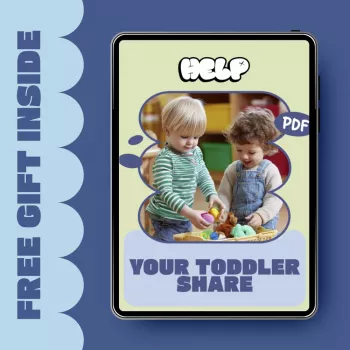
If you want a one-page routine you can print, post, or keep in a diaper bag, start here: Help Your Toddler Share – Printable Checklist for Parents. It includes quick scripts, setup reminders, and a reset plan for tough moments, designed for repeat use across caregivers.
For a calmer “parent reset” after big toddler emotions, some families also like creating a comfort corner with a supportive seat (see Luxury High-Back Recliner Sofa Set) and a simple, soothing space cue like Vintage Resin Vase—not as a reward, but as a consistent spot to breathe and regroup.
FAQ
At what age should toddlers start sharing?
Toddlers can begin practicing turn-taking in the early toddler years with adult help, but spontaneous, flexible sharing often shows up later. Consistent routines and short practice sessions make a big difference over time.
Should a parent force a toddler to share?
It’s usually more effective to coach boundaries and turn-taking than to force a child to hand over an item. Respect ownership, prevent grabbing, and use a timer and simple choices so sharing skills grow without power struggles.
What if my toddler grabs toys during playdates?
Step in calmly with a repeatable script: name the feeling, set the boundary, and offer the next step (“You want it. No grabbing. Ask for a turn.”). Redirect to another toy, use a short timer for turns, and keep playdates brief if your child gets overwhelmed.














Leave a comment