1/2in Impact Socket Set: 6-Point Cr-V, Easy Markings
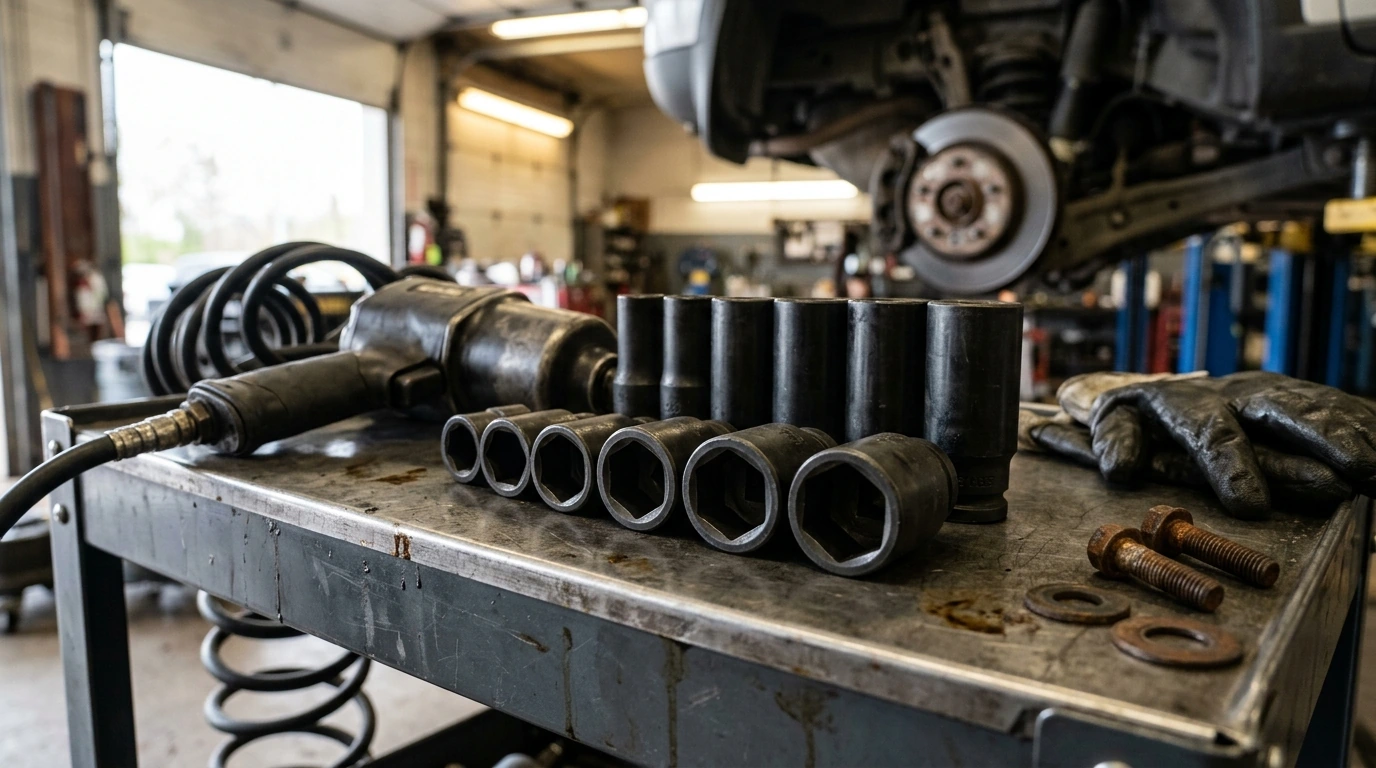
1/2″ Drive Impact Socket Set: 6-Point Cr‑V Strength with Easy-Read Markings
A dependable impact socket set should handle high torque without rounding fasteners, be simple to identify in a busy toolbox, and hold up to repeated use with impact wrenches. This 1/2″ drive 6-point set focuses on durability through Cr‑V steel construction, a geometry designed for secure engagement, and markings meant to stay readable when grease, dust, and low light are part of the job.
What makes an impact socket set different
Impact sockets aren’t just “regular sockets, but black.” They’re built to tolerate the shock loads created by impact wrenches and drivers—those rapid torque pulses that can crack or deform hand-tool-only sockets over time. To handle that punishment, impact sockets typically use tougher materials and a wall thickness tuned for repeated high-torque cycling.
Another practical difference is how impact sockets aim to reduce fastener rounding. With high-torque removal—especially on rusty hardware—the best results come from keeping contact on the flats of the fastener rather than stressing the corners. That’s one reason 6-point profiles are so common in impact sets.
Best practice is to treat the whole setup as a system: pair the sockets with an impact-rated 1/2″ drive impact wrench and use impact-rated extensions, adapters, and swivels as well. Mixing in worn or non-impact accessories can introduce play, increase slop at the drive end, and accelerate wear.
6-point geometry: grip and fastener protection
For hex fasteners, 6-point sockets are widely favored when the job calls for maximum bite. With fewer contact points than 12-point designs, a 6-point opening typically engages more squarely on the flats—helping reduce the chance of rounding tight, corroded, or slightly damaged heads.
That makes 6-point sockets a go-to for lug nuts, suspension hardware, frame bolts, and other fasteners where leverage and torque are the name of the game. If you’re using an impact wrench, a simple habit pays off: fully seat the socket before pulling the trigger. A socket that’s only halfway on the fastener is more likely to slip, chew up corners, or wear the socket opening prematurely.
Cr‑V steel: durability for heavy-duty jobs
Chromium-vanadium (Cr‑V) steel is a common choice for sockets because it offers a strong balance of hardness and toughness. In day-to-day shop work, that translates to a socket that can take repeated torque loads without quickly deforming at the drive end or stretching at the hex opening—both of which can lead to sloppy fit and higher rounding risk.
Longevity depends on the full workflow, not just the alloy. If extensions or adapters are worn and introduce wobble, that movement can concentrate stress where the socket meets the anvil, speeding up drive-end wear. After use—especially around road salt, brake dust, and grime—wipe the sockets down and store them dry to limit corrosion and keep markings readable.
Easy-read markings: faster selection and fewer mistakes
At-a-glance comparison: choosing the right socket type for the job
Socket features and when they help most
| Feature | What it’s best for | Common tradeoff |
|---|---|---|
| Impact-rated construction | High torque pulses from impact wrenches; repeated removal/installation | Typically thicker walls than hand sockets |
| 6-point opening | Stubborn fasteners; reduced rounding risk; lug nuts and suspension bolts | Less flexibility on some specialty fasteners compared to multi-point designs |
| Cr‑V steel | General heavy-duty durability and toughness | Performance also depends on heat treatment and proper use |
| Easy-read size markings | Fast identification; fewer wrong-size grabs; quicker cleanup | Markings can wear if abused or heavily abraded |
Where a 1/2″ drive set fits in a toolbox
To get the most from a 1/2″ impact socket set, pair it with quality accessories: impact extensions for reach, impact-rated universal joints for angled access, and a torque wrench for final tightening when precision matters. For safety, wear eye protection and stop using any socket that’s cracked, visibly deformed, or has a worn drive end. OSHA’s general guidance on safe tool use is a helpful baseline for shop habits and PPE: OSHA Hand and Power Tools.
For those interested in tool fit and performance expectations, industry standards are commonly referenced through ASME guidance, including the B107 hand tool standards overview: ASME B107 Hand Tool Standards.
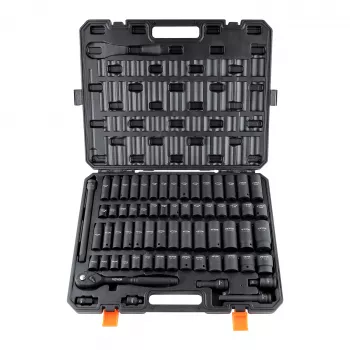
Product overview: 1/2″ Drive Impact Socket Set – 6-Point Cr‑V Steel, Easy-Read Markings, Heavy-Duty
1/2″ Drive Impact Socket Set – 6-Point Cr‑V Steel, Easy-Read Markings, Heavy-Duty
For a quick shortcut when comparing options, you can also view this heavy-duty 1/2″ drive impact socket set with easy-read markings and check current pricing and availability before ordering.
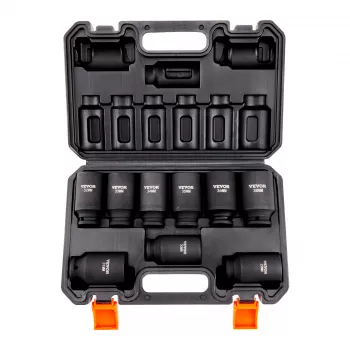
Also in stock
FAQ
Can impact sockets be used with a breaker bar or ratchet?
Yes. Impact sockets can be used with hand tools as long as the drive size matches and the socket is fully seated; just note that impact sockets are often thicker and may need more clearance.
Are 6-point sockets better than 12-point for impact work?
Often, yes—especially on stubborn fasteners. A 6-point socket generally grips the flats more securely and can reduce rounding risk, while 12-point designs can be more convenient in tight swing angles with hand tools.
What does Cr‑V steel mean for a socket set?
Cr‑V stands for chromium-vanadium, an alloy commonly used to improve strength and toughness in tools. Heat treatment and proper use still matter for long service life.













Leave a comment