Large Cat Tree for Indoor Cats: Size, Setup & Use
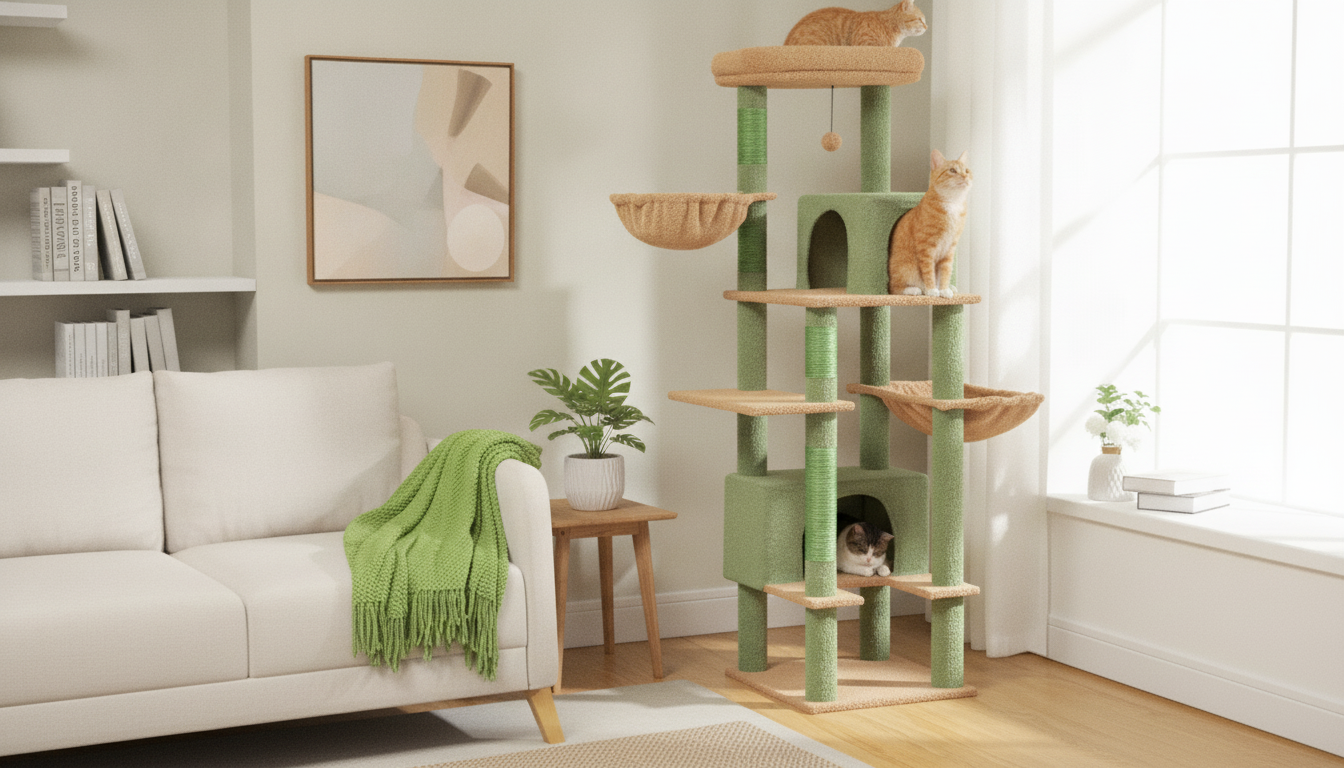
Large Cat Tree for Indoor Cats: A Practical Guide to Comfort, Play, and Vertical Space
Indoor cats do best when a home offers safe climbing, scratching, resting, and lookout spots. A well-designed cat tree concentrates those needs into one vertical footprint, helping protect furniture, reduce boredom, and create predictable “cat zones” in shared living spaces. With the right size, layout, and placement, a large cat tree can become the most-used piece of “furniture” in the house—by the cat.
Why a Cat Tree Matters for Indoor Life
Cats are built for vertical living. Even in a small home, a cat tree can add meaningful territory and routine—two things that often make indoor life smoother for both pets and people.
- Supports natural behaviors: climbing, perching, scratching, and hiding in one familiar spot.
- Adds vertical territory without eating floor space: especially helpful in apartments and multi-pet homes.
- Encourages movement and play: regular climbing and hopping can support weight management and reduce stress.
- Creates a predictable safe place: a “go-to” perch can lower tension in multi-cat households.
- Helps redirect scratching: when posts are appealing and the tree is placed where the cat already wants to scratch.
For more on what cats need indoors, the American Association of Feline Practitioners (AAFP) environmental enrichment guidelines provide a helpful framework for building a cat-friendly home environment.
What to Look for in a Large Cat Tree
“Large” should mean more than tall—it should mean stable, comfortable, and easy to use day after day. Before buying, focus on the features that affect safety and long-term satisfaction.
- Stability: choose a wide base, solid boards, and platforms that don’t wobble under a running jump.
- Height and layout: staggered platforms create an easy “staircase” for confident climbs; taller perches reward cats who like a view.
- Scratching surfaces: durable sisal on posts (and at least one clearly dedicated scratch zone) keeps claws busy.
- Rest areas: look for roomy perches, a condo/cubby, or a basket-style bed for naps and privacy.
- Materials and comfort: soft fabric is great, but it should be easy to vacuum; plush should sit over sturdy boards, not flimsy panels.
- Home fit: measure both ceiling height and the footprint where it will live—near a wall or corner is often best.
Scratching is also a normal communication and maintenance behavior. Cornell’s overview of cat scratching behavior is a useful reminder that the goal is redirection, not “stopping” an instinct.
Sizing and Placement Tips (Especially for Smaller Homes)
Even the best cat tree can be ignored if it’s unstable or tucked in an inconvenient spot. Placement is also a major factor in whether it reduces furniture scratching.
- Use a corner or wall-adjacent location: this improves perceived security and reduces side-to-side sway.
- Place near a window if possible: outdoor views add “free entertainment,” and sunlight turns a top perch into a nap magnet.
- Keep clear approach paths: give the cat room to jump on and off without bumping sharp furniture edges.
- If scratching is the goal: start by placing the tree near the current scratching hot spot, then shift it gradually if needed.
- For shy cats: avoid loud appliances and high-traffic hallways; choose a quieter zone where the cat can observe from a distance.
- Protect floors and reduce sliding: add a small rug, mat, or grippy pad under the base.
Comparing Common Features in Indoor Cat Trees
Quick Feature Match for Different Cat Needs
| Cat type / household | Most helpful features | Notes for best results |
|---|---|---|
| Single indoor cat | Top perch + multiple scratch posts | Add a window view and rotate toys nearby for novelty |
| Two or more cats | Multiple perches + more than one resting zone | Reduce resource guarding by offering separate levels and hideouts |
| Kitten or high-energy cat | Many platforms + dangling toy attachments | Ensure stable base; trim nails regularly to reduce snagging |
| Large or senior cat | Wide platforms + lower step-up spacing | Look for easy climbs and roomy beds; avoid steep leaps between levels |
| Scratch-focused behavior | Sisal-heavy posts + good placement | Praise and reward use; keep posts accessible, not hidden behind furniture |
Spotlight: Large Cat Tree for Indoor Cats
If the goal is to combine vertical play, lounging, and scratching in one footprint, a dedicated, roomy tree is often the simplest upgrade you can make to an indoor setup. The Large Cat Tree for Indoor Cats is designed to provide stacked levels for climbing, comfortable off-the-floor resting spots, and a reliable “cat zone” that helps keep indoor life engaging.
Making a Shared Home Feel Cat-Friendly (Without Sacrificing Style)
- If your cat likes to hang out where people relax, placing the tree near seating can help it become the preferred perch—especially if you’re protecting a new Luxury High-Back Recliner Sofa Set from climbing claws and upholstery scratching.
- For homes where décor matters, keeping breakables out of leap paths reduces accidents; a stable shelf placement for accents like a Vintage Resin Vase can prevent a curious jump from turning into a clean-up job.
Assembly, Safety, and Upkeep
Helping a Cat Actually Use the Tree
FAQ
Where should a cat tree go in an indoor home?
A corner or wall-adjacent spot usually feels the most stable and secure, and placing it near a window adds daily entertainment. Make sure there’s a clear approach and landing area so your cat can jump on and off comfortably.
How tall should a cat tree be for indoor cats?
The best height matches your cat’s mobility and confidence: climbers often love taller top perches, while seniors and larger cats do better with lower, closely spaced platforms. Prioritize stability and usable levels over maximum height.
How can a cat tree help stop furniture scratching?
A tree helps by offering attractive scratching surfaces (especially sisal) in a convenient, obvious spot—ideally near the cat’s current scratching area. Praise and reward tree scratching, and keep posts accessible rather than hidden behind furniture.













Leave a comment