Practical Stress Relief: Quick Resets + Daily Calm Bundle
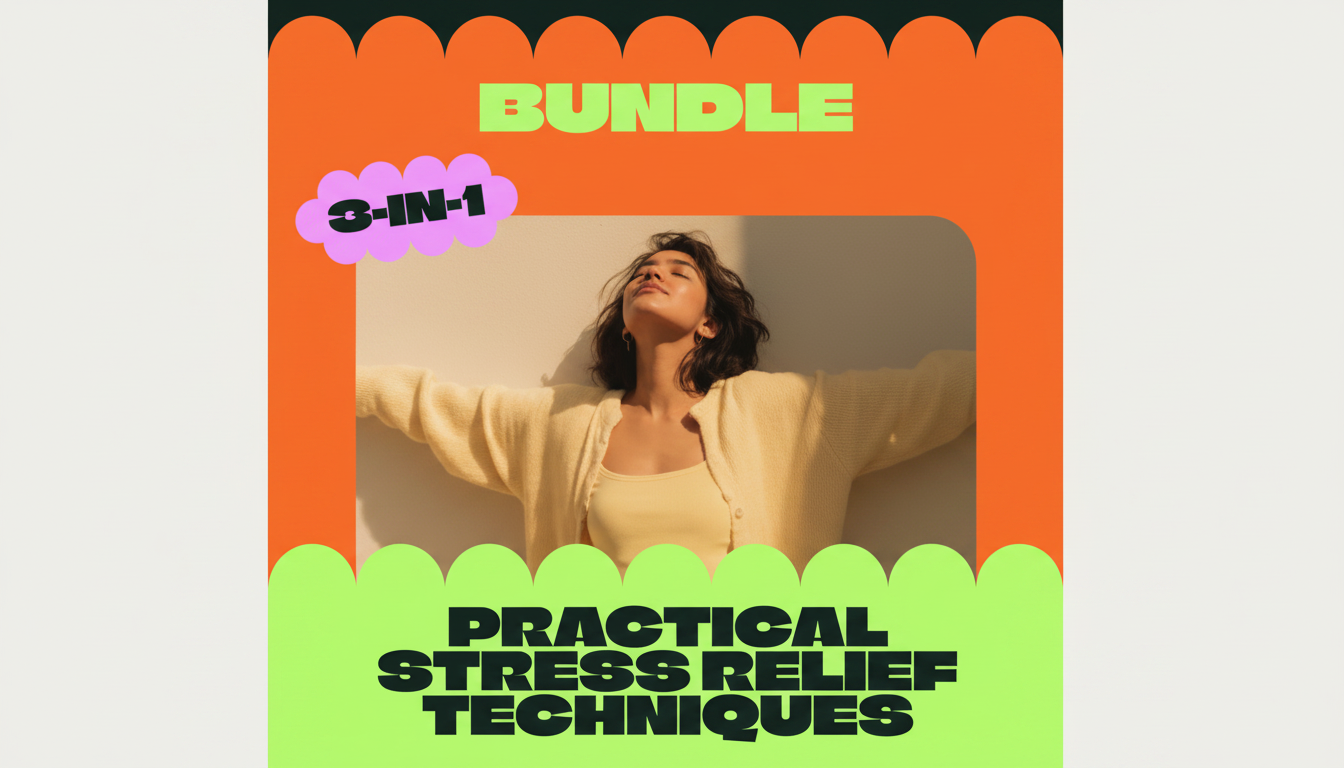
Practical Stress Relief Techniques for a Calmer Mind (That Actually Fit Real Life)
Stress can show up as racing thoughts, a tight chest, shallow breathing, or a constant sense of urgency—especially when life runs on notifications and fast decisions. A calmer mind usually comes from simple skills practiced consistently, not complicated routines. This 3-in-1 digital download bundle focuses on practical techniques that fit into real days: quick resets, structured exercises, and repeatable routines that help reduce overwhelm and build steadier emotional balance over time.
What “practical” stress relief looks like day to day
- Fast techniques for acute stress: 30–120 second resets that take the edge off so decisions feel possible again.
- Short daily practices: 5–15 minute routines that build resilience (not just “put out fires”).
- Environmental supports: small adjustments to sound, light, posture, and screens that lower nervous-system load.
- A flexible approach: options for mornings, work breaks, evenings, and pre-sleep wind-down.
What’s included in the 3-in-1 digital download bundle
The Practical Stress Relief Techniques for a Calmer Mind: 3-in-1 Digital Download Bundle is designed for both “right now” moments and steady routines. You get guided exercises that are easy to repeat, track, and adjust based on energy level—plus the convenience of having everything in a digital format you can open on a phone, tablet, or computer for travel, work breaks, or bedtime.
Quick-start guide: choose a technique by situation
| Situation | What it feels like | Technique to try | Time needed |
|---|---|---|---|
| Overwhelm at the desk | Racing thoughts, tense shoulders | Box breathing + shoulder drop + 10 slow exhales | 2–4 minutes |
| Irritability after messages or social media | Agitation, rumination | 60-second screen break + gaze shift + grounding through 5 senses | 1–3 minutes |
| Afternoon slump | Foggy focus, low motivation | Short walk + paced breathing + hydration check | 5–10 minutes |
| Evening worry loop | What-if thoughts, restlessness | Brain dump + “next right step” list + gentle relaxation | 10–15 minutes |
| Pre-sleep tension | Body tightness, shallow breathing | Progressive muscle release + slow exhale emphasis | 8–12 minutes |
Fast calming techniques for acute stress (under 5 minutes)
- Exhale-focused breathing: Inhale normally, then lengthen the exhale slightly (for example, inhale 4 counts, exhale 6). A longer exhale can help nudge the body toward a calmer state. For breathing ideas, the NHS breathing exercises for stress guide is a helpful reference.
- Grounding with the senses: Name 5 things you see, 4 you feel, 3 you hear, 2 you smell, and 1 you taste. This interrupts spirals by bringing attention back to the present.
- Tension release scan: Unclench jaw, drop shoulders, loosen hands, soften belly—pause—then repeat once more. It’s simple, but it changes the “signal” your body is sending your brain.
- A single-task reset: Choose one small action (send one email, wash one dish, set one timer). Completing a tiny task reduces mental clutter and restores a sense of control.
Build a calmer baseline with daily practices (5–15 minutes)
- Micro-meditation: Short sessions focused on breath or sound train attention. When attention strengthens, reactivity often lowers.
- Journaling prompts that move from emotion to action: Name the stressor, name the feeling, choose a next step. The goal isn’t perfect positivity—it’s clarity.
- Routine pairing: Attach one calming habit to something you already do (morning drink, lunch break, evening shower). Consistency becomes easier when you don’t have to “figure out when.”
- Progress tracking: Note what helped, what didn’t, and what to adjust. Stress skills get stronger through iteration, not intensity.
For additional background on how stress can affect the body over time, the American Psychological Association overview offers a clear summary.
Reduce stress triggers from the environment and routine
- Notification boundaries: Create fixed check-in windows (for example, top of the hour or three times a day) to reduce constant alertness.
- Workstation posture check: Feet grounded, shoulders down, screen near eye level. Physical strain often reads as “danger” to the nervous system.
- Light and sound hygiene: Soften harsh lighting; consider steady background sound if silence increases rumination.
- Transition rituals: Take 60 seconds between tasks—stand, breathe, stretch—to prevent stress stacking from one moment to the next.
A simple 7-day plan to get started
Who this bundle fits best
Related digital bundles to support your routine
- Muscle Relaxation Toolkit for Total Tension Relief – 3-in-1 Bundle for Deep Muscle Relaxation (great if stress shows up as tight shoulders, jaw tension, or restless muscles).
- Peaceful Nights System for Worried Sleepers – 4-in-1 Bundle to Calm Kids’ Night Fears (helpful for families building calmer bedtime patterns).
Important note on stress, anxiety, and care
For more general coping guidance, the National Institute of Mental Health offers practical mental health resources.
FAQ
How fast can these techniques help in a stressful moment?
Many people feel a reduction in intensity within 1–5 minutes using exhale-focused breathing, grounding, or a quick unclenching scan. Results tend to improve when you practice the skills during calmer moments so they’re easier to access under pressure.
Is this bundle suitable for beginners?
Yes—these exercises are designed to be approachable and repeatable. Start with one technique, keep a short daily routine, and add tools gradually as they feel familiar.
Can these techniques be used alongside therapy or medication?
Often, yes—self-regulation skills are commonly used alongside professional treatment. For personalized guidance, coordinate with a qualified clinician who understands your needs and care plan.














Leave a comment