Weight Sled with Harness: Strength and Speed Training
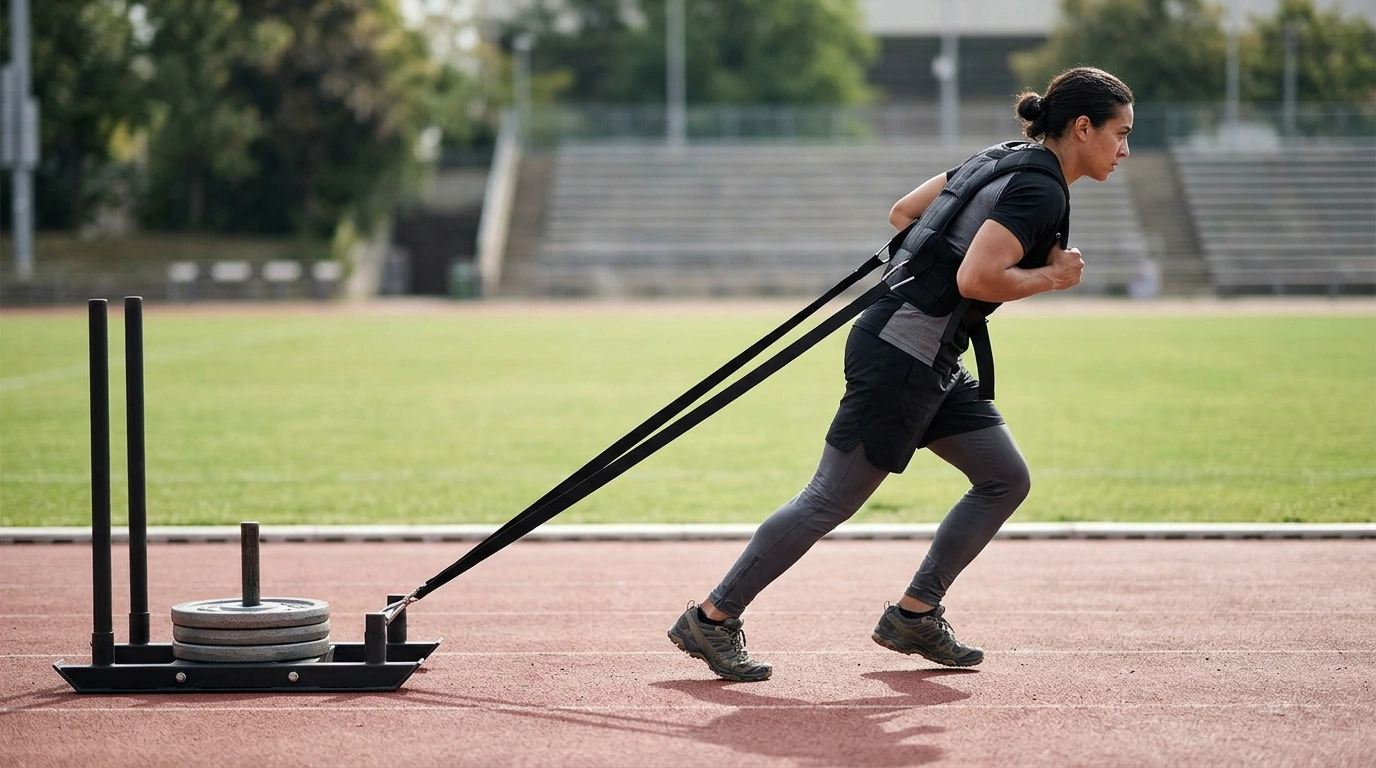
A weight sled and harness can add a different kind of resistance to your strength and conditioning sessions: instead of lifting a load in place, you work against it as you move. Whether you want to practice controlled acceleration or add variety to conditioning, our Weight Sled with Harness gives you an option to explore.
Bring Resistance to Your Training
Sled pulling adds resistance to forward movement, giving you another way to challenge your muscles alongside exercises such as squats, hinges, and lunges. It can complement a broader routine rather than replace the strength and aerobic work you already enjoy.
You can vary your approach according to your goal. A controlled, challenging pull can support strength-focused work, while manageable resistance lets you practice moving more quickly. Repeated efforts at a sustainable pace can also form part of a conditioning session. Your experience, recovery, and technique matter more than trying to make every pull as hard as possible.
Our Weight Sled with Harness is currently in stock and priced at $229.51. Visit the product page for current availability, price, and specifications before ordering.
Match the Effort to Your Goal
There is no single ideal load for every sled pull. Surface friction, distance, experience, and the purpose of the session all affect how an effort feels. Use the following approaches as starting points, and choose recovery that lets you maintain control.
| Training focus | Approach | Recovery |
|---|---|---|
| Speed emphasis | Use manageable resistance and move with control | Rest enough to maintain movement quality |
| Strength emphasis | Use challenging resistance without sacrificing posture | Take longer rests between efforts |
| Conditioning emphasis | Use repeatable efforts at a sustainable pace | Adjust rest to keep technique consistent |
Lighter resistance can help you preserve movement speed; heavier resistance shifts the emphasis toward producing force. Neither approach calls for sacrificing posture or pulling beyond your control. Start conservatively, especially on an unfamiliar surface, and adjust the effort to your experience and the space available.
Set Up for Controlled Pulls
Choose a clear training area with enough room to move and stop safely. Look for obstacles, other people, and changes in the surface along your route. Confirm that the surface is suitable for the equipment before you begin; a different surface can change how much resistance you feel.
Inspect the sled, harness, and attachment points before each session. Follow the product instructions to fit the harness and secure any load, and make sure everything is connected properly before moving. Wear footwear that gives you appropriate traction for your training area.
Warm up with comfortable movement before your first pull. Begin with a manageable effort, keep a stable posture, and stay aware of the sled behind you. Stop if you feel pain or dizziness, or if you lose control. If you are unsure about your setup or technique, ask a qualified fitness professional for guidance.
Fit Sled Work into a Routine
For faster, technique-focused pulls, consider training earlier in your workout, when you are fresh enough to pay attention to movement quality. If conditioning is your goal, manageable repeated pulls may fit later in the session. In either case, leave yourself enough room to slow down safely at the end of each effort.
Build gradually by changing one variable at a time. You might add distance, adjust the effort, or alter your rest rather than changing all three at once. That makes it easier to notice when your technique starts to slip and to decide whether the session is still serving its purpose.
Balance sled work with recovery and other strength and aerobic activities. The CDC’s physical activity basics offer general guidance for planning a well-rounded activity routine. Your schedule should also leave room for rest, particularly after demanding sessions.
If you are considering equipment for your recovery routine as well, our Muscle Relaxation Toolkit for Total Tension Relief is another in-stock option to explore. Choose recovery practices that feel comfortable for you, and seek professional advice if discomfort persists.
Explore the Weight Sled with Harness
For shoppers looking for a sled-and-harness option, this product offers a way to add resisted movement to a training plan. Our team recommends starting with a clear goal and a conservative effort, then progressing as your control and experience allow.
View the Weight Sled with Harness to check the current price, availability, and specifications before you order.
Before choosing, compare the product details with your daily routine, available space, care needs, and preferred setup. The strongest option is usually the one that fits the intended use clearly and remains simple to clean, store, and check before repeat use.
FAQ
Is a weight sled suitable for beginners?
Beginners can start with manageable resistance and short, controlled efforts, then progress gradually. If you are unsure about technique, seek guidance from a qualified fitness professional.
How heavy should sled pulls be?
Choose resistance that fits your goal and allows controlled movement. Start conservatively and increase it only when your technique remains consistent.
Can sled pulls be used for conditioning?
Yes. Repeatable pulling efforts can form part of a conditioning session; adjust your pace and rest to suit your fitness and maintain good technique.















Leave a comment