Stable Hybrid IEM: PentaconnEar + Detachable Cable

High-Fidelity Listening That Stays Stable, Serviceable, and Upgrade-Ready
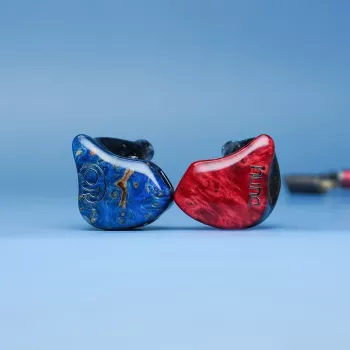
Some IEMs win you over with tuning alone. Others earn their place in your daily rotation by keeping the entire signal chain more stable, more durable, and easier to adapt as your gear changes. Our High-Fidelity IEM with Hybrid Drivers, Detachable Cable & PentaconnEar Interface is built around three practical decisions—hybrid drivers, a detachable cable, and a PentaconnEar connection—to help you keep detail intact while making ownership simpler over the long run.
If you care about precision, consistent channel performance, and an IEM that can follow you from phone dongles to desktop amps without feeling fragile, this design approach is worth considering.
What This IEM Is Built to Do
Our team sees this style of IEM as a “control-first” choice: it’s designed to resolve small details and handle daily handling without turning your setup into a maintenance project.
- Deliver high-detail playback with fast transients and defined layering for critical listening, mix referencing, and high-resolution streaming.
- Use a hybrid driver approach to separate low-end weight from mid/treble articulation, so you don’t have to push volume just to hear nuance.
- Keep ownership practical: detachable cabling supports simple replacements, cable upgrades, and quick swaps between portable and desktop chains.
- Provide a secure, low-resistance connection via the PentaconnEar interface for stable contact and consistent channel performance.
Hybrid Drivers: Why the Split Workload Matters
Hybrid IEMs generally assign different parts of the frequency range to different driver types. The goal isn’t “more drivers = better,” but rather better division of labor—especially when music gets dense or when you want clarity at moderate levels.
- Bass lines can sound more defined because the low end isn’t fighting the same mechanical behavior responsible for upper detail.
- Vocals and midrange instruments can stay more intelligible in complex mixes, reducing the urge to keep turning the volume up.
- Upper detail and “air” can come through with less reliance on aggressive treble boosting.
- If you’re sensitive to harshness, a well-implemented hybrid approach can preserve clarity without making brightness the main tool.
Listening benefits often associated with hybrid-driver IEMs
| What you want | What hybrid designs can help with | Best used for |
|---|---|---|
| Tighter bass lines | Low-end control and faster recovery | Electronic, hip-hop, modern pop, live kick drum |
| Clear vocals without strain | Better separation in the midrange region | Singer-songwriter, podcasts, acoustic recordings |
| More “air” and micro-detail | Upper detail retrieval and articulation | Jazz cymbals, strings, ambience in recordings |
| Less congestion on busy tracks | Improved layering across frequency bands | Orchestral, metal, complex mixes |
PentaconnEar Interface: A Connection Designed for Stability
When you’re using IEMs every day, the connector matters as much as the drivers. PentaconnEar is designed for secure engagement and consistent contact—useful when portable use, frequent pocketing, and repeated swaps can stress connection points over time.
- A stable connector helps preserve channel balance and reduces intermittent cut-outs that can happen with worn or loose connections.
- Cable swaps become a controlled, repeatable process instead of a fragile “one-and-done” attachment.
- If you switch sources often (phone dongle, DAP, desktop amp), a robust interface makes frequent changes less stressful.
If you want to read more about the connector standard itself, NIPPON DICS provides background information on PentaconnEar here: https://www.ndics.co.jp/en/solutions/pentaconn/.
Detachable Cable: Practical Ownership, Easier Upgrades
A detachable cable is one of the most ownership-friendly features an IEM can have. Cables take the brunt of daily bends, snags, and storage stress—so being able to replace just the cable can keep your IEM in service longer.
- Replace a damaged cable without replacing the entire IEM.
- Swap cables to match your use case: lightweight for commuting, more robust for desk listening.
- Keep your output options open—balanced vs. single-ended decisions are often cable-driven as your source gear evolves.
- Simple maintenance (clean contacts, careful disconnects) helps keep fit and signal integrity consistent.
Quick handling checklist for detachable IEM cables
| Task | How to do it | Why it helps |
|---|---|---|
| Disconnect safely | Pull by the connector housing, not the wire | Prevents internal strain and loosening |
| Store with gentle coils | Avoid sharp bends near the connectors | Reduces fatigue and intermittent issues |
| Keep contacts clean | Use a dry, lint-free wipe; avoid liquids on contacts | Helps maintain stable connection |
| Check fit regularly | Confirm left/right connectors are fully seated | Prevents dropouts and channel imbalance |
How to Get the Best Sound: Fit, Tips, and Daily Setup
With a resolving IEM, fit is the first “EQ.” A consistent seal typically improves bass presence, stabilizes imaging, and reduces the temptation to raise volume to chase detail.
For safe-listening guidance that applies well to IEMs, the World Health Organization’s “Make Listening Safe” resources are a helpful reference: https://www.who.int/activities/making-listening-safe.
Pairing Notes: Phone Dongles, DAPs, and Desktop Gear
In Stock at Our Store
- High-Fidelity IEM with Hybrid Drivers, Detachable Cable & PentaconnEar Interface
- Muscle Relaxation Toolkit for Total Tension Relief – 3-in-1 Bundle for Deep Muscle Relaxation
- Vintage Resin Vase
FAQ
What is the PentaconnEar interface, and why does it matter for IEMs?
It’s a connector standard designed for secure engagement and consistent contact between the cable and the IEM. It matters because stable contact helps maintain channel balance and reduces dropouts, while also making cable swapping more reliable over time.
Do hybrid-driver IEMs automatically sound better than single-driver models?
No—“better” depends on tuning, your ear tips and seal, and your source chain. Hybrids can improve separation and bass/treble control by splitting the workload, but fit and overall implementation still determine the final result.
Can the detachable cable be replaced or upgraded later?
Yes, as long as you choose a cable that matches the same connector type. Handle swaps by gripping the connector housing (not the wire), and pick a length and termination that fits the sources you actually use.















Leave a comment