5-in-1 Commercial Real Estate Buyer’s Toolkit Guide
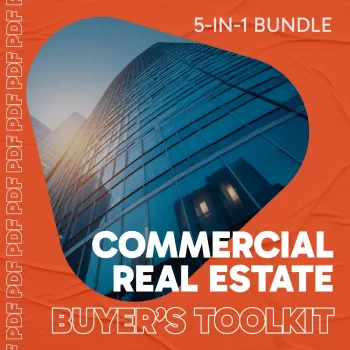
Commercial Real Estate Buyer’s Toolkit: a practical 5‑in‑1 system for buying property with confidence
Buying commercial property is a process of decisions that stack: deal sourcing, underwriting, financing, due diligence, and closing. Miss one step and the “great deal” gets expensive fast. Our Commercial Real Estate Buyer’s Toolkit is built to keep every moving part organized—so your path from first tour to final signatures stays clear, documented, and repeatable.
What this 5‑in‑1 toolkit helps organize (and why that matters)
Commercial acquisitions don’t usually fail because of one big mistake; they slip because small items go untracked—an assumption that never gets verified, a lender document request that gets buried, a lease clause that conflicts with the rent roll, a deadline that sneaks up. Our team designed this toolkit to create a single workflow you can follow deal after deal.
- Creates one end-to-end workflow—from initial screening through closing—so fewer steps fall through the cracks.
- Turns vague research into written checklists and decision points you can share with partners, lenders, brokers, attorneys, and inspectors.
- Supports consistent underwriting habits by separating “deal excitement” from documented criteria and verified numbers.
- Helps reduce avoidable delays by keeping requests, documents, and deadlines visible throughout due diligence and financing.
Buying stages the toolkit supports
| Stage | Typical questions | What to document |
|---|---|---|
| Deal screening | Does this asset fit the plan and risk tolerance? | Target returns, tenant profile, location criteria, initial red flags |
| Underwriting | Do income and expenses support the price? | Rent roll inputs, expense assumptions, cap rate comps, sensitivity notes |
| Financing | What terms are realistic and bankable? | Lender package items, DSCR targets, required statements, timing |
| Due diligence | What must be verified before removing contingencies? | Lease review checklist, estoppels, inspections, title/ALTA items |
| Closing | What needs to be signed, paid, and confirmed? | Closing checklist, prorations, insurance, final walk-through notes |
How to use the toolkit in a real purchase timeline
To keep momentum without losing control, treat your acquisition like a project with gates. Each gate has a checklist, a set of documents, and a “go/no-go” decision point. That’s the difference between being busy and being protected.
- Day 1–3 (first look): Start with a fast screening checklist—location fit, tenant mix, basic financial sanity check, and deal-breakers that justify walking away early.
- Week 1 (offer prep): Build an offer package with clear assumptions and a due diligence plan; define what documents you need immediately after acceptance (rent roll, leases, trailing 12, service contracts).
- Week 2–4 (deep dive): Run the due diligence checklists methodically—lease-by-lease review, expense verification, maintenance/CapEx expectations, and compliance items that can impact insurance or financing.
- Financing window: Keep lender requests in one place; track every document provided, what’s pending, and what’s missing to avoid “last-minute” surprises.
- Closing week: Use a closing checklist to confirm prorations, deposits, insurance certificates, utility transfers, keys/access, and post-closing deliverables.
Example due diligence request map
| Document / verification | Who usually provides it | Why it matters |
|---|---|---|
| Rent roll + leases | Seller / property manager | Validates income, lease terms, renewals, concessions, and risk concentration |
| Trailing 12 (T‑12) + GL detail | Seller | Confirms real operating expenses and catches one-time or misclassified items |
| Service contracts | Seller | Shows recurring obligations (HVAC, landscaping, security) and termination terms |
| Insurance loss runs (if available) | Seller / broker | Flags claim history that may affect premiums or insurability |
| Title commitment + survey | Title company / surveyor | Identifies easements, encroachments, access issues, and legal description accuracy |
Checklists that keep negotiations and risk management clean
Sample negotiation tracker
| Finding | Impact | Preferred remedy | Deadline |
|---|---|---|---|
| Roof nearing end of life | CapEx risk + insurance concerns | Credit at closing or escrow holdback | Before contingency removal |
| Lease clause mismatch vs. rent roll | Income uncertainty | Lease amendment + tenant confirmation | Prior to lender approval |
| Unusually high utilities | NOI reduction | Verify meters + request bills + adjust underwriting | Within diligence period |
| Parking easement unclear | Access/tenant satisfaction risk | Title cure or legal agreement | Before title deadline |
What to expect from the Commercial Real Estate Buyer’s Toolkit (5‑in‑1)
Who typically benefits most
| Buyer type | Common challenge | Toolkit support |
|---|---|---|
| First-time commercial buyer | Unclear process and missing steps | Guided structure + checklists that reduce blind spots |
| Busy operator/entrepreneur | No time to reinvent documents | Ready-to-use frameworks for faster decisions |
| Investor scaling acquisitions | Inconsistent underwriting across deals | Standardized workflow for comparable evaluations |
| Buyer working with partners | Misalignment on assumptions and risks | Shareable documentation and decision checkpoints |
In-stock resources from our store
- Commercial Real Estate Buyer’s Toolkit | 5-in-1 Guide, Checklists & eBooks for How to Purchase Commercial Property
- Muscle Relaxation Toolkit for Total Tension Relief – 3-in-1 Bundle for Deep Muscle Relaxation
Make the toolkit part of a repeatable buying system
Practical references for financing and baseline rules
If you’re building a financing plan, it helps to anchor your expectations in primary sources and lending context. For SBA-backed options and program basics, review the U.S. Small Business Administration (SBA) — Loans page. For broader context on the banking environment, the FDIC — Bank Data & Statistics is a helpful reference point.
FAQ
Is this toolkit only for first-time commercial real estate buyers?
No—while first-time buyers often use it to avoid missing steps, experienced buyers use it to standardize underwriting, document assumptions consistently, and keep multiple deals moving without reinventing their process.
Will this help with due diligence and working with lenders?
Yes. The checklists and trackers are designed to keep due diligence deliverables, lender requests, and key deadlines visible in one workflow so you can respond faster and reduce last-minute surprises.
What types of commercial properties can this buying system apply to?
Most property types follow the same acquisition stages—screening, underwriting, financing, due diligence, and closing—so you can apply the system to office, retail, industrial, multifamily, and mixed-use. The specifics vary by asset and market, but the documentation discipline carries across.















Leave a comment