Declutter for Less Stress: 20-Minute Calm Home Plan
Declutter for Less Stress: A Clean, Calm Home You Can Maintain
A calmer home rarely comes from a single “big clean.” It comes from fewer decisions, clearer surfaces, and simple systems that keep daily life moving. Our team built Declutter for Less Stress: Your Ultimate Guide to Clean & Calm Home for real schedules and real homes—helping you turn clutter hotspots into easy-to-manage zones, so your space supports rest, focus, and better routines.
Stress is a real mind-and-body response to demands and pressures (see the APA definition of stress), and your environment can either add to that load or reduce it. When your home is easier to reset, your day is, too.
What “less stress” looks like at home
- Clear pathways and surfaces: fewer obstacles, fewer micro-annoyances, less visual noise.
- Easier resets: a 10-minute tidy actually works when items have a defined “home.”
- Fewer delayed decisions: reduce “maybe later” piles with quick rules for keep, donate, recycle, or trash.
- More usable space: closets, drawers, and corners become functional instead of forgotten storage.
- A calmer sensory baseline: less clutter often supports better sleep routines, work focus, and end-of-day decompression.
If you’re also carrying physical tension, pairing your home reset with a simple body reset can help you stay consistent. Our Muscle Relaxation Toolkit for Total Tension Relief – 3-in-1 Bundle for Deep Muscle Relaxation is an easy add-on for short recovery breaks between decluttering bursts.
Start small: the 20-minute reset that changes the whole week
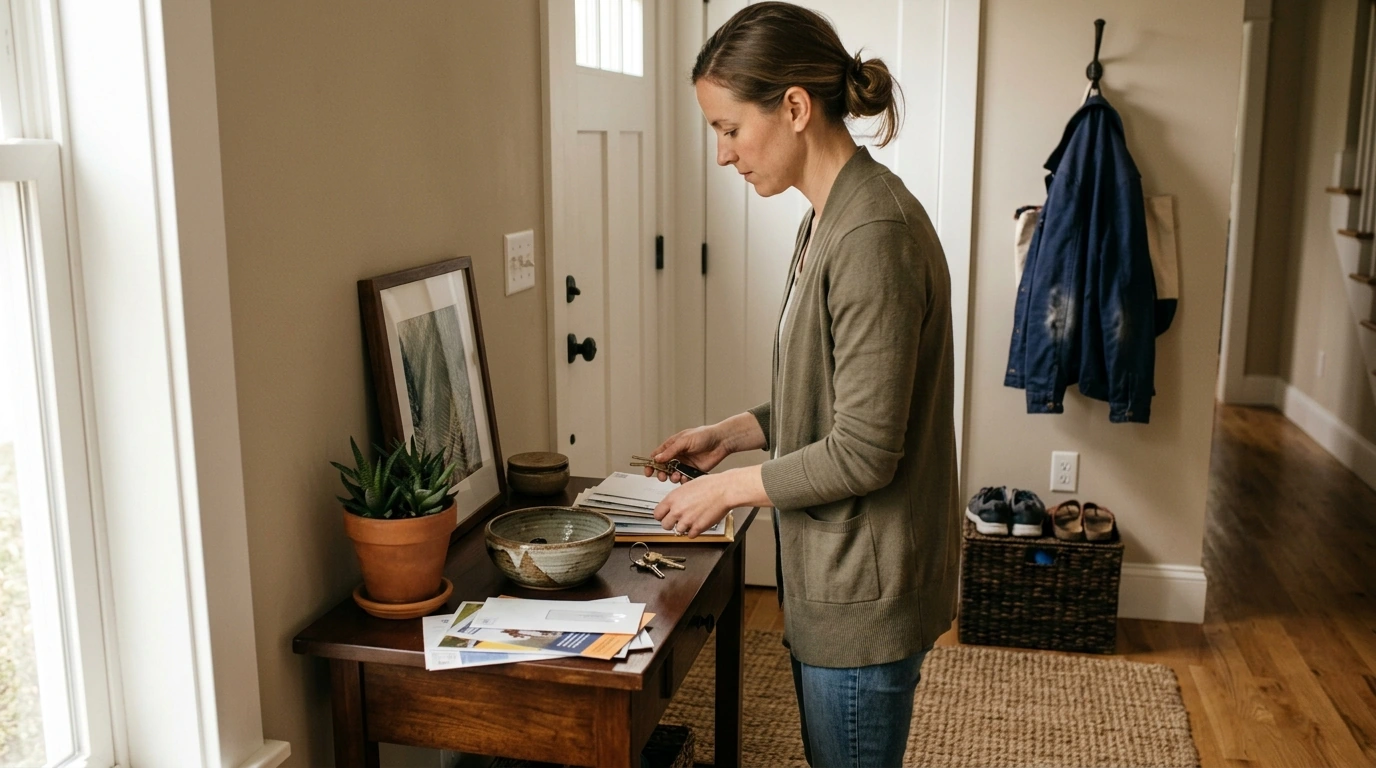
When everything feels messy, the fastest relief comes from choosing one “stress surface” and making it calm again. Pick a single zone—kitchen counter, entry table, bedside, or desk—and commit to clearing only that space first.
- Use a 4-bin method: Keep Here, Keep Elsewhere, Donate/Sell, Trash/Recycle.
- Set a timer and stop on time; consistency beats marathon sessions that lead to burnout.
- Finish by giving the “Keep Here” items real homes (one drawer, one shelf, one hook).
- Repeat the same reset daily for 3 days before expanding to the next zone.
| Minute | Action | Goal |
|---|---|---|
| 0–3 | Grab 4 bins/bags and a laundry basket | Prevent item drift |
| 3–10 | Clear the surface completely | Create a true blank slate |
| 10–17 | Sort items into bins quickly | Reduce decision fatigue |
| 17–20 | Return “Keep Here” only; stage the rest by the door | End with visible progress |
The guide’s core method: fewer decisions, better homes for items
Decluttering sticks when you design for daily life: the goal isn’t a perfectly empty home—it’s a home you can reset quickly after real life happens.
- Category before containment: decide what belongs in a space before buying organizers.
- One space, one purpose: mixed-use drawers tend to turn into default junk drawers.
- A home for every repeat-use item: if you use it weekly, store it where you use it.
- The “two-touch” rule: handle an item once to decide its next step; don’t move it pile-to-pile.
- Maintenance is part of decluttering: a system counts only if it can be reset in under 10 minutes.
If you want a structured, repeatable framework, our team designed Declutter for Less Stress: Your Ultimate Guide to Clean & Calm Home to walk you from the first stress surface to room-by-room momentum—without overcomplicating your day.
Room-by-room decluttering plan (without creating a bigger mess)
Entryway
Reduce drop-zones to a few “allowed” landing spots: one tray/bowl, one hook set, and one bin for shoes. Clear “homeless” items nightly so tomorrow starts clean.
Kitchen
Start with counters, then go one cabinet at a time. Keep daily tools accessible and store occasional tools higher or deeper—prime zones are for repeat use.
Living room
Create a “close-up calm” zone near seating. Fewer small objects on side tables means fewer visual distractions during downtime, and it’s faster to reset before bed.
If you’re building a true decompression spot, comfort matters. A supportive seat like our Luxury High-Back Recliner Sofa Set can help define the living room as a rest zone—especially when surfaces around it stay intentionally clear.
Bedroom
Prioritize sleep-supporting surfaces: the nightstand and the floor. Keep only essentials within arm’s reach and move everything else to a defined home.
Bathroom
Keep the calm: simple systems that prevent rebound clutter
For additional stress-management support beyond your space, the CDC’s guidance on coping with stress is a helpful reminder that small, repeatable habits are often the most sustainable.
Make your space feel finished: calming decor after the clutter is gone
If you want a simple, polished anchor that won’t multiply into clutter, our Vintage Resin Vase works well as a one-piece focal point on a console, coffee table, or shelf—especially when you keep surrounding surfaces intentionally open.
Put the plan into action with Declutter for Less Stress
FAQ
How long does decluttering take for an average home?
It depends on volume and how consistently you can work, but 20-minute resets add up fast over a week. Instead of aiming for a single “done” date, plan for steady progress by zone and keep a short daily reset so your wins don’t slide backward.
What should be decluttered first when everything feels overwhelming?
Start with your most-used stress surface—often the kitchen counter, entry drop-zone, or nightstand—because clearing it reduces daily friction immediately. Use the 4-bin method so you don’t create new piles while trying to fix the first one.
How can clutter stay gone without buying lots of organizers?
Declutter by category first, use visible limits as boundaries, and keep a donation bag staged so decisions don’t stall. Start with containers you already own, then add only what you need after you’ve defined what truly belongs in each space.













Leave a comment