Is Your Cat Happy While Grooming? What to Watch For
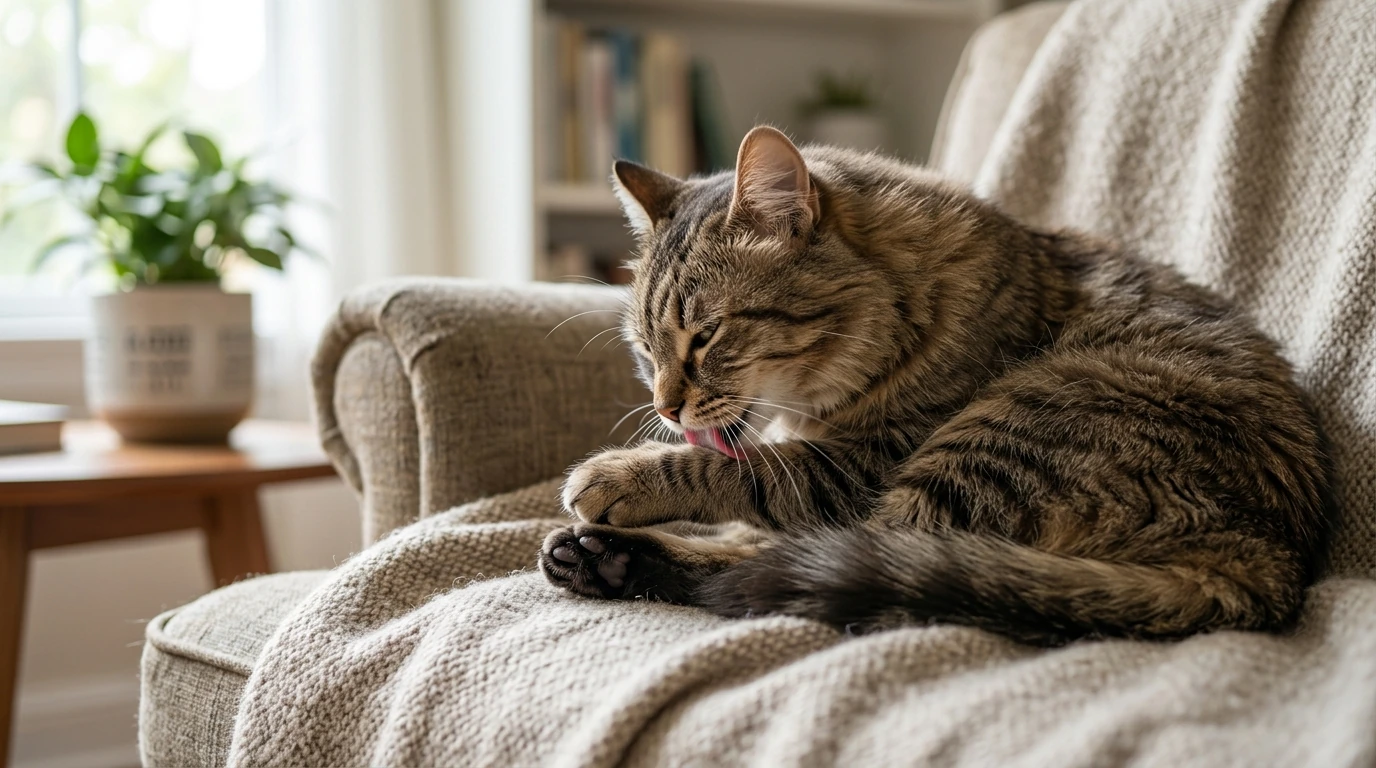
Is a cat happy when it cleans itself?
Often, a cat that calmly cleans itself is comfortable enough to follow its normal grooming routine. But licking its coat is not a sure sign of happiness. Cats groom to remove loose fur and dirt, spread natural oils, manage scent, and sometimes settle themselves when they feel mildly stressed.
Look at the rest of your cat’s behavior for a clearer picture. A relaxed posture, soft eyes, normal appetite, playful moments, and willingness to interact can all suggest your cat feels secure. If grooming happens between naps or after a meal and your cat otherwise acts normally, it is usually an ordinary part of daily care.
When grooming may signal a problem
Frequent, intense licking can be a response to stress, itchiness, allergies, parasites, or pain. Check for thinning fur, bald patches, redness, scabs, or a particular area that gets repeated attention. A sudden change in grooming habits is also worth noting. Some cats groom less when they feel unwell, have trouble reaching parts of their body, or experience discomfort.
Contact a veterinarian if you see skin damage, persistent overgrooming, or a noticeable decline in self-care. Avoid scolding your cat for licking; that may add stress without addressing the cause. A vet can help identify whether the behavior is related to health or the cat’s environment.
How to support healthy grooming
Keep fresh water and a clean litter box available, and offer a calm place to rest. Brush your cat gently when needed, especially if its coat is long or it sheds heavily. Brushing can remove loose hair and help you spot tangles or skin changes, but it should not replace veterinary care when symptoms appear. Let your cat set the pace and stop if it seems uncomfortable.
For a practical routine covering brushing and other basic care, see the cat hygiene and maintenance guide.
FAQ
How often should I brush my cat?
It depends on coat length and shedding. Short-haired cats may need brushing about once a week, while long-haired cats often benefit from daily brushing to prevent tangles.
















Leave a comment