Older Car Maintenance Plan for Long-Term Reliability
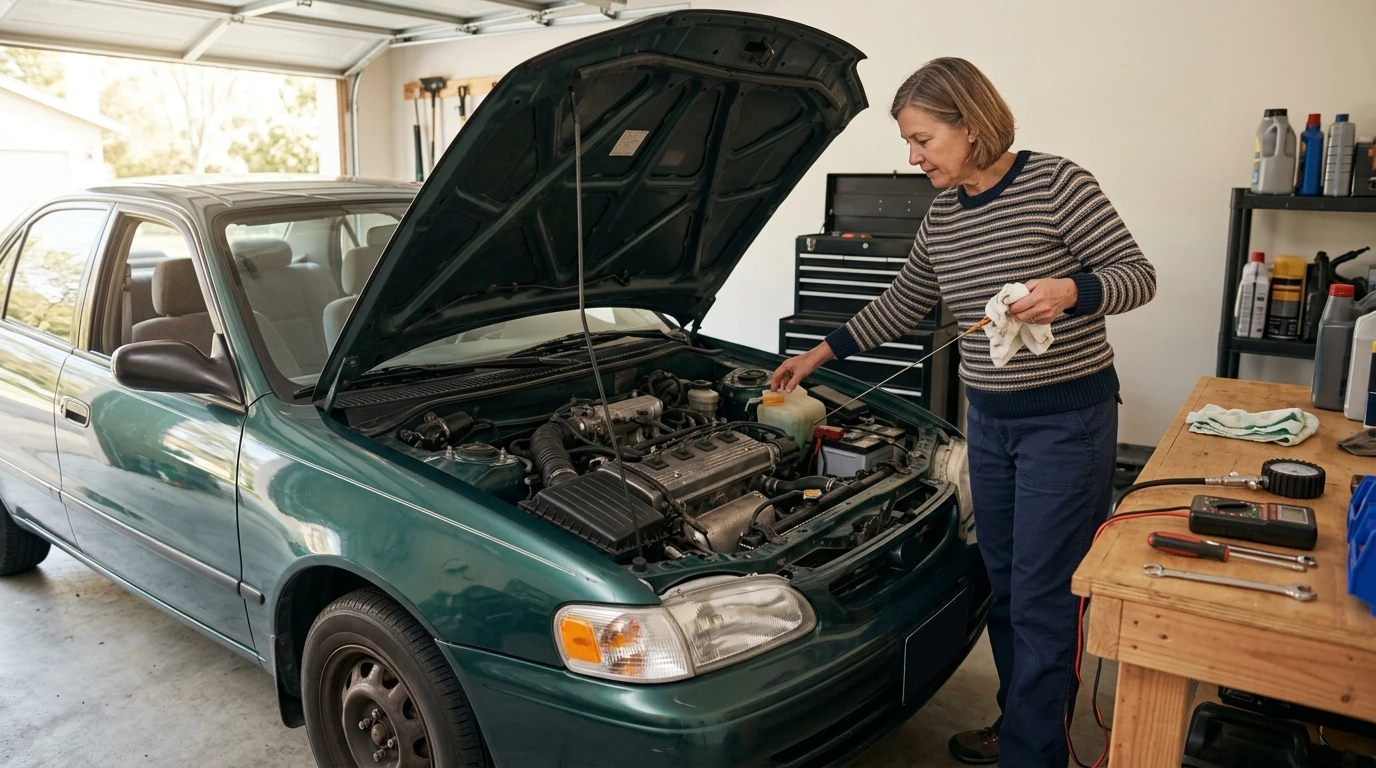
Keeping Your Car Reliable for the Long Run: A Practical Older-Car Maintenance Plan
Older cars can stay dependable for years when maintenance becomes a routine instead of a reaction. The goal is to reduce surprises, catch wear early, and focus on the few systems that most often cause breakdowns: fluids, cooling, charging, tires, belts/hoses, and brakes. The plan below keeps checks simple, spreads out bigger services, and adds clear “act now vs. monitor” decision points so maintenance stays manageable and cost-effective.
What “reliable” looks like in an older vehicle
In an older vehicle, “reliable” isn’t just that the engine runs. Reliability looks like predictable starts, stable operating temperatures, consistent braking, and no unresolved warning lights. It also means the car behaves the same way day after day—no mystery vibrations, no intermittent stalling, no “sometimes the temp gauge creeps up” moments.
Small problems tend to accelerate with age. A tiny drip, an occasional overheat, or a weak battery can seem “fine” until margins shrink and a minor issue becomes a tow. To avoid getting stranded, prioritize the systems most likely to stop the car in its tracks: cooling, charging, fuel/ignition basics, and tires. Comfort items (like a weak A/C) can wait.
If your car’s maintenance history is unclear, do a baseline inspection to “reset the clock”: check all fluids, inspect belts and hoses, test the battery and charging system, evaluate brakes and tires, and address obvious leaks. That baseline is often the difference between planned upkeep and a string of emergencies.
The high-impact preventive maintenance checklist
These items deliver the biggest reliability gains per dollar because they reduce overheating, no-starts, tire failures, and brake damage.
Quick checklist by frequency (general guidance—confirm with owner’s manual)
| When | Check/Service | Why it matters | Red flags to act on |
|---|---|---|---|
| Every fuel fill | Walk-around + tire glance | Catches low tire/visible leaks early | New puddle, tire looks low, bulge, nails/screws |
| Monthly | Oil level, coolant reservoir, tire pressures, lights | Prevents low-fluid damage and unsafe driving | Oil below add mark, coolant dropping, repeated low tire |
| Every 3–6 months | Battery terminals, wipers, air filters, brake feel | Reduces no-starts and visibility issues | Slow crank, corrosion, streaking, pulsing brakes |
| 6–12 months | Full tire inspection/rotation, brake inspection | Extends tire life, catches brake issues before damage | Feathered wear, cords showing, squeal/grind |
| Per manual/condition | Coolant service, transmission service, brake fluid | Fluid condition is critical as vehicles age | Burnt smell, dark fluid, overheating, spongy pedal |
Breakdown prevention: the top failure points and how to catch them early
- Overheating: Watch how quickly the engine warms up, whether the temperature stays steady in traffic, and whether cabin heat is consistent. Slow leaks often leave dried residue near hose ends or radiator seams.
- No-starts and intermittent stalls: Battery age, alternator output, and ground connections are frequent culprits. Fix corroded grounds and loose terminals before chasing expensive sensors.
- Misfires and rough running: Worn spark plugs, aging coils/wires (as applicable), vacuum leaks, and PCV issues can turn into catalytic converter damage if ignored.
- Fuel delivery problems: Listen for unusual fuel pump noise, replace the fuel filter where serviceable, and address hard starts early.
- Tire-related failures: Underinflation and aged rubber cause blowouts. Check the DOT date and sidewalls, not just tread depth. Tire safety basics are covered by NHTSA Tire Safety.
- Brake pulling or vibration: Can indicate seized calipers, warped rotors, or suspension wear. Resolve early for safety and to avoid turning a small job into a full overhaul.
For broader guidance on upkeep planning and repair decisions, reference resources like AAA Car Maintenance and Repair and the U.S. Department of Energy maintenance tips.
A simple maintenance routine that fits real life
What to keep in the car for fewer emergencies
When to repair, when to monitor, when to retire a component
A ready-to-use maintenance guide and checklist
If you want a consolidated, ready-to-follow plan, see: Keeping Your Car Reliable for the Long Run (digital maintenance guide and checklist).
For long days of maintenance work (or long drives after you’ve handled the essentials), consider comfort and recovery items like: Muscle Relaxation Toolkit for Total Tension Relief – 3-in-1 Bundle for Deep Muscle Relaxation.
Before choosing, compare the product details with your daily routine, available space, care needs, and preferred setup. The strongest option is usually the one that fits the intended use clearly and remains simple to clean, store, and check before repeat use.
FAQ
How often should an older car be inspected if it’s driven daily?
Do a quick monthly check (fluids, tire pressure, lights) and plan a more thorough inspection every 6–12 months. Check immediately anytime you notice new noises, smells, leaks, or warning lights, since condition-based issues become more common with age.
What maintenance prevents the most roadside breakdowns?
Cooling system upkeep, battery/charging tests, tire pressure and tire age checks, and belt/hose inspections prevent many “stranding” failures. These items often give warning signs that are easy to catch during brief routine checks.
Is it worth changing fluids on a high-mileage car with an unknown history?
Usually yes, but start by evaluating fluid condition and follow the correct specifications. For transmission and cooling systems with unknown history, a cautious approach (and a mechanic’s assessment) is often safer than aggressive flushing.
















Leave a comment