Oval Vessel Sink Set: Matte Black Waterfall Faucet
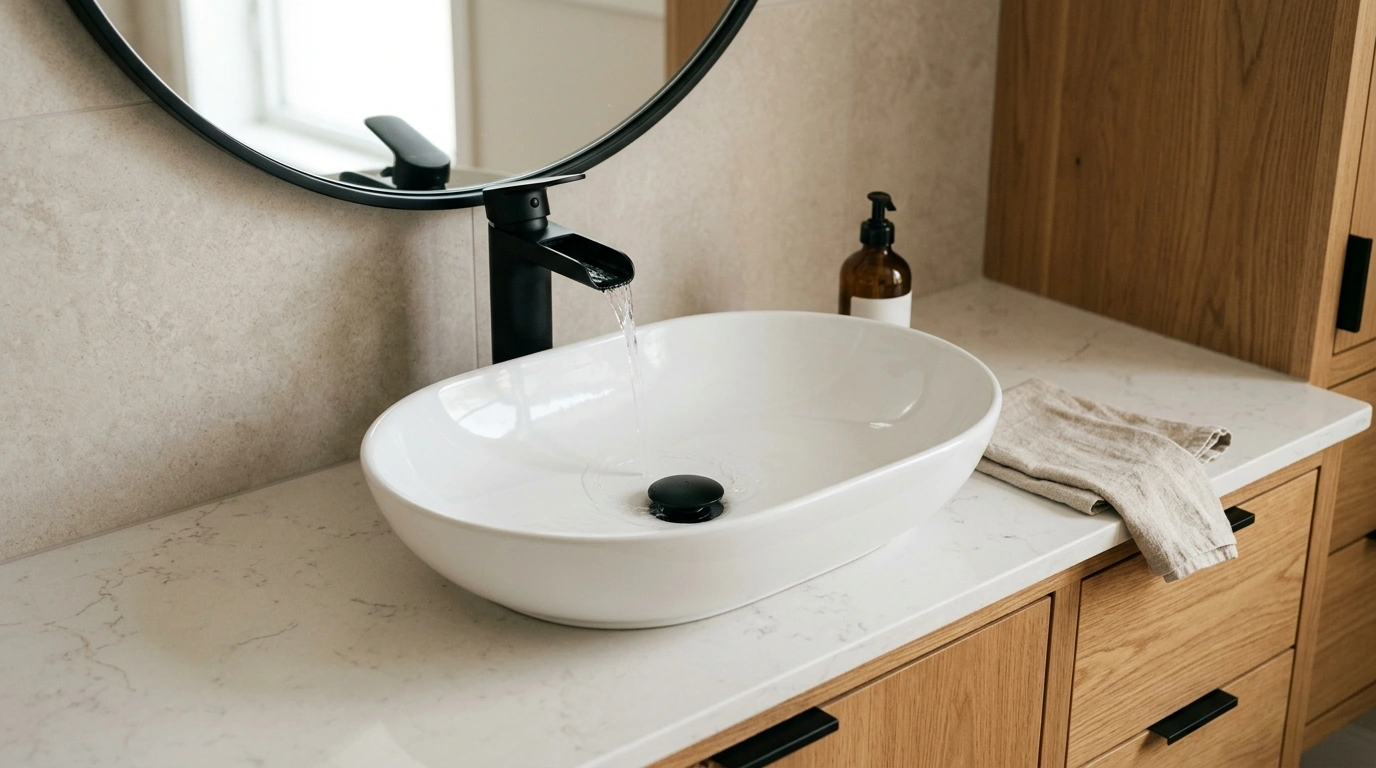
Oval Ceramic Vessel Sink Set with Matte Black Waterfall Faucet and Pop-Up Drain
A vessel sink can instantly shift a bathroom from basic to boutique—especially when the bowl, faucet, and drain are designed to look like one cohesive set. This oval ceramic basin pairs with a matte black waterfall faucet and a matching pop-up drain for a modern contrast that suits powder rooms, guest baths, and primary vanities alike. The details below cover what’s included, how it feels in daily use, and what to confirm before installation so the finished look is as clean as the concept.
What Comes in the Set
- Oval ceramic vessel sink designed for above-counter installation
- Matte black waterfall faucet for a wide, sheet-like stream
- Pop-up drain included for a coordinated finish
- Designed to create a matched look between bowl, faucet, and drain hardware
Choosing a set (instead of sourcing each part separately) can reduce finish mismatch and simplify planning—especially in bathrooms where matte black is repeated across mirrors, cabinet pulls, or lighting.
Design Details That Shape the Look
- Oval bowl silhouette softens hard lines and works well with both rectangular and rounded vanities
- Ceramic surface complements bright tile, stone, and warm wood tones
- Matte black hardware adds contrast and reduces the appearance of fingerprints compared with high-gloss finishes
- Waterfall spout creates a contemporary focal point and pairs well with minimal mirrors and linear lighting
If the countertop material is a highlight—think veined stone, butcher-block style wood, or a solid-surface slab—vessel sinks help keep more of that surface visible. The oval profile also reads “softer” than sharp-edged shapes, which can be a nice balance in bathrooms with rectangular mirrors and straight-lined vanities.
Everyday Use: Flow, Splash, and Comfort
- Waterfall faucets can feel smoother and more “open” than aerated streams, which many users prefer for quick handwashing
- To reduce splash, confirm faucet reach aligns with the sink’s drain area (stream should land near the drain, not on the rim)
- Vessel sinks raise the wash surface higher; confirm vanity height feels comfortable for the main users
- A pop-up drain simplifies filling the basin for rinsing or light cleaning tasks
Day-to-day comfort comes down to geometry: the bowl height above the counter, the faucet height, and the spout reach. When the stream lands close to the drain area, water tends to circulate down instead of ricocheting off the sidewalls. For households with kids (or anyone sensitive to a “tall” vanity), measuring the final rim height before buying can prevent an awkward setup.
Water use is also worth considering. If you’re comparing faucets, checking for water-efficiency guidance can help you balance performance with responsible consumption. The EPA’s WaterSense program is a helpful reference point when evaluating water-saving bathroom fixtures.
Materials and Finish Care
- Ceramic is generally resistant to staining and cleans easily with non-abrasive cleaners
- Avoid harsh scouring pads that can dull ceramic glaze and wear matte finishes over time
- Matte black hardware looks best when wiped dry after use to minimize mineral spotting
- If water is hard, periodic descaling around the spout and drain helps maintain an even finish
For routine cleaning, a soft cloth with mild soap and warm water is usually enough for both the ceramic bowl and the matte black finish. If you notice mineral buildup, address it early—especially around the spout outlet and drain flange—so it doesn’t turn into a stubborn ring. If you’re troubleshooting water quality issues that contribute to spotting or scale, NSF’s consumer guidance on drinking water standards and certification can be a practical starting point.
Fit Checklist Before Buying
Quick Compatibility Checklist
| Item to Confirm | What to Look For | Why It Matters |
|---|---|---|
| Vanity height | Comfortable handwashing height with a vessel bowl on top | Prevents an awkwardly high wash position |
| Faucet reach | Stream lands close to the drain area | Helps minimize splashing on the counter |
| Drain hole size/type | Matches the included pop-up drain | Avoids extra adapters or replacement drains |
| Countertop thickness | Enough thread length for faucet and drain mounting | Ensures secure installation without leaks |
| Cabinet clearance | Room for P-trap and supply lines under the sink | Prevents fit issues after the countertop is installed |
If you’re unsure about faucet sizing and placement, a general buying guide can clarify common dimensions and mounting types. American Standard’s bathroom faucet buying guide offers a straightforward overview that can help when comparing spout reach and installation styles.
Installation Notes for Vessel Sink Setups
When This Style Works Best
Shop In-Stock Picks
- Oval Ceramic Bathroom Vessel Sink with Matte Black Waterfall Faucet and Pop-Up Drain
- Vintage Resin Vase
- Muscle Relaxation Toolkit for Total Tension Relief – 3-in-1 Bundle for Deep Muscle Relaxation
FAQ
Do vessel sinks need a special drain?
Many vessel sinks use a standard bathroom sink drain opening, but the drain type matters: if the bowl has no overflow, you typically need a non-overflow drain. Confirm whether your sink includes an overflow channel and match the drain type and size accordingly.
Does a waterfall faucet splash more than a regular faucet?
Splashing depends more on faucet height, reach, and where the stream hits the basin than on the waterfall style itself. Aim the stream so it lands near the drain area and use a moderate flow for calmer, cleaner handwashing.
How should matte black faucet finishes be cleaned?
Use mild soap and water with a soft cloth, then rinse and dry to reduce mineral spots. Avoid abrasive pads and harsh chemicals, which can wear the finish and leave it looking uneven over time.














Leave a comment