Smart True HEPA Air Purifier: Auto Clean Air at Home
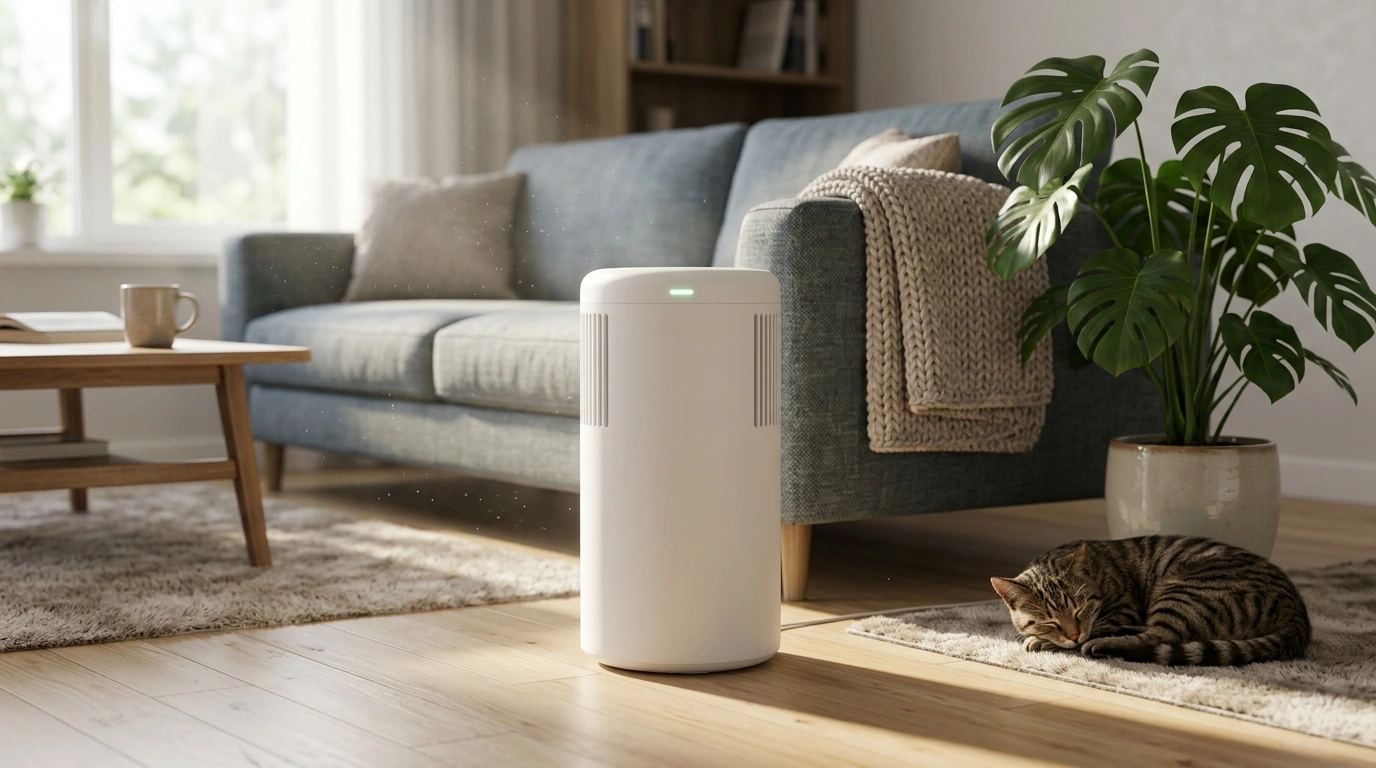
Smart True HEPA Air Purifier: Cleaner Air with Less Guesswork
Cleaner indoor air can make a noticeable difference for allergies, smoke, odors, and everyday comfort. A smart true HEPA air purifier combines high-efficiency particle filtration with app-enabled monitoring and automatic adjustments, helping maintain healthier air with less manual effort. Whether you’re dealing with seasonal pollen, pet dander, cooking smells, or wildfire haze, the right purifier can help keep your most-used rooms feeling fresher and easier to breathe in.
What a Smart True HEPA Air Purifier Does
A smart true HEPA air purifier is built to continuously cycle room air through filters that trap airborne particles. Instead of masking odors or “freshening” the air, it focuses on removing pollutants from the air you actually breathe.
- Pulls room air through a multi-stage filtration system to reduce airborne particles such as dust, pollen, pet dander, and smoke.
- Uses a true HEPA filter to capture very fine particulate matter (commonly referenced as 99.97% at 0.3 microns for HEPA-grade performance).
- Adds smart controls that can automate fan speed, provide air-quality feedback, and support scheduling.
- Helps reduce particle buildup in frequently used spaces like bedrooms, home offices, nurseries, and living rooms.
For practical guidance on using air cleaners at home, the U.S. Environmental Protection Agency offers a helpful overview: U.S. EPA — Guide to Air Cleaners in the Home.
Smart Features That Matter Day to Day
“Smart” features are most valuable when they reduce daily babysitting. The best tools are the ones that quietly keep performance consistent—especially during allergy season or when indoor air changes quickly (like after frying, vacuuming, or bringing in packages).
- Auto mode: adjusts fan speed based on sensor readings to balance air cleaning and noise.
- Scheduling: runs higher cleaning cycles when the room is in use and quieter settings at night.
- Air quality indicators: color/status lights or app dashboards that show changes over time.
- Filter reminders: prompts for cleaning/replacement planning to avoid performance drop-offs.
- Child lock and safety controls: helps prevent accidental setting changes in family spaces.
| Feature | What it does | Best for |
|---|---|---|
| Auto mode | Changes fan speed in response to air quality | Hands-off daily use |
| Sleep/quiet mode | Runs at a lower, quieter speed | Bedrooms and nurseries |
| Timer/schedule | Runs at set times or intervals | Routine maintenance and energy planning |
| App or remote control | Adjusts settings without touching the unit | Home office and multi-room living |
| Filter alert | Notifies when filter service is due | Consistent performance |
Understanding the Filtration Stages
Not all “HEPA-style” systems perform the same. A strong setup combines multiple layers that each handle a different job, and the housing should be designed to minimize air bypass.
- Pre-filter: captures larger particles like hair and lint, helping extend true HEPA filter life.
- True HEPA filter: targets fine particles such as pollen, dust, and smoke particles.
- Activated carbon (when included): helps reduce odors and some VOC-related smells from cooking or pets.
- Sealed airflow and fit: proper sealing and filter fit reduce air bypass, improving real-world cleaning.
If comparing models, pay attention to performance measures like CADR (Clean Air Delivery Rate). The Association of Home Appliance Manufacturers explains CADR and how to use it: AHAM — Clean Air Delivery Rate (CADR).
Room Size, CADR, and Placement Basics
A purifier can only clean the air it can move. Matching the unit to your space and giving it clear airflow is one of the simplest ways to improve results without changing any settings.
- Match room coverage: choose a purifier rated for the room’s square footage; oversizing can improve results at lower noise levels.
- CADR: higher CADR generally indicates faster particle removal in real-room use; compare CADR to room size needs.
- Placement: keep the unit away from walls and curtains, and avoid blocking the intake or outlet.
- Continuous use: steady operation typically performs better than occasional short runs, especially during allergy or wildfire seasons.
| Item | Recommendation |
|---|---|
| Distance from walls | Leave breathing room around intake/outlet for airflow |
| Furniture clearance | Avoid placing behind sofas, under shelves, or near heavy drapes |
| High-particle zones | Near entryways, pet areas, or kitchens (while maintaining clearance) |
| Door strategy | Keep doors closed for faster cleaning in a single room |
Noise, Energy Use, and Everyday Comfort
During wildfire events, keeping indoor air cleaner often means limiting outdoor air intrusion and running filtration steadily. For health guidance, see: CDC — Wildfire Smoke and Your Health.
Maintenance and Filter Replacement Planning
| Condition | Impact on filters |
|---|---|
| Pets | More hair and dander increases pre-filter loading |
| Smoke or wildfire haze | Faster HEPA loading and odor saturation |
| Construction or high dust | More frequent pre-filter cleaning and earlier replacement |
| Open windows during high pollen | Increases particle load on HEPA |
Product Picks for a More Comfortable Home
Smart True HEPA Air Purifier
Luxury High-Back Recliner Sofa Set
Muscle Relaxation Toolkit for Total Tension Relief – 3-in-1 Bundle for Deep Muscle Relaxation
FAQ
Does a true HEPA air purifier help with smoke and wildfire particles?
Yes—true HEPA filtration is designed to capture fine particulate matter found in smoke. For odors, look for a model with activated carbon, keep doors/windows closed, and run the purifier continuously during smoke events.
How often should HEPA filters be replaced?
Many households replace HEPA filters roughly every 6–12 months, but pets, smoke, and high dust can shorten that timeline. Follow your model’s indicator/manual and watch for reduced airflow or returning odors (if a carbon filter is included).
Where should an air purifier be placed for best results?
Place it where airflow is open—away from corners, curtains, or furniture that blocks the intake/outlet. Keep it in the room where people spend the most time, and close doors for faster cleaning in a single room.








Leave a comment