Sunny Slide & Climb Playhouse: Kitchen, Table & Fun
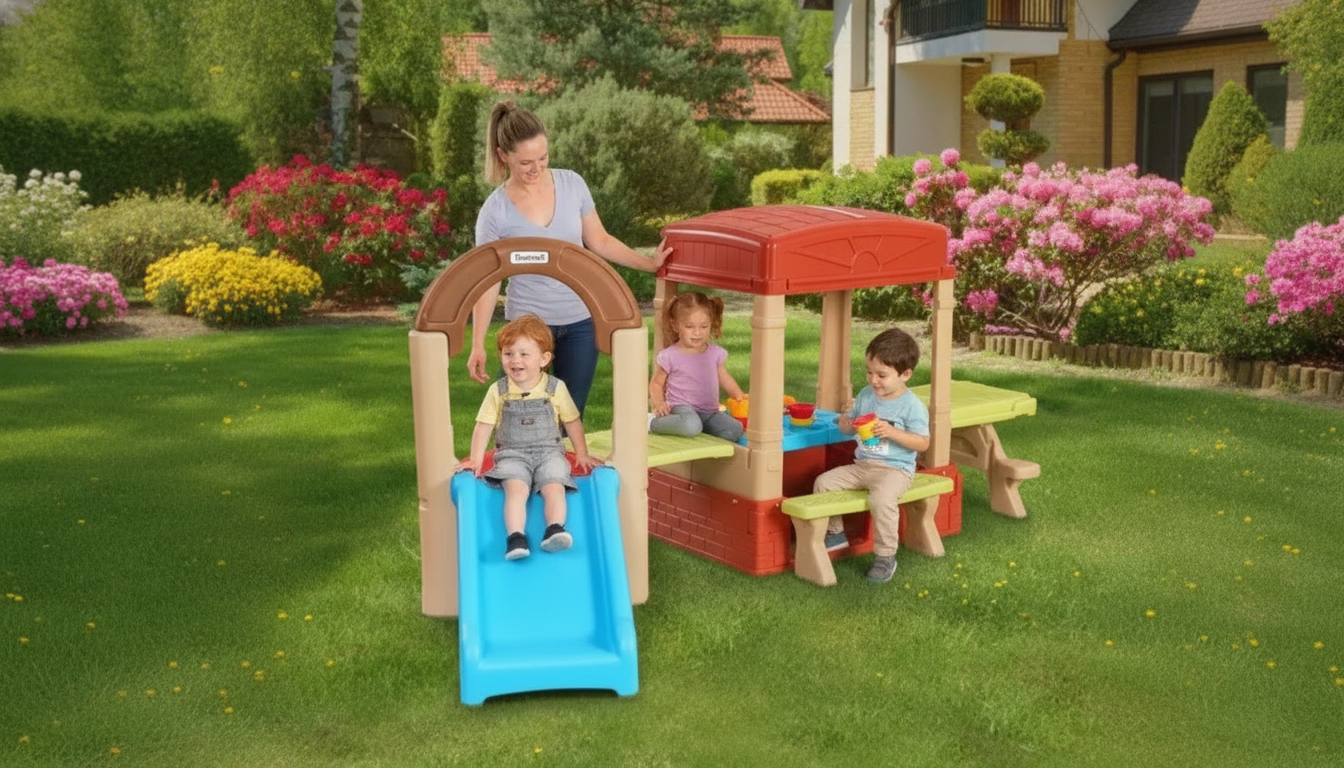
Sunny Slide and Climb Playhouse with Kitchen, Picnic Table & Toddler Activity Center
A backyard play set can do more than burn energy—it can support pretend play, early motor skills, and social routines like sharing and turn-taking. The Sunny Slide and Climb Playhouse with Kitchen, Picnic Table & Toddler Activity Center combines climbing, sliding, a kid-sized kitchen, and a picnic table to create one go-to station for active play and calm play—without needing multiple bulky toys spread across the yard.
What Makes This Playhouse a Daily-Use Play Space
The biggest advantage of an all-in-one playhouse is how naturally it fits into real family routines. Kids aren’t locked into a single type of play. They can climb and slide for a burst of movement, then shift into “making lunch” or sitting at the table for a break.
- Multi-zone layout supports different play moods: active (climb/slide) and quiet (kitchen/picnic table).
- Encourages independent play: toddlers can stay engaged in one defined area while caregivers keep an eye on them nearby.
- Helps siblings share: one child can cook and serve while another climbs or slides, reducing “everyone wants the same spot” friction.
- Works like a destination toy: it’s the kind of play space kids return to throughout the day rather than trying once and abandoning.
Play Zones and How Kids Use Them
Each feature has a different developmental “job,” which is why mixed-zone play sets often stay interesting longer. The movement zones help toddlers practice predictable routes (up, pause, down), while the kitchen and table encourage language, imagination, and social play.
- Slide: supports confidence-building with repeated, predictable motion; helps practice sitting, scooting, and a controlled descent.
- Climbing area: promotes balance, coordination, and strength in legs and core; teaches safe up/down routines.
- Kitchen play: builds imagination and language—naming foods, role-playing meals, and copying caregiver routines.
- Picnic table: an easy “home base” for snacks, crafts, sensory bins, or pretend restaurant play; encourages sitting and taking turns.
Quick Guide to Activities by Zone
| Play zone | Best for | Easy activity ideas |
|---|---|---|
| Slide | Gross motor practice | Count-down slides, “stop/go” listening game, soft-toy rides |
| Climb | Balance and strength | Treasure hunt steps, color/shape calls, up-and-down safety routine |
| Kitchen | Pretend play and language | Menu role play, sorting pretend foods, “wash and dry” station |
| Picnic table | Social play and fine motor | Snack time, coloring, play-dough, pouring practice with cups |
Safety and Placement Considerations
A great play experience starts with smart placement. Toddlers learn best when the route is consistent and the environment supports safe repetition—especially for climbing and sliding.
- Choose flat, stable ground: avoid slopes or spots where water pools after rain.
- Keep open clearance: leave space at the slide exit and around entry points so kids can step away without collisions.
- Use impact-absorbing ground: mulch, rubber tiles, or play mats can reduce injury risk from falls.
- Supervision still matters: toddlers need an adult nearby while learning the climb-and-slide routine.
- Set simple rules: feet-first down the slide, one at a time on climbing features, and no standing on the slide surface.
For broader guidance on home play equipment safety and spacing, the CPSC Outdoor Home Playground Safety Handbook is a helpful reference for caregivers setting up backyard play spaces.
Age Range Fit and Skill Building
This type of playhouse is a strong match for toddlers and early preschoolers because it supports repetition—doing the same route again and again until it feels easy. That repetition helps kids build confidence without needing constant novelty.
- Ideal for early learners: toddlers benefit from predictable paths (climb, turn, slide) that they can master.
- Gross motor milestones: stepping, climbing, controlled sitting/standing transitions, and whole-body coordination.
- Social-emotional growth: taking turns, cooperative pretend play, and shared routines like “serve and clean up.”
- Adaptable play: younger toddlers may start with kitchen/picnic play first, then graduate to climbing and sliding as confidence grows.
- Efficient outdoor sessions: multiple activities in one footprint can reduce the need to rotate big toys to prevent boredom.
Play’s role in healthy development is well documented; the American Academy of Pediatrics highlights how play supports cognitive, social, and emotional growth. For age-based guidance on supporting skills at home, see the CDC’s Positive Parenting Tips.
Assembly, Maintenance, and Long-Term Use
A playhouse that gets used daily benefits from a simple routine: careful setup, quick checks, and easy cleaning. That keeps the structure sturdy and the play experience predictable for toddlers.
Who This Playhouse Is Best For
Product Snapshot
Shop In-Stock Picks
- Sunny Slide and Climb Playhouse with Kitchen, Picnic Table & Toddler Activity Center
- Luxury High-Back Recliner Sofa Set
- Vintage Resin Vase
FAQ
Is this suitable for toddlers who are just learning to climb?
Yes, it can be a great fit with close supervision and clear rules. Start with kitchen and picnic table play to build familiarity, then introduce short, guided climbing turns on a properly cushioned surface.
Can more than one child play on it at the same time?
Yes—the separate zones make parallel play easier, such as one child “cooking” while another slides. Use one-at-a-time rules for the climbing and slide features to keep movement predictable and safe.
What surface should it be placed on outdoors?
Choose flat ground with impact-absorbing materials like rubber tiles, mulch, or play mats, and keep clear space around exits and entry points. Avoid placing it directly on hard surfaces without cushioning.














Leave a comment