No-Drama Meal Checklist for Picky Eaters (Printable)
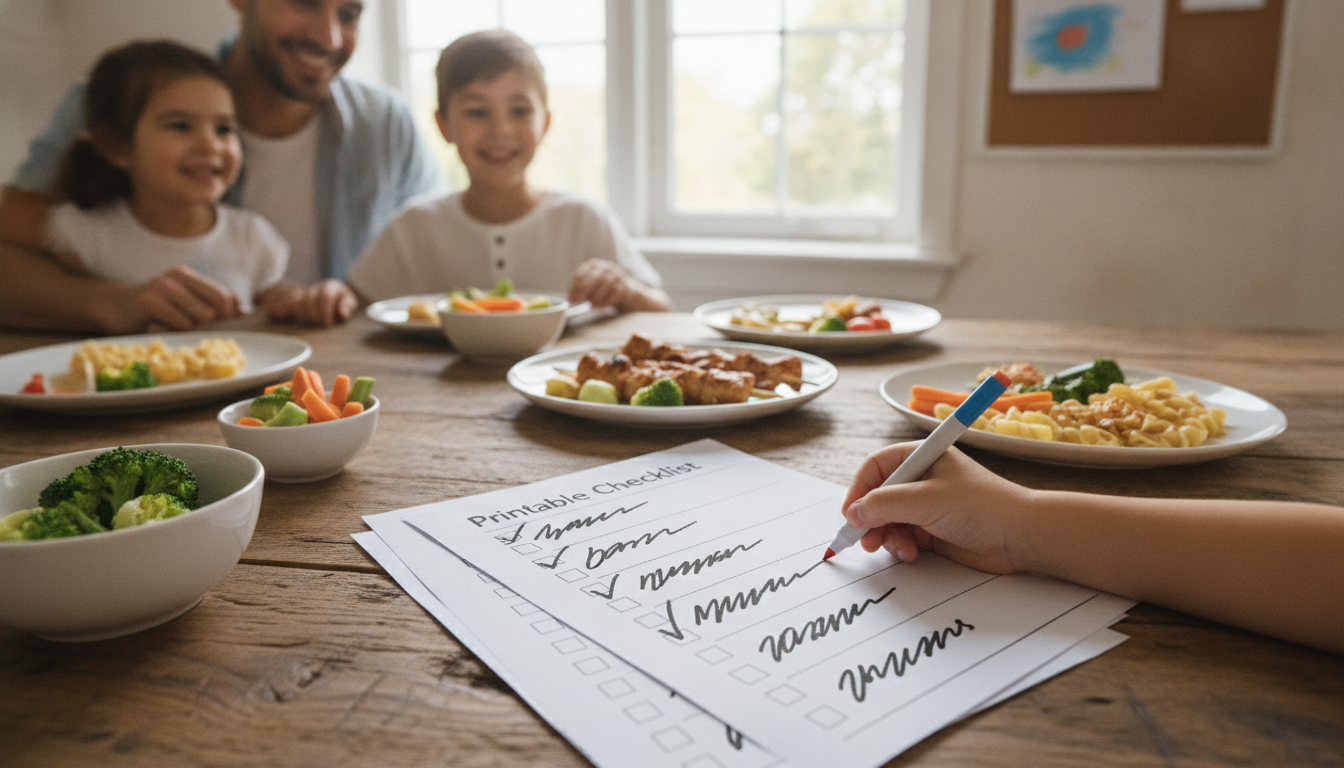
Why picky eating turns dinner into drama (and what actually helps)
When a child is selective about food, dinner can start to feel like a daily negotiation. The stress usually isn’t about one rejected bite—it’s the uncertainty. If the plan changes every night, kids can feel like they have to stay on alert, and adults can feel pressure to “land” a meal everyone will accept.
What tends to make it worse is pressure: bargaining, coaxing, counting bites, or using dessert as leverage. Even when it’s well-intentioned, it can increase anxiety around food and lock the whole table into a control battle. A calmer, more repeatable approach is built on predictability—consistent steps for when dinner happens, what shows up on the plate, and what happens if someone doesn’t eat much.
That predictability also makes room for realistic progress. For many kids, a “win” looks like tolerating a new food on the plate, touching it, smelling it, or taking a single bite—not finishing a full serving. And when meal and snack times are consistent, appetite cues have a better chance to do their job, so kids come to the table hungry enough to participate.
For additional guidance on picky eating, you can reference trusted public health sources like HealthyChildren.org (American Academy of Pediatrics) and the CDC nutrition resources.
The No-Drama Meal Checklist: the dinner routine that keeps everyone steady
This checklist is designed to lower decision fatigue and remove the “live negotiation” from dinner. It’s not about forcing variety overnight; it’s about building a stable routine that is easy to repeat on busy weeknights.
Step 1 — Set the schedule
Keep meals at consistent times, and avoid grazing for 1–2 hours before dinner (water is fine). Predictable timing helps kids arrive with enough appetite to engage.
Step 2 — Use a predictable plate
Include at least one “safe” food your child reliably eats, plus 1–2 familiar sides and one low-pressure “learning” food (a small portion of something new or “iffy”).
Step 3 — Decide the rules before serving
Adults choose what’s offered and when; kids choose what (and how much) to eat from what’s offered. This boundary reduces conflict and gives everyone a clear role.
Step 4 — Keep language neutral
Swap “Just try it” with calm phrases like “You don’t have to eat it; it can sit on your plate.” Neutral language lowers the emotional temperature.
Step 5 — Limit substitutions
If you need a backup, make it planned and boring (the same every time). This prevents dinner from becoming a short-order menu and removes the incentive to refuse strategically.
Step 6 — Keep dinner short and calm
Aim for a reasonable time window (often 20–30 minutes for younger kids). Long, tense meals can teach kids to stall instead of listen to hunger/fullness.
Step 7 — Close the kitchen after
Constant re-snacking teaches kids they can skip dinner and hold out for preferred foods later. Instead, keep food to the next planned snack or breakfast.
Step 8 — Repeat the routine
The checklist works best when it’s consistent across weekdays—not only on “good” nights. Repetition is what makes the routine feel safe.
| Checklist item | What it looks like | Why it helps |
|---|---|---|
| Include one safe food | Bread, rice, pasta, fruit, or a preferred protein | Reduces anxiety and ensures there is something to eat |
| Add one learning food | A small portion of a new or “iffy” food | Builds familiarity without pressure |
| Neutral dinner language | “You can decide.” “It can stay on the plate.” | Avoids escalating into control battles |
| Planned backup option | Same simple item each time if needed | Prevents short-order cooking and negotiation |
| Consistent end to dinner | Kitchen closes; next food is at snack/breakfast | Supports appetite rhythms and routine |
If you want a ready-to-use version you can keep on the fridge, see The No-Drama Meal Checklist for Picky Eaters (printable).
Easy meal ideas built around safe foods (mix-and-match templates)
Templates reduce nightly decision-making. Start with what works, then add a small learning food alongside it (not mixed in) so the safe food stays dependable.
How to introduce new foods without battles
For more general “fussy eater” tips from a national health system, see the NHS guidance pages.
A weekly plan that prevents last-minute decisions
Printable support: make the routine easy to follow on busy nights
For a ready-made fridge-friendly routine plus simple meal ideas, use The No-Drama Meal Checklist for Picky Eaters (printable). And if bedtime stress is part of what’s draining the household bandwidth for calm dinners, these additional supports may help: Peaceful Nights System for Worried Sleepers and Muscle Relaxation Toolkit for Total Tension Relief.
FAQ
What is the best dinner rule for picky eaters that reduces fighting?
Use a clear division of responsibility: the adult decides what and when food is offered; the child decides what and how much to eat from what’s served. Keep your language neutral and stick to the same routine so the rules don’t change night to night.
How many times should a child be exposed to a new food?
There isn’t one magic number. Many kids need repeated, low-pressure exposures before acceptance, so focus on calm repetition and small steps like tolerating it on the plate, touching it, or tasting it.
What if a child refuses everything at dinner?
Stay calm and keep the routine predictable rather than becoming a short-order cook. Make sure at least one safe food is available; if needed, use a planned, boring backup option and then close the kitchen until the next scheduled eating time.















Leave a comment